Agra guide
Sikandra, Agra: Akbar’s Quiet Mughal Garden Beyond the Taj
A calm highway suburb on Agra’s northwestern edge, Sikandra is where Akbar’s vast red-sandstone tomb, roaming deer and a handful of overlooked Mughal monuments offer the city’s best crowd-free half-day.
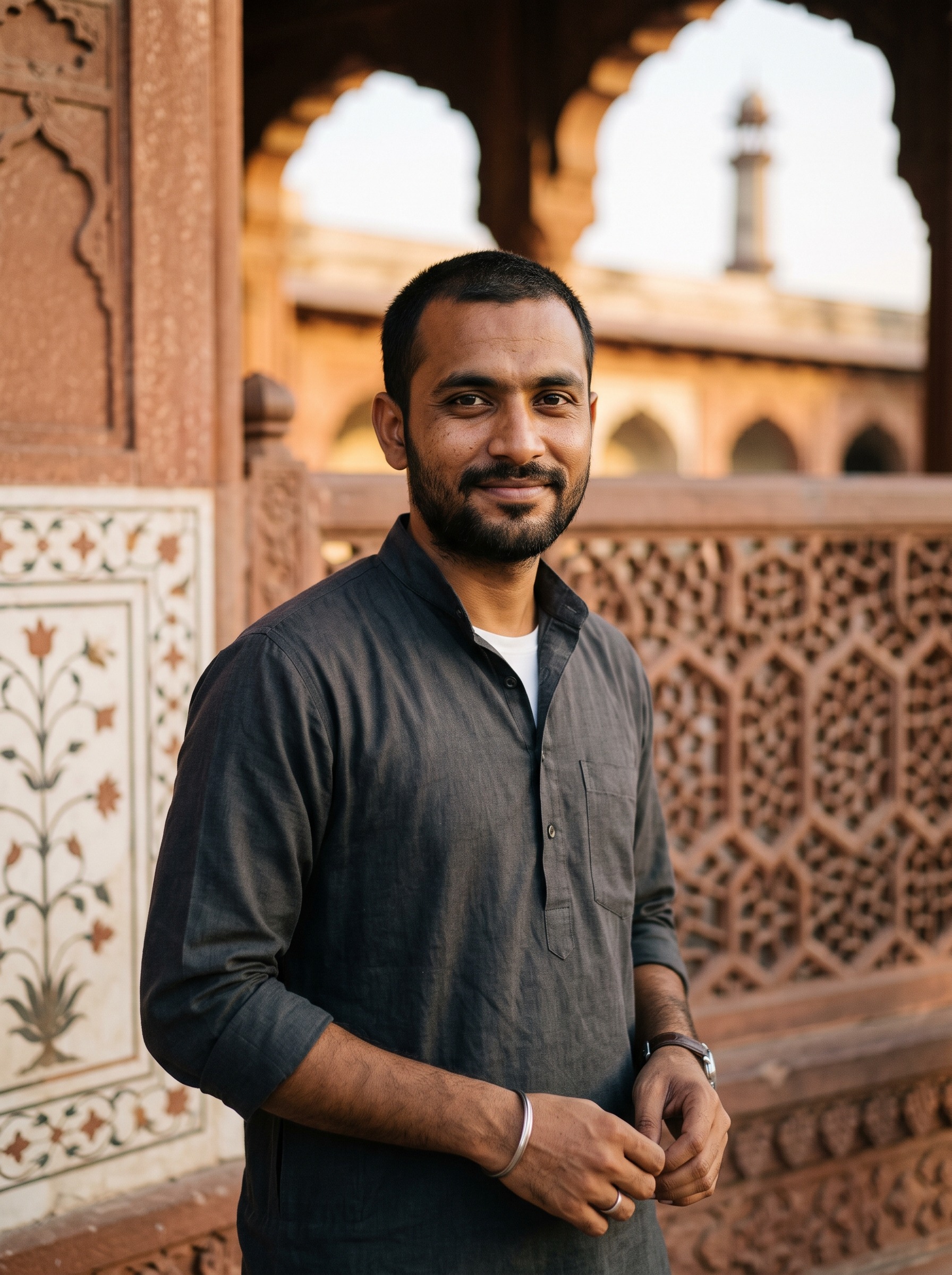

Ten kilometres up the old Mathura Road from the Taj, the traffic thins and the tour buses seem to lose their nerve. That is the first gift Sikandra gives you: a little distance, a little silence, and then, almost without warning, a gate so large it resets your pace. Beyond it lies Akbar’s Tomb, not a side note to the Taj but a monument with its own gravity — a burial garden that still feels alive with blackbuck, deer and peacocks, and with the kind of architectural confidence the Mughals reserved for emperors.
Sikandra is not a neighbourhood that flatters the visitor. It doesn’t perform for cameras from every angle, and it certainly doesn’t pretend to be a dining or nightlife district. It is a spread-out residential and light-industrial belt on Agra’s northwestern edge, strung along the Agra–Delhi highway, where school gates open onto honking lanes, where dhaba signs and hotel boards break the skyline, and where the city’s tourist theatre finally runs out of steam. That is exactly why it works. Here, the Mughal story is not framed by crowds; it is allowed to breathe.
What Sikandra is known for
The name Sikandra predates the Mughals, borrowed from Sikandar Lodi, the Delhi sultan who made this stretch of the Mathura Road a favoured retreat long before Akbar’s grave was dug. But the place is now defined by one thing above all: Akbar’s Tomb, the mausoleum of the third and greatest Mughal emperor, begun by Akbar himself and completed by his son Jahangir between 1605 and 1613. It is one of those monuments that should be on every Agra itinerary, and yet most Taj day-trippers never make it this far.
The tomb sits at the centre of a walled charbagh garden that covers some 119 acres, a scale so generous it feels almost rural. The structure itself rises in five tiers, a pyramid-like composition of deep red sandstone inlaid with white marble. The southern gateway is the showpiece: a huge red-sandstone arch topped with four white-marble chhatri minarets that predate — and clearly rehearse — the ones later built at the Taj Mahal. That family resemblance is no accident, and it is one reason Sikandra matters. You come here and see the Taj’s language being spoken in an earlier, rougher, more experimental register.

The second draw is what lives in that garden. Blackbuck antelope, spotted deer, nilgai, peacocks, langurs and monkeys roam the lawns freely, as if the Mughals had intended the tomb not as a sealed memorial but as a working ecosystem. That idea — that a burial garden should teem with life — is part of what makes the place feel so unlike a conventional monument stop. Early photographers know it well. Come at opening time and the lawns can still hold dew; the animals are active, the terraces are quiet, and the whole complex seems to be waiting for the day to begin.
Inside the walls, the contrast with the highway outside is the whole point. One minute you are in a suburb of signboards, traffic and roadside kitchens; the next, you are walking a causeway toward an emperor’s resting place with birdsong in your ears. There are no golf carts, no rooftop cafés, no touts working a queue. Sikandra rewards slowness. It is the opposite of a Taj day.
Things to do / what to see
The cleanest way to do Sikandra is as a half-day loop, beginning at Akbar’s Tomb while the light is still soft and the animals are most active. The tomb is open sunrise to sunset and closed Fridays, with foreigner tickets around ₹310, Indian tickets around ₹35, and under-15s free. Those numbers tell you something about the place too: this is major heritage at a remarkably modest cost, and one of the few Agra monuments where the ticket price does not feel like a tax on patience.
Walk the long causeway to the mausoleum and don’t rush the approach. The geometry matters here. The gardens open out in measured quadrants, the red sandstone warms as the sun climbs, and the building slowly reveals itself as a layered composition rather than a single façade. Climb through the stepped terraces to the open marble pavilion that holds the emperor’s false cenotaph; the real grave lies in a plain crypt in the basement below. That split between display and burial is classic Mughal theatre, but in Sikandra it feels almost intimate, because the scale is so broad and the crowds so thin.

A five-minute step away, on the same Mathura Road stretch toward Delhi, is the Tomb of Mariam-uz-Zamani. Built by Jahangir between 1623 and 1627 for Akbar’s wife — popularly called Jodha Bai — it began life as a Lodi-era pleasure pavilion and now sits in a hush that feels almost corrective after the grandeur of Akbar’s tomb. It is quiet, uncrowded and often overlooked, which is precisely why it deserves the detour. If Akbar’s mausoleum is the headline, this is the footnote that sharpens the whole page.
Just inside the Akbar’s Tomb complex sits the Kanch Mahal, an early-17th-century red-sandstone pavilion decorated with glazed blue-green tiles. It was once a royal harem or hunting lodge and is now cared for by the ASI. The building is smaller, more curious, more fragmentary than the main tomb, but that is part of its charm. You sense a courtly life in miniature: a place for pause, observation and retreat, tucked into the larger imperial landscape.

The final stop, if you have the time and the energy, is Gurudwara Guru ka Taal. It is a striking red-sandstone Sikh shrine on the highway, marking the spot where the ninth Guru, Tegh Bahadur, surrendered to Aurangzeb in 1675. Built over a Jahangir-era rainwater reservoir, it has a 24-hour langar open to all and no entry fee. In a neighbourhood that can feel defined by Mughal memory alone, this shrine widens the lens. It is another reminder that Sikandra is not a one-note heritage zone but a place where different histories sit close together on the same road.

{{ATTRACTIONS}}
Where to eat & drink
Be honest with yourself before you come: Sikandra is a sightseeing stop, not a dining district. There are no rooftop Taj-view cafés here, no fine-dining tables, no polished restaurant scene waiting to be discovered between monuments. What the neighbourhood has is highway food, practical and unadorned, built for drivers, families and anyone who needs a plate before the next stretch of road.
The best-known local option is Bhagwati Dhaba on Mathura Road, roughly opposite Dhruv Guest House. It is a long-running pure-vegetarian dhaba that runs from mid-morning to around midnight, and it turns out the sort of food that does the job without ceremony: dal makhani, paneer butter masala, tandoori and missi rotis, raita, papad and a sweet, all for a fraction of five-star prices. It is not a destination restaurant, and the reviews are mixed on consistency, but that is not really the point. Bhagwati Dhaba is the sort of place you use, not the sort of place you curate.

Beyond it, the Agra–Delhi highway around Sikandra is lined with the usual run of dhabas and dry-day roadside kitchens serving thalis, chole bhature, lassi and kulhad chai to drivers. That is the culinary texture of the area: steam from a tea stall, a stack of plates, a counter with more urgency than style. If you want a proper meal with your monument, the simplest plan is to see Akbar’s Tomb early and drive back into the city. The Cantonment’s Sadar Bazar and its petha and chaat, or Fatehabad Road’s restaurants, are 20–30 minutes away and offer a much broader choice.
Shopping
Sikandra is not a shopping neighbourhood in the way Sadar Bazar or the Old City are. There is no pedestrian market to browse, no petha-shop row to drift through after lunch, no sense that the streets themselves are built for browsing. What the area is quietly known for is marble handicrafts.
Along the Agra–Delhi highway around Sikandra you will find a number of marble-inlay workshops and showrooms working in the same pietra dura tradition that decorated the Taj. This is where you can watch artisans set semi-precious stone into white marble and buy tabletops, coasters, boxes and plates. The craft is the draw; the sales pitch is the weather around it. Prices are heavily negotiable and quality varies wildly, so buy on what you can see rather than what you are told, and remember that many showrooms pay commissions to the drivers who bring you. There is no obligation to buy just because someone has steered you in.
For everyday souvenirs — petha, dry fruits and leather — you are better off shopping back in the Cantonment’s Sadar Bazar or the Old City, then treating Sikandra purely as a monuments run. That is the honest division of labour here. Come for the tombs, not the bags.
Where to stay in Sikandra
Straight answer: for most visitors, don’t. Sikandra sits about 10–13 km northwest of the Taj Mahal, which means basing yourself here turns a monument visit into a commute. You would be looking at a 25–40 minute drive to the Taj and then the same trek back for dinner. If your Agra fantasy involves a sunrise walk to the monument or an evening drink on a rooftop, this is the wrong end of the city.
Sikandra does make sense for one specific traveller: someone arriving late from Delhi or leaving early towards Mathura and the Yamuna Expressway, who wants a convenient highway bed for a night. In that case, the NH-2 / Delhi–Agra bypass road around Sikandra has a spread of functional business and budget hotels — mid-range highway properties and OYO-style rooms — with parking and easy road access. They are built for drivers, not for atmosphere.
For an actual Agra stay, you want Taj Ganj, Taj East Gate Road, Fatehabad Road or the Cantonment. Those are the bases that let you walk to a Taj sunrise or settle into the city’s better cafés and restaurants. Any hotels you choose in Sikandra should be read in that light: convenience, not romance.
{{HOTELS}}
Getting around
You’ll need wheels. Sikandra lies on the old Mathura Road / Agra–Delhi highway, now NH-19, on the city’s northwestern edge, roughly 10–13 km from the Taj Mahal and about 9–13 km from Agra Cantonment railway station. The nearest small station is Raja ki Mandi, around 9 km away. There is no metro line out here, and it is too far to walk from the tourist core.
That leaves three practical options: a hired taxi or cab, an auto-rickshaw agreed on price before you set off, or — easiest by far — a half-day car tour. The classic route pairs the monuments in one loop: Akbar’s Tomb, the Tomb of Mariam-uz-Zamani, Kanch Mahal and Guru ka Taal, ideally first thing, then back into the city for the Taj, the Fort or lunch. Because Sikandra sits on the Delhi highway, it also folds neatly into an arrival or departure day. Stop off on the way in or out rather than making a dedicated round trip.
Allow about 25–40 minutes each way from the Taj Ganj or Fatehabad Road side depending on traffic. That is the real rhythm of Sikandra: not a place to linger forever, but a place to enter deliberately, move slowly, and leave before the city’s noise comes back up around you.
FAQs
Is Sikandra worth visiting in Agra?
Yes, if you have more than one day or a real interest in Mughal history. Akbar’s Tomb is a major monument with a vast garden full of roaming blackbuck and deer, and it sees a fraction of the Taj’s crowds. On a rushed single day, prioritise the Taj, Agra Fort and Fatehpur Sikri; on a slower trip, Sikandra is one of Agra’s best quiet half-days.
Should I stay in Sikandra?
Only if you’re arriving late from Delhi or leaving early towards Delhi and want a highway hotel for one night. Sikandra is 10–13 km from the Taj Mahal, so it’s not a good sightseeing base. For a Taj-focused trip, stay in Taj Ganj, on Taj East Gate Road, on Fatehabad Road or in the Cantonment.
How do I get from the Taj Mahal to Sikandra?
By road. There’s no train or metro out here. It’s roughly 10–13 km along the Mathura Road / Agra–Delhi highway, about 25–40 minutes by car or auto-rickshaw depending on traffic. A half-day loop with Akbar’s Tomb, Mariam’s Tomb, Kanch Mahal and Guru ka Taal is the easiest way to do it.
What is Sikandra known for besides Akbar’s Tomb?
Its quieter Mughal-era sites, especially the Tomb of Mariam-uz-Zamani, Kanch Mahal and Gurudwara Guru ka Taal, plus marble inlay workshops along the highway. It’s not a shopping or dining district, but it is strong on history, architecture and crowd-free monument viewing.