Berlin guide
Prenzlauer Berg, Berlin: Altbau Calm, Sunday Noise and the City’s Softest Edge
From Mauerpark’s Sunday karaoke to Kollwitzplatz’s market stalls, Prenzlauer Berg is Berlin at its most polished, lived-in and quietly local.
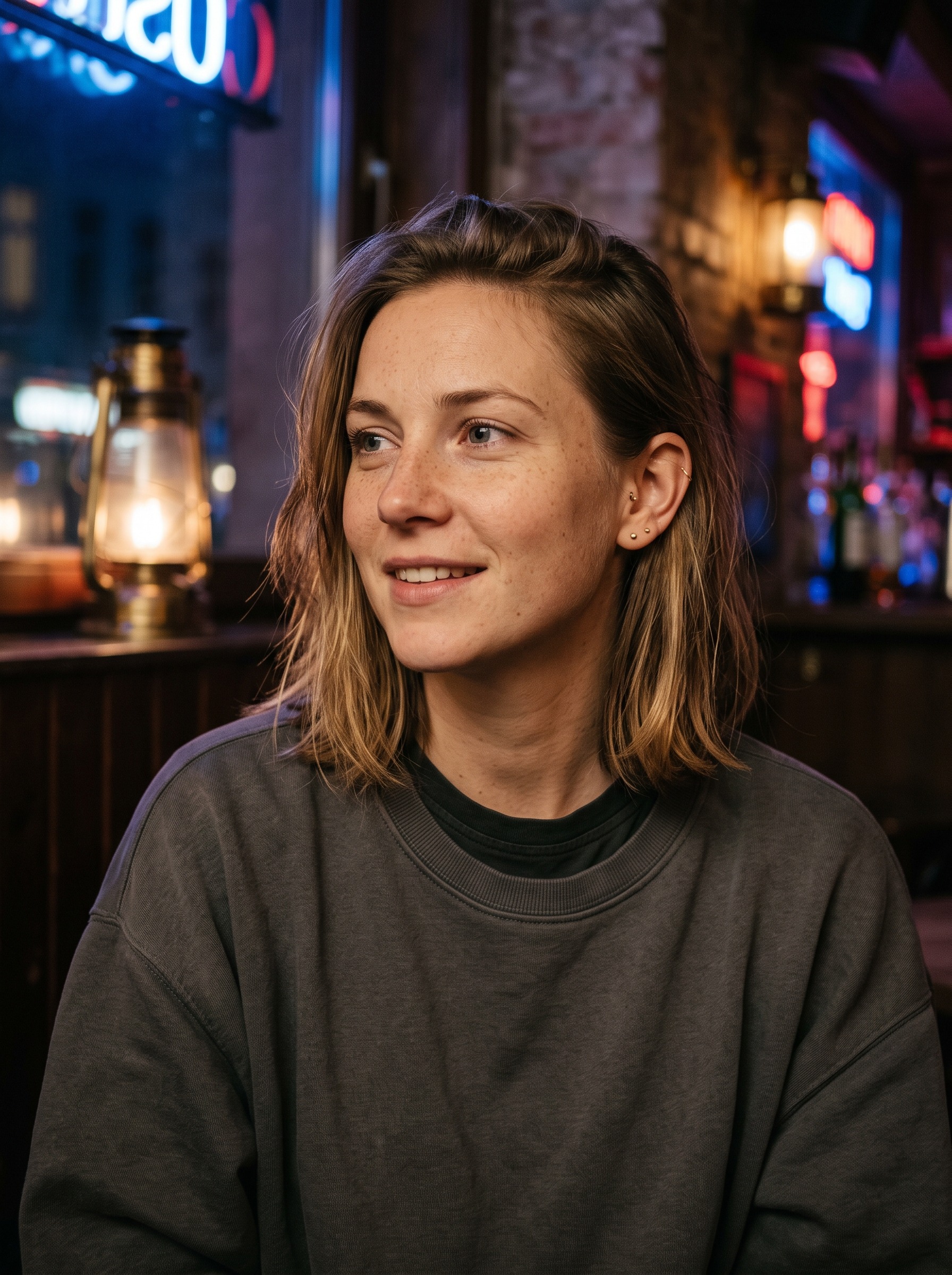 By Lena Fuchs

On a Sunday afternoon, the slope of Mauerpark is all voices and elbows: crate-diggers bent over the flea market, a few thousand strangers shouting themselves hoarse at the Bearpit karaoke bowl, and the smell of grilled sausage drifting across the old Wall death-strip. By Monday morning, the same neighbourhood seems to exhale. Prenzlauer Berg settles back into itself — restored 19th-century tenements, cobbled squares, prams parked outside wine bars, and a tram bell somewhere on Schönhauser Allee keeping time with the day.
What Prenzlauer Berg is known for
Prenzlauer Berg is what east Berlin looks like after the dust of reunification settles and the money moves in. It was once a working-class, dissident quarter under the GDR; after 1989 it gentrified hard, and roughly four-fifths of the pre-1989 residents eventually moved on. What remains is not a theme park version of the east, but something more complicated and, in its own way, more persuasive: a district of butter-yellow and grey Altbau blocks, lovingly renovated, framing quiet cobbled streets and small green squares. The beauty is real. So is the concentration of places where you can eat well, drink well, and spend a whole day moving from one square to the next without ever feeling rushed.
Around Kollwitzplatz and Helmholtzplatz, the pavements belong to prams, cargo bikes and dogs. Cafes put blankets on the outdoor chairs so people can sit out longer into autumn. The sound is low here — kids in playgrounds, glasses clinking on terraces, the occasional tram — and the mood is less midnight scramble than long, well-fed evening. It can feel almost suspiciously pleasant, which is exactly why locals half-joke about the “Bionade-Biedermeier”: organic cordial for the bourgeois. But that joke only lands because the neighbourhood really does have a soft centre, and because it sits on top of a harder history that keeps surfacing if you know where to look.
The prettiest streets in the neighbourhood still tell the story best. Kollwitzplatz, and the little triangle around it — Knaackstraße, Sredzkistraße, Husemannstraße — survived the war largely intact and now hold one of the densest clusters of good restaurants and wine bars in the city. Then there is the Wasserturm on Knaackstraße, Berlin’s oldest water tower, finished in 1877 and nicknamed “Fat Hermann,” sitting on a small park that carries a grim memory: the SA ran an early concentration camp there in 1933. Prenzlauer Berg is full of scenes like that, where the postcard and the warning share the same block.

Where to eat & drink
You can eat somewhere different every night for a week and never leave the Kollwitzkiez. That is the neighbourhood’s quiet flex: not one single defining restaurant, but a dense web of places that make ordinary nights feel a little more considered. The old anchor is still Konnopke’s Imbiss, under the U2 tracks at Eberswalder Straße, where the sliced skinless currywurst comes on a paper tray with the family’s secret sauce and a shaker of curry powder. It has been trading since 1930 and is credited with bringing currywurst to East Berlin in 1960. It is cash-friendly, unpretentious, and exactly the kind of institution you want to find under a railway viaduct when the city is being its most itself.
A few streets away, Café Frieda on Lychener Straße near Helmholtzplatz gives the neighbourhood its more polished daytime pulse: Michelin-trained, nose-to-tail, ingredient-led, with a serious biodynamic wine list. It is the sort of place where lunch can quietly become the first drink of the afternoon, and nobody seems surprised. Nearby Sathutu turns Sri Lankan flavours into refined modern comfort food, while November Brasserie goes in another direction entirely with a sushi chef’s table where the whole raw sea bream is the move. That range is the point. Prenzlauer Berg does not do one-note dining; it does a long, confident run of good ideas.
Osmans Töchter keeps Turkish cooking well beyond the döner cliché, and Wen Cheng has the pull of hand-pulled Biang Biang noodles, the kind of place you remember by the stretch and chew of the noodles as much as by the room itself. On Sredzkistraße, Chutnify brings South Indian dosas and thalis into the neighbourhood’s daily rhythm, while Der Blaue Fuchs on Knaackstraße gives you Georgian khinkali and khachapuri — the sort of comforting, generous cooking that suits a district built on lingering. Inside Markthalle Pfefferberg, Taquería El Oso carves al pastor straight off the trompo, which feels exactly right in a 700-square-metre food hall: a little theatre, a little smoke, a lot of appetite.

Coffee is treated as a serious craft here, not an afterthought. Bonanza Coffee Roasters on Oderberger Straße has been part of the story since 2006, when it helped kick off Berlin’s third-wave scene out of a former blacksmith’s shop. Even if you only stop in for one cup, you feel the neighbourhood’s rhythm in the room: people working, people talking, people killing time properly.
For drinks, the accent is natural wine. Bar Normal and Material both pour low-intervention bottles in relaxed, food-friendly settings, and both work as late-evening hangouts as much as wine bars. Material adds Spanish low-intervention wines, pastries and snacks, all day long, which is very much the Prenzlauer Berg way of stretching a day into evening without ever turning it into a scene. Traditionalists who want a more old-school ending can chase the crispiest Schinkenhaxe in the city at Zur Haxe — though it sits off in the far north near Weißensee, a long walk from any U-Bahn, so plan a taxi.

Going out
This is not the neighbourhood for a big club night. If you want that, cross to Friedrichshain or Kreuzberg and let the bass do the work. Prenzlauer Berg’s nights are lower-key, more grown-up, and often better for it. The centre of gravity is Prater Garten on Kastanienallee, Berlin’s oldest beer garden, trading since 1837. You sit under chestnut trees at long communal benches, drink a self-service Pilsner, eat a wurst, and let the evening spread out. The attached restaurant and Volksbühne open-air stage keep it lively into the evening, but the mood remains one of easy, shared summer-time sociability rather than spectacle.
Around it, Kastanienallee and the Kollwitzkiez are thick with wine bars, and Bar Normal and Material double as late-evening hangouts when dinner runs long. The streets around Oderberger, Lychener and Raumerstraße are lined with small bars that don’t need to shout to be noticed. That is one of the pleasures of the neighbourhood: you can have a proper night out here without ever feeling like you’ve entered a nightlife district. It is all a little gentler, a little more domestic, and somehow still full of life.
The one place with real night-time programming is the Kulturbrauerei on Schönhauser Allee, a red-brick former brewery complex with a cinema, concert halls, comedy and club nights across its courtyards. It is worth checking what’s on, because the courtyard system gives the whole place a bit of a wandering, after-dark energy that the rest of the neighbourhood mostly resists. Even so, the overall register remains clear: a good dinner that slides into a third and fourth glass of wine on a terrace, not a 5am warehouse.

Things to do / what to see
Give Prenzlauer Berg a full day and it rewards you. Begin at Mauerpark, ideally on a Sunday, when the flea market sprawls across the slope and the Bearpit amphitheatre fills for open-air karaoke. Even midweek, it is a fine place to lie on the grass where the Wall once ran. The park’s appeal is partly obvious and partly historical: this is not just a park but a former Wall death-strip turned into a citywide ritual. The Sunday scene can feel chaotic from a distance and strangely communal once you’re in it, with the old border landscape replaced by a very Berlin kind of public performance.
Walk the memory of the Wall properly at the Berlin Wall Memorial on Bernauer Straße, on the Mitte border: 1.4 kilometres of preserved border strip, the only surviving full-depth section, plus the Chapel of Reconciliation and a free documentation centre and viewing tower. It is open Tuesday to Sunday, roughly 10:00 to 18:00, and it gives the neighbourhood a spine that the brunch chatter can’t quite cover. For the GDR up close, the Museum in der Kulturbrauerei on Schönhauser Allee 36 runs an excellent free permanent show, “Alltag in der DDR,” about everyday life in East Germany, told through real objects. Together, those two places make the district more than pretty streets and wine bars; they anchor it in the city’s recent history.
Then circle back to the handsome-Altbau version of Prenzlauer Berg: Kollwitzplatz and the Wasserturm, the latter Berlin’s oldest water tower, finished in 1877, round and squat, a landmark that has seen this district change almost beyond recognition. The restored Rykestraße Synagogue is another essential stop — Germany’s largest synagogue, reopened for its centenary in 2003 — and the neo-Gothic Gethsemanekirche carries the weight of the 1989 pro-democracy protests. Families should make a beeline for Helmholtzplatz, whose playgrounds and children’s cafe make it a natural base for slower days.

{{ATTRACTIONS}}
Shopping & markets
Shopping in Prenzlauer Berg is small-scale and independent rather than flagship, which suits the neighbourhood’s temperament. The spine is Kastanienallee — half-jokingly called “Casting Alley” for its parade of stylish locals — lined with boutiques, concept stores, vintage and streetwear. OYE Records is the institution DJs make a pilgrimage to for house, techno, soul and jazz on vinyl, and goodshaus is a lovely family-run shop for sustainable homeware and kitchen bits. Elsewhere, the streets around Schönhauser Allee, Eberswalder Straße and the Kollwitzkiez hide specialist shops for comics, loose-leaf tea, sustainable fashion and design. Nothing here feels aggressively retail-led; the pleasure is in browsing, in drifting, in discovering a place because you were already on your way to coffee.
The real event, though, is the Saturday market on Kollwitzplatz, roughly 9:00 to 16:00, one of Berlin’s best farmers’ markets. You get organic produce, cheeses, charcuterie, flowers, prepared food and crafts, all arranged with the easy confidence of a neighbourhood that knows its own habits. There is also a smaller, greener eco-market on Thursdays. For an all-weather option, the Markthalle Pfefferberg gathers food stalls and small traders under one roof. And on Sundays, the Mauerpark flea market is where you dig for records, vintage clothes, cameras and the occasional genuinely good piece of GDR-era design.
Where to stay in Prenzlauer Berg
Prenzlauer Berg suits travellers who want a calm, genuinely local base and don’t mind being fifteen minutes from the headline sights. The sweet spot is the Kollwitzkiez / Helmholtzplatz pocket: quiet Altbau streets, cafes and playgrounds on the doorstep, and a short tram or U-Bahn hop into Mitte. Kastanienallee and the area around Eberswalder Straße put you closest to the bars, Mauerpark and the nightlife-lite, while Schönhauser Allee gives you the best transport and slightly better value. This is a mid-to-upper-range area rather than a bargain one: expect roughly €80–120 a night for simple hotels and hostels, €150–280 for the characterful boutiques, and family-friendly serviced apartments with kitchens in between. The Oderberger, in a restored 1902 bathhouse with its original pool, is the local showpiece.
It is one of Berlin’s better neighbourhoods for a longer or repeat stay, especially if your ideal day begins with coffee, includes a market, and ends with one more glass of wine than you meant to have. The area’s live hotel availability and prices are shown right below.
{{HOTELS}}
Getting around
Prenzlauer Berg is flat, compact and made for walking. Most of what you’ll want sits within a 20-minute stroll of Kollwitzplatz, and the neighbourhood rewards that slower pace. The transport hub is Eberswalder Straße on the elevated U2, right by Konnopke’s and Mauerpark, which reaches Alexanderplatz and Mitte in well under ten minutes and Potsdamer Platz without a change. Schönhauser Allee, with the U2 plus the S-Bahn Ring, is the other main gateway and your fastest connection around the city’s edge.
Trams do a lot of the local work here. The M10 runs along the park to Friedrichshain and Warschauer Straße, and the M1 links down through Kollwitzplatz toward Hackescher Markt and Mitte. For the airport, take the S-Bahn Ring or U2 to a mainline station and change for the FEX or S9/S45 to BER; budget about 50–60 minutes door to gate. Cycling is excellent — quiet side streets, flat terrain and plenty of bike lanes — and rental bikes and e-scooters are everywhere. In other words: you do not come to Prenzlauer Berg to fight the city. You come to move through it at a human pace, with a coffee in hand and, if the evening goes right, a beer you meant to have only once.
FAQs
Is Prenzlauer Berg a good area to stay in Berlin?
Yes — especially for families, couples and repeat visitors who want a calm, attractive, genuinely local base. You get restored streets, strong cafes and restaurants, and safe, quiet nights, with fast U2 and tram links that put Mitte and the main sights about 10–15 minutes away. The trade-off is that it sits in the mid-to-upper price range and it is not a big-club neighbourhood.
Is Prenzlauer Berg safe?
It is one of Berlin’s safest and most family-friendly neighbourhoods, with low crime, well-lit streets and playgrounds full of children by day. Use normal big-city common sense around the busier transport hubs and Mauerpark late at night, but there are no areas visitors need to avoid.
What is Prenzlauer Berg best known for?
Its cafe-and-brunch culture, natural-wine bars and Sunday markets, set among some of Berlin’s best-preserved 19th-century Altbau streets. The headline draws are Mauerpark, Kollwitzplatz and its Saturday farmers’ market, Konnopke’s currywurst stand, the Kulturbrauerei and the Berlin Wall Memorial on Bernauer Straße.
What kind of traveller is Prenzlauer Berg best for?
It suits travellers who like a calm base with character: families, design-minded visitors, cafe people, and anyone who wants good food and easy strolling more than late-night clubbing. If your trip is built around warehouse parties, you will probably prefer Friedrichshain or Kreuzberg.