Bogota guide
Chicó & Parque 93, Bogotá: terraces, trees and the city’s polished north
A walk through Bogotá’s moneyed north, where Parque de la 93 anchors dinner, Parque El Virrey softens the mornings, and the whole district runs on rooftops, reservations and good manners.
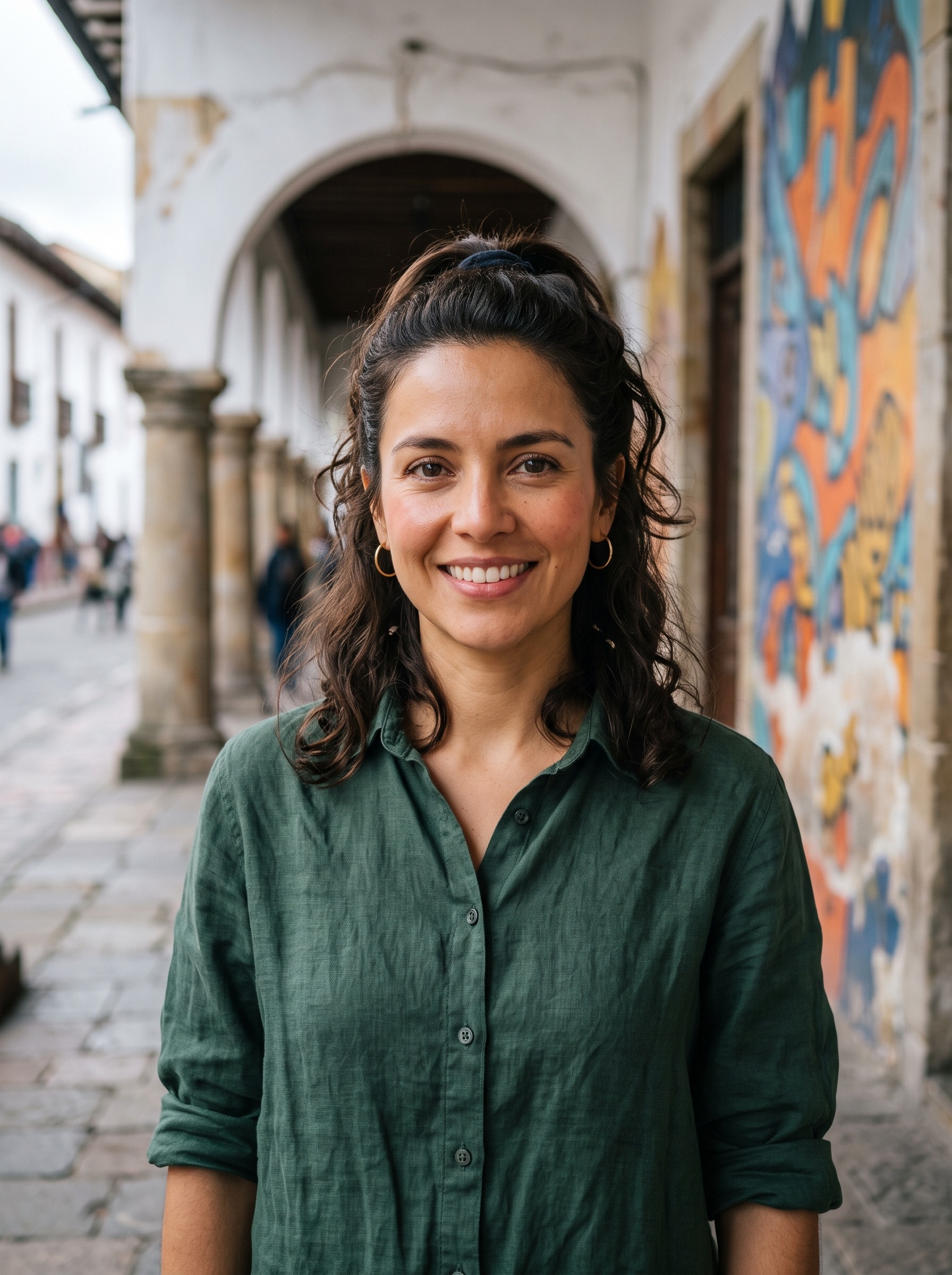

Parque de la 93 is only two blocks of grass, ficus trees and fountains, but at dusk it behaves like a much larger idea: the place where Bogotá’s polished north comes to eat, drink and be seen. The tables spill out before the light goes, the park benches fill with office workers, and the district’s glassy calm takes on that particular urban sheen that says money, altitude and a reservation.
What Chicó & Parque 93 is known for
Chicó is Bogotá at its most composed. The colonial centre is eight kilometres south, but that feels like a longer journey than the map suggests; down there is the old city’s grit and theatrical density, while up here the streets are orderly, the towers are new, and the mood is engineered for comfort. The spine of the district is Parque de la 93, a 13,400-square-metre pocket park between Calle 93A and 93B, planted with 141 trees and wrapped on all sides by restaurants, cafés and bars. It is small enough to cross in a couple of minutes, which is exactly why it works: a neighbourhood living room for lunch, a family square on weekends, and a dining room after dark.

That park gives the area its shorthand. Bogotanos say they’re going “a la 93” when they mean dinner and drinks around the square, and the phrase carries a whole social code: refined, safe, a little expensive, and not especially interested in chaos. The soundscape is low — traffic on Carrera 11, the fountains, the occasional busker, sometimes a cumbia leaking out of a restaurant door. This is not the neighbourhood for a wild night. It is the neighbourhood for a good one.
The broader district is El Chicó, named for the Museo del Chicó, officially the Museo Mercedes Sierra de Pérez, on Carrera 7. The house is an 18th-century Sabana hacienda, whitewashed and dignified, with a chapel, ten period rooms and centuries-old trees, donated to the city in the 1950s and open as a museum since 1976. It gives the quarter its historical root system, a reminder that this polished business district once had fields and air. Now it has embassies behind gates, private universities, design showrooms and a great deal of polished glass. The city’s smart north has a way of making itself look effortless.
A few blocks down the hill, Parque El Virrey runs through an old creek corridor, and that matters because it gives the district a second rhythm. In the morning the runners arrive before the cafés do, circling the park’s three connected loops while the light is still flat and clean. Chicó is green in a controlled way: lawns, trees, a linear park, then the red-brick apartment blocks and the embassies and the quiet residential streets in between. It is a district for people who like their urban life to feel managed.
Where to eat & drink
Dining is the reason to be here, and the park ring is so dense with restaurants that the whole block reads like a menu. Start with the old guard: Pesquera Jaramillo on Calle 93A has been feeding Bogotá since 1934, and it wears that history without fuss. This is the room for ceviches, whole fried fish and Colombian-Caribbean seafood, the kind of place where generations have come for a reliable park table and no one is trying to reinvent the wheel. There is a great deal to be said for a restaurant that knows exactly what it is.

La Fabbrica, at Carrera 11A #93B-12, is the neighbourhood Italian, with reclaimed industrial furniture and the sort of pasta-and-pizza kitchen that understands the value of proper comfort. The ragùs are slow-cooked, the ossobuco is the sort of dish that asks for time, and the margherita is properly blistered. It’s the kind of place that makes a park ring feel less like a commercial strip and more like a small, self-sustaining city.
For a more formal turn, Pajares Salinas near Carrera 10 and Calle 96 is the white-tablecloth Spanish classic, opened by a Spanish chef in the 1950s and now listed on the World’s 50 Best Discovery. There is a kind of old-world confidence to it — house-smoked trout, meatballs in sherry sauce, Rioja-style prawns — and a room that knows exactly how to hold itself. Chicó has plenty of polished dining, but this is one of the addresses that reminds you how long Bogotá has been taking its eating seriously.
Then there is the louder, looser side of the park. El Mono Bandido La 93, at Carrera 12 #93-08, is a craft-beer-and-burger bar with a sand floor, which is either a gimmick or a very good idea depending on the hour and the shoes you brought. The communal tables fill after work, and the place has that useful after-office energy where a beer becomes two without anyone noticing. It is casual in the best sense: not trying too hard, and therefore not exhausting.

If you want dinner to slide into music, Gaira Café Cumbia House on Carrera 13 at Calle 96 is the one to know. It belongs to Colombian star Carlos Vives and his brother, and the room serves sancocho, arepas and grilled meats before the live cumbia and vallenato begin Thursday through Saturday, when the tables clear and the floor fills. It is one of the few places in this district where the night visibly loosens its tie.
For a simpler daytime pause, Juan Valdez Café at Carrera 11A #93A-10 has pavement seating facing the park and does what it should: 100% Colombian arabica, a useful perch, and a view of the district passing by with a coffee in hand. Sometimes that is enough.
Going out
Nightlife here is lounge-and-rooftop rather than club-and-sweat, which is a very Chicó way to behave. The big dancefloors are a short hop away in Zona T; this district prefers the evening to begin with a cocktail and end, if all goes to plan, with another one. The signature move is a rooftop.
At the eleventh floor of the Salvio Parque 93 aparthotel, Vista Corona stretches indoor-outdoor with retractable roofs, plenty of greenery, skyline views and a Mexican-leaning menu of drinks and small plates. It runs from sunny lunches to weekend DJs, which tells you everything about the neighbourhood’s sense of occasion: daylight, then music, then another round. The setting is spacious rather than dramatic, but the view over the north of the city does the heavy lifting.

A few blocks over, Apache crowns the Click Clack Hotel with a wrap-around-glass lounge and 360-degree views over the north of the city. The cocktail list is long, the room is sleek, and the whole thing feels designed for people who like their sunset with architecture. If Bogotá has a habit of making rooftops feel like rewards, Apache is one of the cleaner examples of the genre.
Back on the ground, El Mono Bandido doubles as a drinking spot once the burgers are cleared, and Gaira Café Cumbia House shifts from restaurant to live-music venue as the night deepens. Thursday through Saturday, the cumbia and vallenato bands bring the room to its feet, which is about as lively as Chicó usually wants to get. The district’s social contract is simple: dinner, cocktails, maybe a band, and then a sensible ride home. If you want to keep going, Zona T is only ten minutes away by taxi.
Things to do / what to see
The parks are the main attractions, and they shape the days here in different ways. Parque de la 93 is the daytime draw: a shady, fountain-dotted square good for a coffee on a bench, a browse of whatever art or market the city has installed, and a slow look at the office-lunch crowd. By evening it becomes the district’s dining room, which is a neat trick for a park that is not especially large but knows exactly how to hold a neighbourhood together.

A few blocks south, Parque El Virrey is the local running track, a narrow linear park that follows the creek from roughly Calle 87 to 89 and stretches east-west across the north. It has three connecting circuits, about 1.4 km for a full loop, plus outdoor gym machines, bike paths and playgrounds. Locals run it at dawn and dusk; it is cleanest and calmest by day, and the eastern end near the police post is the safest stretch after dark. If Parque de la 93 is about seeing and being seen, El Virrey is about movement without ceremony.
Museo del Chicó, on Carrera 7 #93-01, is the district’s quiet hour. The 18th-century hacienda house preserves period furniture, a chapel and gardens full of old trees, along with objects its benefactress collected across four continents. It’s a lovely, low-key visit, and it gives the district its name in the most literal way: a fragment of the old countryside sitting patiently amid the towers.
{{ATTRACTIONS}}
Beyond these anchors, the pleasure of Chicó is unstructured. Sit on a terrace. Drift between the park cafés. Use the neighbourhood as a calm, green base and then taxi out to the sights further afield. Not every district needs to perform. Some just needs to work well.
Shopping & markets
Chicó and Parque 93 are more about eating than shopping, but the district is stitched into Bogotá’s smartest retail corridor, so the browsing comes naturally between meals. Around the park, design showrooms, bookshops, jewellers, opticians and boutiques sit alongside the cafés. It is the sort of place where a slow walk can turn into an hour without anyone feeling trapped by it.
For a more concentrated sweep, head a few blocks to Carrera 15 and the wider Chicó grid, where independent boutiques and homeware stores keep the tone upscale but not frantic. If you want the full shopping expedition, the high-end malls around Zona T — Centro Comercial Andino, El Retiro and Atlantis Plaza on Calle 82 — pack international and Colombian designer labels, department stores and a cinema into a few walkable blocks. That is where you go for a serious afternoon of retail therapy, though “therapy” here comes at the usual north-Bogotá price.
Back around Parque de la 93, the smarter move is smaller-scale: pick up whole beans from Juan Valdez or the independents, browse the design and book shops that gave the area its arts-culture-trends reputation, and treat the city’s weekend art or craft installations in the park as a rotating market. This is not a bargain-hunting district. It is a district for gifts, coffee and the occasional thing you did not know you needed until you saw it on a shelf.
Where to stay in Chicó & Parque 93
This is one of Bogotá’s best-judged bases for a first trip or a business stay: safe, green, well connected and packed with hotels, if not cheap. The tightest cluster sits right on Parque de la 93, where you can walk out of the lobby into the restaurant ring. Salvio Parque 93, the Curio Collection by Hilton, faces the park and gives you Vista Corona on the roof; DoubleTree by Hilton Parque 93, Novotel Bogotá Parque 93 and Holiday Inn Express Bogotá – Parque La 93 are all within a block or two. The convenience is obvious, and so is the price.
{{HOTELS}}
For a quieter night, the residential streets deeper into Chicó — back from Carrera 11 and 15, toward Museo del Chicó — trade a little walking distance for calm and place you nearer Parque El Virrey for morning runs. If nightlife is the priority, edge west toward Zona T and you’ll shave the taxi ride to the clubs while keeping the same safe, upmarket feel. Wherever you land, expect modern buildings, reliable service and easy ride-hailing. The trade-off is price and a certain corporate polish rather than character, which is not the same thing as a flaw.
Getting around
The district is flat, walkable and grid-clear, so you can cover Parque de la 93, the surrounding restaurants and Parque El Virrey on foot in an easy afternoon. For getting in and out, the fastest public option is TransMilenio on Autopista Norte, with the nearest stations at Virrey and Calle 100, both a short walk or cheap ride from the park. Regular SITP buses run along Carreras 7 and 11. In practice, though, most visitors use taxis and ride-hailing apps such as Uber, Didi and Cabify, which are plentiful and the low-stress way to move at night.
From Parque 93, the historic centre and La Candelaria are roughly 20 to 35 minutes south by taxi depending on Bogotá traffic; Usaquén’s Sunday market is 10 to 15 minutes north; and Zona T’s shopping and nightlife are five to ten minutes west. El Dorado International Airport sits to the west of the city, typically 30 to 50 minutes by taxi from Chicó, and longer at peak hour. One altitude note for arrivals: at 2,640 metres, take the first day gently, go easy on alcohol at those tempting rooftop bars, and drink plenty of water while you acclimatise.
Chicó is not the Bogotá of murals, cobbles and dramatic history. That city lives elsewhere, and it lives loudly. This one is quieter, greener, and rather more concerned with the placement of a terrace than the romance of a ruin. But for travellers who want a safe base, good food, decent coffee and a neighbourhood that understands the value of a calm evening, Parque 93 and its surrounding streets make a persuasive case for themselves. They may only be a few blocks of park, but they carry a great deal of the city’s polished north on their shoulders.
FAQs
Is Chicó / Parque 93 a good area to stay in Bogotá?
Yes. It’s one of the best bases for first-timers and business travellers: safe, green, walkable, well supplied with hotels around Parque de la 93, and close to the north’s restaurants and rooftop bars. It’s also well connected by TransMilenio and ride-hailing. The trade-offs are price and a modern, corporate feel rather than colonial character.
What is there to do around Parque de la 93 besides eating?
Quite a bit, though dining is the headline. Parque de la 93 hosts open-air events and art installations, Parque El Virrey is the local running and cycling strip with about 1.4 km of circuits and outdoor gyms, and Museo del Chicó offers a quiet hour in an 18th-century hacienda house with period rooms, a chapel and gardens. Rooftop bars and the Zona T malls are also close by.
Is Parque 93 safe at night?
It’s one of Bogotá’s safer districts after dark, with a busy restaurant ring and good lighting, but standard city caution still applies. Use ride-hailing or a hotel-called taxi late at night, keep valuables out of sight, and avoid the quieter stretches of Parque El Virrey after dark. The eastern end near the police post is the safest stretch.
How do I get to Chicó & Parque 93 from the airport or the centre?
El Dorado International Airport is typically 30 to 50 minutes away by taxi, depending on traffic. From the centre or La Candelaria, expect about 20 to 35 minutes by taxi. The nearest TransMilenio stations are Virrey and Calle 100 on Autopista Norte, with SITP buses along Carreras 7 and 11.