Bogota guide
La Candelaria, Bogota: where the city began and still tells on itself
From the Chorro de Quevedo to Plaza de Bolívar, La Candelaria folds Bogota’s founding myth, gold, murals and a stubbornly walkable colonial core into a few steep, cobbled blocks.
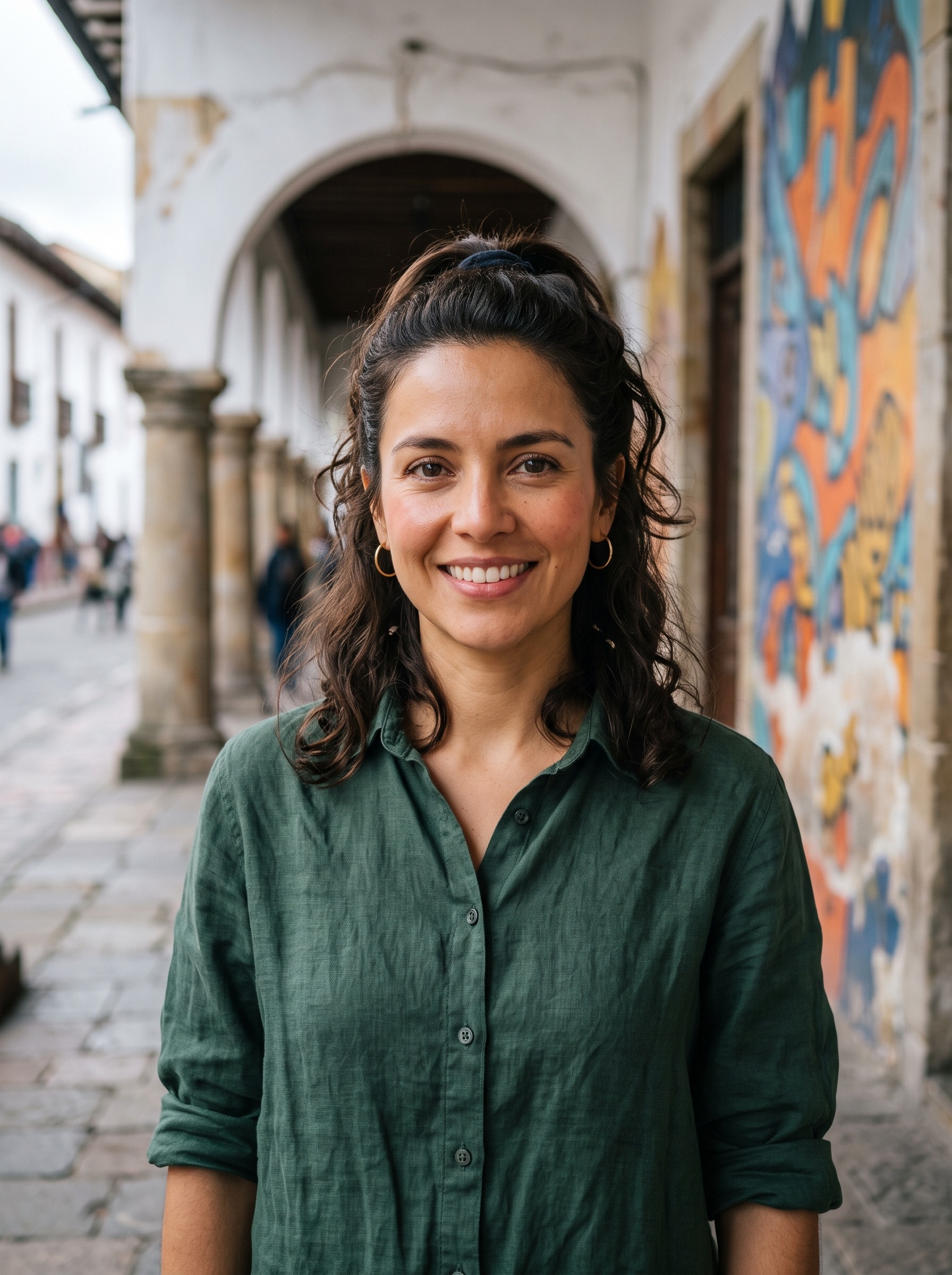

Bogota begins with a spring and a story, and in La Candelaria the two still sit almost cheek by jowl. At the Chorro de Quevedo, where the hillside tightens into a triangular square and the cobbles seem to tilt you toward the past, the city likes to remember 6 August 1538, when Gonzalo Jiménez de Quesada laid out the first streets. The neighbourhood has spent nearly five centuries being rearranged, argued over, painted on and lived in, yet it still feels like the original sentence of the capital: steep, colonial, a little theatrical, and impossible to mistake for anywhere else.
What La Candelaria is known for
La Candelaria is the oldest and most tightly wound corner of a nine-million-person city, and it wears that fact without much polish. The streets follow the 16th-century Spanish grid, but the grid is pinched by altitude and history: narrow lanes, cobbles, one- and two-storey houses in mustard, terracotta, blue and green, and heavy wooden doors that open onto tiled courtyards. By day, students spill out from the universities, museum-goers drift between the big names, and the air can feel almost crisp enough to sharpen your thoughts. By night, the whole thing contracts. The plazas empty, the light gets thin, and the barrio becomes a place that asks for taxis rather than bravado.
At the top of the neighbourhood, the Chorro de Quevedo is the place Bogota keeps returning to when it wants to explain itself. It is a small triangular square, modest enough to miss if you blink, but it carries the city’s founding myth and the name of the Augustinian friar who later put a public fountain here in the 1800s. Downhill, Plaza de Bolívar broadens out with a different kind of authority: the neoclassical cathedral, the Capitolio Nacional, the Palacio de Justicia, the Alcaldía in the Palacio Liévano, and Bolívar himself in the middle, surrounded by pigeons as if the republic were a matter of municipal housekeeping.

The neighbourhood’s other defining language is art. La Candelaria holds two of Colombia’s great museums, and then spills the rest of its culture straight onto the walls. The Museo del Oro is the obvious thunderbolt: tens of thousands of pre-Hispanic gold objects, including the famous Muisca raft, a small piece of metalwork that somehow carries the weight of an entire civilisation. The Museo Botero is free and, in the Botero way, disarmingly full of rounded bodies, swollen fruit and paintings by Picasso, Monet and Dalí that he donated to the country. Between and around them, the murals do what murals do best here: argue, remember, satirise, and insist. Since the 2010s, the city has largely tolerated and even commissioned this open-air gallery, so the walls are threaded with political and indigenous stories rather than just decoration.
Where to eat & drink
The first meal to understand in La Candelaria is not subtle, and it should not be. La Puerta Falsa on Calle 11 No. 6-50 has been serving since 1816 and is generally called Bogota’s oldest restaurant, which is the sort of claim that would be unbearable if the food were not so reassuringly old-school. The room is tiny, the queue is part of the ritual, and the menu is exactly what a cold, high-altitude morning wants: ajiaco santafereño, the capital’s chicken-and-three-potato soup with capers and cream; a banana-leaf-wrapped tamal; and a chocolate completo, where hot chocolate comes with a wedge of soft cheese you drop straight into the cup, plus buttered bread and a biscuit. It is cash-only, cramped, and worth the squeeze.

A few doors up, El Mejor Ajiaco del Mundo (Antigua Santa Fe) does the same comforting work when La Puerta Falsa has decided to test your patience. It is the reliable backup, the practical friend, and nobody should sneer at a good bowl of soup just because it arrived without a queue. There is also a cazuela de frijoles here, which is exactly the kind of sturdy dish that makes sense at this altitude.
For a different register entirely, Prudencia on Carrera 2 No. 11-34 is La Candelaria’s fine-dining room and one of the few places in the barrio that behaves like a destination rather than a convenience. It runs a monthly-changing seven-course lunch menu, mostly cooked in a wood-fired oven inside a restored colonial house with a glass-roofed courtyard. It is reservation-only, books up quickly, and opens the neighbourhood to a more deliberate kind of pleasure: not a quick stop between museums, but a meal that asks you to sit still and let the old walls do some of the talking.

If you want to graze rather than linger, Plaza de Mercado La Concordia on Calle 12c No. 1-40 is the place to wander with an appetite and no fixed plan. The restored market hall serves regional Colombian dishes — ajiaco, lechona, bandeja paisa and frijolada — and it feels like a practical answer to all the museum walking. For coffee, La Candelaria is serious without making a fuss about it. Azahar Coffee Candelaria roasts beans from the Quindío region and does proper flat whites and breakfast in a colonial-house setting. Café de la Peña on Carrera 3 No. 9-66 is a long-running French-style patisserie with a flowering back patio, which is exactly the sort of place that can save a wet afternoon. And Varietale on Calle 12 No. 1-20, with its skylit patio and coffee-tasting flights, is where the laptop crowd settles in and pretends not to notice the world passing outside.
Going out
Nightlife in La Candelaria is not a performance of excess. It is bohemian, low-key, and happiest when it stays close to home. The centre of gravity is the Chorro de Quevedo & Callejón del Embudo, where muralled walls, student bars and juice-and-arepa stalls compress into a few cobbled turns. This is the part of the barrio that feels most like an evening conversation rather than a night out: buskers at the square, small groups leaning into warm drinks, and the sense that everyone is looking for one more reason not to go too far.

If you want to do it properly, start with the Carrera 2 chicherías between Calle 11 and Calle 12. This is chicha country, and chicha is the point: the indigenous fermented-maize drink that predates the Spanish, usually served warm and cloudy in a totuma gourd or plastic cup. It is cheap, sweet-sour, and a little defiant, which is probably why it suits the barrio so well. A couple of chichas and some fried snacks around the Chorro is the classic move, the sort of evening that belongs to a place with a memory.
For live music, Quiebracanto is the long-standing salsa spot where the floor actually moves. That matters. Plenty of places claim music; fewer places let local bands pull the room into the rhythm. If you want something gentler before heading north, Divino Café Especial near the chichería strip makes sense as an early-evening stop, the kind of place that keeps you in the neighbourhood without pretending it will turn into a club.
And that is the other truth about La Candelaria after dark: it is not where Bogota goes late. The city’s bigger, later nightlife — cocktail bars, clubs, crossover reggaeton — lives in Chapinero and the Zona T, and most sensible itineraries end there after dinner or a quick drink here. In La Candelaria itself, the evening should be brief, central and well-lit, with a taxi waiting at the end of it.
Things to do / what to see
The single best way to read La Candelaria is on foot with a guide who can explain what the walls are saying. The Bogotá Graffiti Tour is free and tip-based, runs daily for about two and a half hours, and meets at the Parque de los Periodistas at 10am and 2pm. It is one of those rare city walks that earns its reputation by being useful: the political and indigenous stories behind the murals are decoded as you go, and the neighbourhood stops being a pretty backdrop and starts behaving like a public argument.

Then there are the museums, which in La Candelaria are not an optional add-on but the main event. The Museo del Oro is unmissable, partly because it is world-class and partly because it understands drama. Thousands of Muisca and other pre-Hispanic gold pieces fill the galleries, including the Muisca raft, and the museum is closed on Mondays with free entry on Sundays. Two blocks away, the Museo Botero is free every day it opens and pairs Botero’s rotund paintings and sculptures with donated works by Picasso, Monet and Dalí. It is an easy place to become fond of, even if you arrive sceptical of giant-faced people and swollen fruit.
For the political spine of the city, step into the Casa del Florero (Museo de la Independencia) on the corner of Plaza de Bolívar, where the 1810 flower-vase incident helped ignite the independence movement. It is one of those rooms where a small object gets to carry a very large story. Nearby, the Teatro Colón is the gilded 1892 neoclassical national theatre, and it is worth booking ahead for a performance or a guided visit. Even if you are not a theatre person, the building has the kind of hush that makes you lower your voice without being asked.
If you have one more half-day in you, go up Monserrate. The 3,152-metre peak sits above the barrio with a white pilgrimage church and a view that makes the whole city look temporarily comprehensible. From La Candelaria it is a short taxi or a 20–25 minute uphill walk to the base station, then a funicular or cable car to the top. Go on a clear morning before the cloud rolls in, because Bogota can hide its own skyline with impressive efficiency.
{{ATTRACTIONS}}
Shopping
Shopping in La Candelaria is not about labels or polished display windows. It is craft, curio and a little bit of improvisation. The Callejón del Embudo craft stalls and the lanes around the Chorro de Quevedo sell the sort of souvenirs that feel connected to place rather than airport retail: artist T-shirts, hats, mochila bags and Andean textiles. If you want a genuinely local object to carry home, this is where you look for it.
The most recognisable of those objects are the Wayúu mochilas, the hand-crocheted shoulder bags from La Guajira, and the ruanas, the woollen ponchos of the highlands. They suit this barrio’s climate and temperament better than any glossy tote ever could. For a different kind of shopping, Bogota’s historic emerald trade runs through the Emerald Trade Center on Avenida Jiménez. This is not a place for impulsive decisions; buy only from reputable, certified dealers, and do not let the romance of the stone outrun common sense.
For food and daily provisions, Plaza de Mercado La Concordia is useful as well as pleasant, with Colombian coffee, chocolate and produce alongside the stalls. It is the kind of market where you can buy lunch, a bag of beans and a few things you did not know you needed until they were in your hand.
Where to stay in La Candelaria
La Candelaria is the backpacker and boutique-colonial base of Bogota, not its luxury district, and that is part of the charm. Accommodation here skews to hostels, guesthouses and small hotels carved out of restored old houses, often with courtyards that make you forgive the stairs. It is also among the cheapest central bases in the city, which matters if you plan to spend your money on museums, meals and taxis north for dinner.
The trick is to stay between Plaza de Bolívar and the Chorro de Quevedo, ideally near Calle 11, Calle 12 or Carrera 3, so you are on the main pedestrian routes and not wandering dark side lanes back to bed. That puts the Gold Museum, the Botero and the colonial core within easy reach, and it gives you the most atmospheric morning in the city: shutters opening, coffee brewing, church bells, and the first students cutting across the cobbles.
The trade-offs are real. The neighbourhood is quieter than many visitors expect, some rooms are noisy from student bars and street life, and the whole place empties out after dark. If you want a livelier, safer-feeling evening scene, Chapinero or the Zona G/Chicó are better bases, with La Candelaria as the day trip you never quite finish.
{{HOTELS}}
Getting around
La Candelaria is small enough to walk across in 15 to 20 minutes, but the hills and cobbles will remind you that Bogota sits at 2,600 metres and does not care if you arrived yesterday. Pace yourself. The historic core rewards slow feet, and the best detail is usually found when you stop pretending to be efficient.
The TransMilenio bus rapid-transit runs along the northwestern edge on the Eje Ambiental, with the Museo del Oro and Las Aguas stations a few minutes’ walk from the sights. A single ride is a flat fare of roughly COP 2,900, and you will need a rechargeable Tullave card. For anything else, use Uber, DiDi or Cabify, or ask your hotel to call a taxi. That advice applies to the whole city, but it matters especially here after dark, when even a few blocks can feel longer than they look.
From El Dorado International Airport, the barrio is about 13km west and usually 30 to 60 minutes away by taxi or rideshare, depending on traffic. Use the app fare or the official airport taxi rank rather than negotiating on the kerb; Bogota traffic is punishment enough without a bargaining session.
Monserrate’s base station is a short taxi or a 20–25 minute walk uphill via Calle 21 or Calle 19, which is exactly the sort of climb that sounds manageable until you remember the altitude. Still, there are worse ways to earn a view.
FAQs
Is La Candelaria a good area to stay in Bogota?
Yes, if you're here for history, museums and colonial atmosphere and want the cheapest central base. You'll wake up steps from the Gold Museum, the Botero and Plaza de Bolívar, and the neighbourhood has the backpacker-and-boutique-colonial feel that first-timers usually come looking for. The trade-offs are that it’s quiet and can feel unsafe after dark, some rooms are noisy from student bars, and you’ll taxi north for the best nightlife and fine dining.
Is La Candelaria safe?
By day, yes, with normal city caution. The main risks are pickpocketing and phone-snatching around the plazas, museum queues and crowded TransMilenio stations, so keep valuables out of sight. After dark it changes character fast: the lanes empty, the lighting is poor, and it’s sensible to take a taxi or rideshare even for a few blocks.
What are the must-do things in La Candelaria?
The essentials are the Museo del Oro, the free Museo Botero, Plaza de Bolívar with the cathedral and Capitolio, and a street-art walk — the daily Bogotá Graffiti Tour is the classic. Add the Chorro de Quevedo, a bowl of ajiaco and a chocolate completo at La Puerta Falsa, and, if the weather behaves, Monserrate for the view.
What should I eat first in La Candelaria?
Start with ajiaco santafereño at La Puerta Falsa or El Mejor Ajiaco del Mundo, then have a chocolate completo if you want the full Bogota ritual. If you have more time, try the stalls at Plaza de Mercado La Concordia or book Prudencia for something much more polished.