Bogota guide
Zona G, Bogotá: Where the City Goes to Dinner
In Chapinero’s quiet six-block grid, Bogotá’s most serious meals happen behind old brick facades, under glass atriums and beside wine lists that stretch the night out slowly.
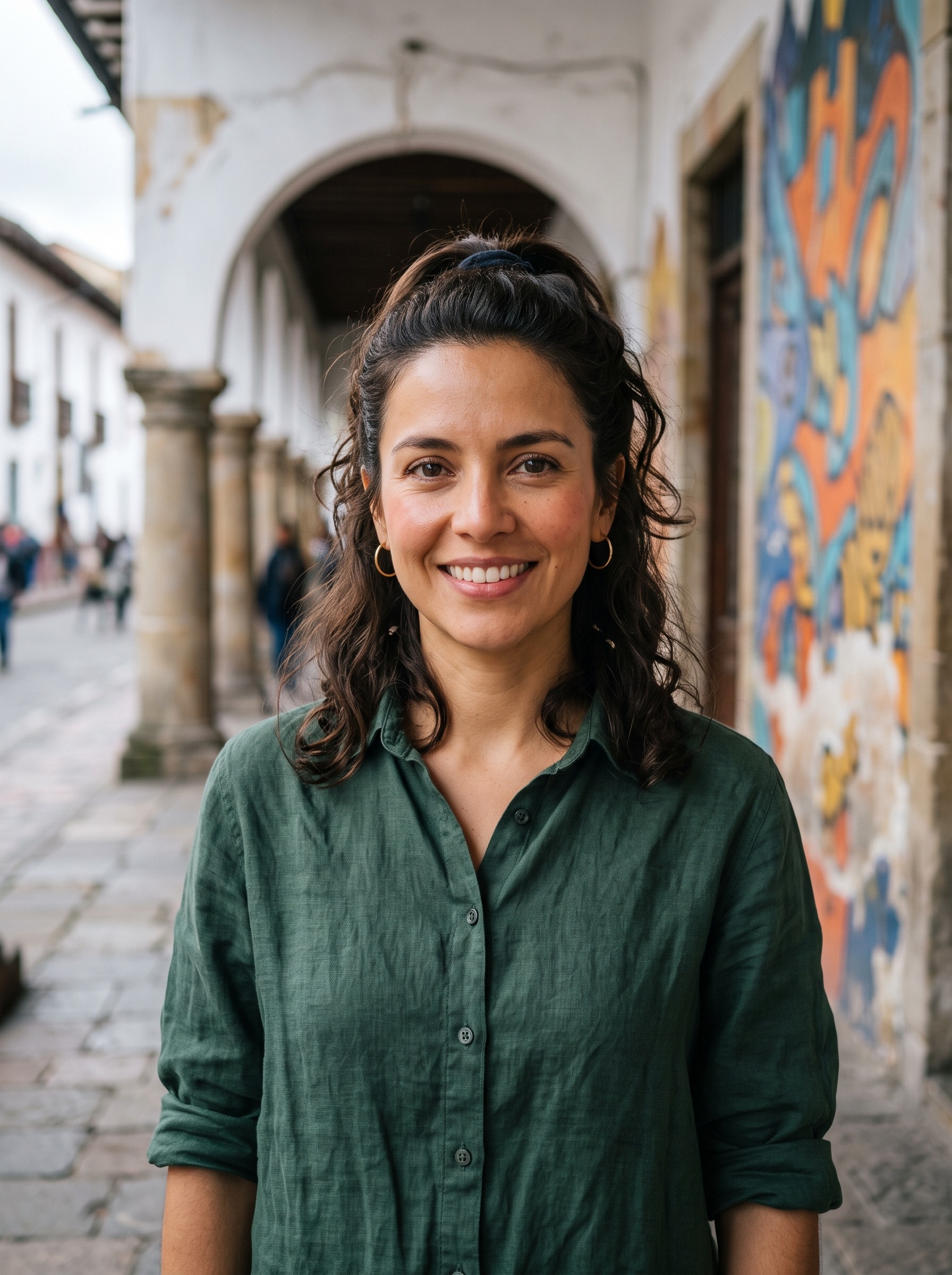

Zona G announces itself softly: a brick mansion on Calle 65, a valet in a dark coat, the low glow from a dining room where someone has booked weeks ahead for a table they will remember longer than the taxi ride home. This is Chapinero’s gourmet district, a six-block patch roughly between Calles 65 and 71 and Carreras 4 and 7, where the city’s best-known kitchens have taken over old houses and made a case for dinner as a civic event. Bogotá can be loud, unruly, gloriously overfull; Zona G prefers the opposite. It is calm, polished, and almost suspiciously quiet until the sun drops behind the eastern hills and the whole neighbourhood seems to inhale, put on a jacket, and open its doors.
What Zona G is known for
The “G” stands for gourmet, and the joke is not really a joke. This is the part of Bogotá where people come to eat with intent, and where the city’s dining reputation has been built one tasting menu, one courtyard, one converted mansion at a time. The area is small enough to cross on foot in fifteen minutes, but dense enough to hold some of Colombia’s most ambitious restaurants in a remarkably tight radius. El Chato, named Latin America’s best restaurant in 2025, sits here. So does Leo, Leonor Espinosa’s ethnobotanical temple to Colombian biomes. El Cielo, Harry Sasson, Rausch Restaurante — all of them have found a home in or around these blocks, which is why Zona G has become shorthand for a certain kind of Bogotá evening: booked, dressed, and hungry.

What gives the district its particular mood is the architecture. Zona G is not a restaurant strip in the obvious sense; it is a neighbourhood of old English-style mansions and modern glass towers, with the kitchens tucked into the old bones. Some rooms are warren-like and intimate, some have courtyards roofed in steel and glass, and some climb vertically with gardens on interior walls. The result is less “food corridor” than a row of carefully repurposed houses, each one carrying the memory of domestic life while serving something far more elaborate than family supper. There is no monument here, no museum queue, no market clamour. The table is the attraction, and the district has the confidence not to pretend otherwise.
The crowd reflects that confidence. By day, the streets are nearly sleepy, with little more than office workers, delivery bikes and the occasional coffee stop. By night, the pavements fill with Bogotá’s professional and creative class, plus the food travellers who came specifically for this postcode and are trying not to look too delighted about it. The atmosphere is polished but never stiff. You hear Spanish over wine glasses, the hiss of live fire from an open kitchen, the soft thud of a taxi door. At 2,600 metres, the air cools quickly once the light goes, and that chill seems to sharpen the appetite. Zona G understands this. Its rooms are low-lit, warm, and built for lingering.
Where to eat & drink
If you only have one serious dinner in Bogotá, make it here. El Chato, at Calle 65 #4-76, is the obvious first reservation: Álvaro Clavijo’s produce-led contemporary Colombian bistro and tasting room, now carrying the weight of being named Latin America’s best restaurant in 2025. The downstairs à la carte room is the gentler way in, with shareable plates that let you understand the kitchen without surrendering the whole evening to ceremony. Upstairs, the tasting room leans into the full argument, and the wall of spices is a small but telling reminder that this is a kitchen thinking carefully about flavour, not just plating. The tasting menu runs around US$180, which is not a casual detail in a city where most people have to plan for a meal like this the way they plan for a flight.

A couple of blocks away, Leo at Calle 65bis #4-23 is the restaurant that still feels most like a thesis in motion. Leonor Espinosa’s tasting menu is built from the ethnobotany of Colombia’s biomes, which is a grand phrase until the dishes arrive and make the point with Amazonian and Pacific ingredients most diners have never met before. Her daughter, Laura Hernández-Espinosa, pairs the menu, and the whole operation has the calm authority of a house that knows exactly what it is doing. Leo is less about novelty than about precision and origin; it asks you to trust that the country can be read through flavour, and then it proceeds to prove it course by course.
For theatre, El Cielo at Calle 70 #4-47 brings Juan Manuel Barrientos’s multi-sensory molecular tasting menu to the neighbourhood. It is the Bogotá home of a group whose Miami and Washington branches hold Michelin stars, and the local menu runs around COP 189,000 before pairings. That matters because El Cielo is not just dinner; it is a deliberate performance of dinner, one that leans into sensory tricks, texture and surprise. Some diners love that. Some come for the story and leave having been converted. Either way, it gives Zona G a different register from the more quietly exacting rooms nearby.
Harry Sasson, at Carrera 9 #75-70, is the district’s grand all-rounder, even though it technically sits a little beyond the tightest gourmet cluster. Set in a 1914 Tudor-style mansion under a soaring glass atrium, it offers live-fire grilling, robata, steak, seafood and Latin-Asian-European crossovers, which is a lot of territory for one room to cover and, in this case, a lot of ground well held. This is the sort of restaurant that becomes a reliable answer to many questions: business dinner, celebratory dinner, long lunch that turns into a late afternoon, “we need somewhere excellent but not fussy.” The room has anchored the neighbourhood for years for a reason.

Rausch Restaurante, at Calle 69A #5-75, now occupies the former Criterion mansion after Criterion closed in 2024. The Rausch brothers’ fine-dining fusion room inherits both the address and the expectation that this should be a serious meal in a house with history. That old-mansion feeling matters here. You are not simply eating in a restaurant; you are moving through a building that has been adapted, carefully, for a different kind of domestic ritual.
Not every meal in Zona G has to be a formal production. SUNA Restaurante y Mercado, at Calle 72 #5-09, is where the district loosens its tie a little: organic, vegetarian-friendly breakfasts and lunches, plus an attached market. It is practical, bright and useful in a neighbourhood that can otherwise feel very much like a place built for dinner and little else. Bagatelle, at Calle 70A #4-99, plays the Parisian café with tartines, crepes, croque-madames and pastries. It is the sort of place that reminds you that a neighbourhood of tasting menus still needs somewhere to sit with coffee and something buttery before the serious reservations begin.
Going out
Zona G is not where Bogotá goes to dance itself silly, and that is part of its charm. Nights here run late, but they run low. The after-dinner ritual is usually a wine flight, a cocktail, a digestif, or one more glass in the restaurant lounge while the city’s louder instincts are left for elsewhere. The one bar that gives the area a distinct public life is Felix Bar, with its outdoor beer garden and cigar shop, craft beer and signature cocktails. It has enough personality to be a destination without trying to become a scene, which feels right for this neighbourhood. You go there before dinner, or after, or when the table you wanted is still not ready and you need a place to wait with purpose.
The rest of the nightlife in Zona G is mostly contained within the restaurants themselves: the bar at Harry Sasson, the wine list at El Chato, the final drink you did not plan to have at Leo. That is the pattern here. If you want louder rooms, later hours and actual dancing, you head north to Zona T and Zona Rosa, where the pedestrian strip around El Retiro and Andino takes over from Zona G’s more restrained pleasures. Think of Zona G as the place that hands off the night once the meal is done. It is very good at knowing when to stop.
Things to do
The smartest thing to do in Zona G is to eat with a plan and walk between courses. This is not a neighbourhood that rewards frantic sightseeing. Instead, it asks for a slower, more local rhythm: coffee in the morning, a wander past the mansions, lunch somewhere lighter, and a reservation worth dressing for at night. The architecture gives the walking some shape. Glass office towers stand beside surviving brick houses, and the contrast is the whole point. It is a district that wears its layers openly, with the eastern Cerros Orientales rising behind Chapinero as a green backdrop that never quite lets you forget where you are.
A guided Zona G food tour is a sensible first-night orientation if you want someone else to explain the logic of the district while you taste your way through it. The format is usually a bakery, a specialty coffee stop and a fine-dining sampling, which is a tidy way to understand that Zona G is less a place of attractions than a place of appetites. It is also a useful antidote to the common tourist habit of assuming every neighbourhood needs a monument. Here, the meal is the monument.

{{ATTRACTIONS}}
Because the district is compact and calm, it also works as a low-stress base for drifting into the rest of Chapinero or up toward Zona T. But the deeper truth is that Zona G is happiest when you leave enough empty space between one booking and the next. Let the neighbourhood do its slow evening turn. Watch the lights come on in the dining rooms. Notice how quickly the air changes once the sun is gone. Then go and sit down again.
Shopping & markets
Zona G is not a shopping district, and it does not pretend to be one. That restraint is part of why it feels so composed. The retail here is mostly edible and specialist: the market attached to SUNA on Calle 72, with its organic and natural produce; Masa bakery on Calle 70, where New York-style breads and pastries can be carried away in a paper bag; and specialty coffee shops such as Libertario Coffee Roasters, where the beans are sourced almost entirely from Zipacón, Cundinamarca. If you want a souvenir that actually says something about the neighbourhood, buy coffee. It is the most Zona G thing you can carry home without needing a reservation.
For actual shopping — fashion, design, malls — locals go north to Zona T and Zona Rosa, to El Retiro and Andino. Zona G deliberately leaves that business to its neighbour. There is something admirably unfussy about that division. One district feeds you; the other sells you things to wear while you digest.
Where to stay in Zona G
Zona G makes sense as a base if your trip is built around food, business, or the rare luxury of a quiet night in a central part of the city. You sleep with Bogotá’s best restaurants on your street, in a safe, leafy pocket of Chapinero that is close to the financial district and an easy walk from Zona T. The hotels here tend to be boutique or business-minded, often in converted houses or modern towers, and the price level matches the neighbourhood’s reputation. The core blocks between Calles 65 and 71 put you closest to El Chato, Leo, El Cielo and Harry Sasson; the northern edge toward Calle 72 edges into Rosales and gets you nearer to shopping and later bars.
The appeal is not complicated. You are staying somewhere calm, well-served and central-north, with dinner options that would be destinations anywhere else in the city. That makes Zona G especially good for couples, solo business travellers and anyone who prefers a proper sleep to a stumble home from a club. The trade-off is obvious enough: this is not hostel territory, not a backpacker base, and not the place for families hoping for all-day bustle. It is expensive, but the money goes toward location, quiet and access to some of the city’s most serious tables.
{{HOTELS}}
Getting around
Zona G is compact enough that walking is the default and, really, the only way to understand it. The restaurants, cafés and bars sit within a few blocks of one another around Calles 65 to 71, so moving on foot is not a hardship but the point. The neighbourhood is flat, calm and easy to read, and you can cross it end to end in about fifteen minutes. If you want Zona T or Zona Rosa, it is a walkable fifteen to twenty minutes uphill, or a very short taxi ride.
For getting in and out, use app-based taxis or ride-hailing, especially after dark. TransMilenio serves the wider Chapinero district via stations along Avenida Caracas, while Bogotá’s bike paths make cycling a realistic option for confident riders. On Sundays, the Ciclovía closes major avenues to cars, which is one of the city’s best habits and a reminder that Bogotá can be generous to people outside metal boxes when it chooses to be. From El Dorado International Airport, the trip takes roughly 30 to 50 minutes by taxi or ride-share depending on traffic, so build in a little patience at rush hour.
The practical truth about Zona G is that it rewards people who like a neighbourhood to be legible. You come for dinner, you stay for another drink, you walk home under the cold Bogotá air, and you notice that the district has been very quietly excellent the whole time. That is its trick. It does not need a headline sight. It has the table, and in this part of the city, that is enough.
FAQs
Is Zona G a good area to stay in Bogotá?
Yes, if you want an upscale, central-north base focused on dining, business or a calm boutique stay. You sleep with Bogotá’s best restaurants on your doorstep in a safe, leafy part of Chapinero, a short taxi from the financial district and an easy walk to Zona T’s shops and nightlife. The trade-offs are price — it is on the pricier end of the city — and quiet: there is no hostel or party scene here, so backpackers and night-owls may prefer Zona Rosa or La Candelaria.
What is Zona G known for?
Fine dining. The “G” is for gourmet, and the district holds the densest cluster of Colombia’s flagship restaurants — including El Chato, named Latin America’s best restaurant in 2025, Leonor Espinosa’s Leo, El Cielo’s molecular tasting menu, and Harry Sasson’s live-fire mansion. Many occupy century-old brick houses converted into kitchens. It is a place you come to eat rather than sightsee, with no big museums or monuments of its own.
Is Zona G safe at night?
It is among the safer central Bogotá neighbourhoods, and the blocks around the restaurants stay busy and well-lit into the evening. The sensible precautions are the usual ones for the city: use app-based taxis or ride-hailing rather than flagging cabs on the street after dark, don’t flash phones or valuables on the quieter residential blocks, and stick to where other people are. Walking between restaurants and to Zona T along the main streets is normal and fine.
What should I do first in Zona G?
Start with coffee or a bakery stop, then plan around one serious dinner. A guided Zona G food tour is a smart first-night orientation if you want help decoding the district’s bakery, coffee and tasting-menu culture before booking a marquee restaurant.