Bologna guide
Quadrilatero, Bologna: where the city eats, shops and spills into the street
Behind Piazza Maggiore, Bologna’s Roman grid still trades in mortadella, tortellini and Lambrusco, then turns into the city’s most convivial open-air bar by dusk.
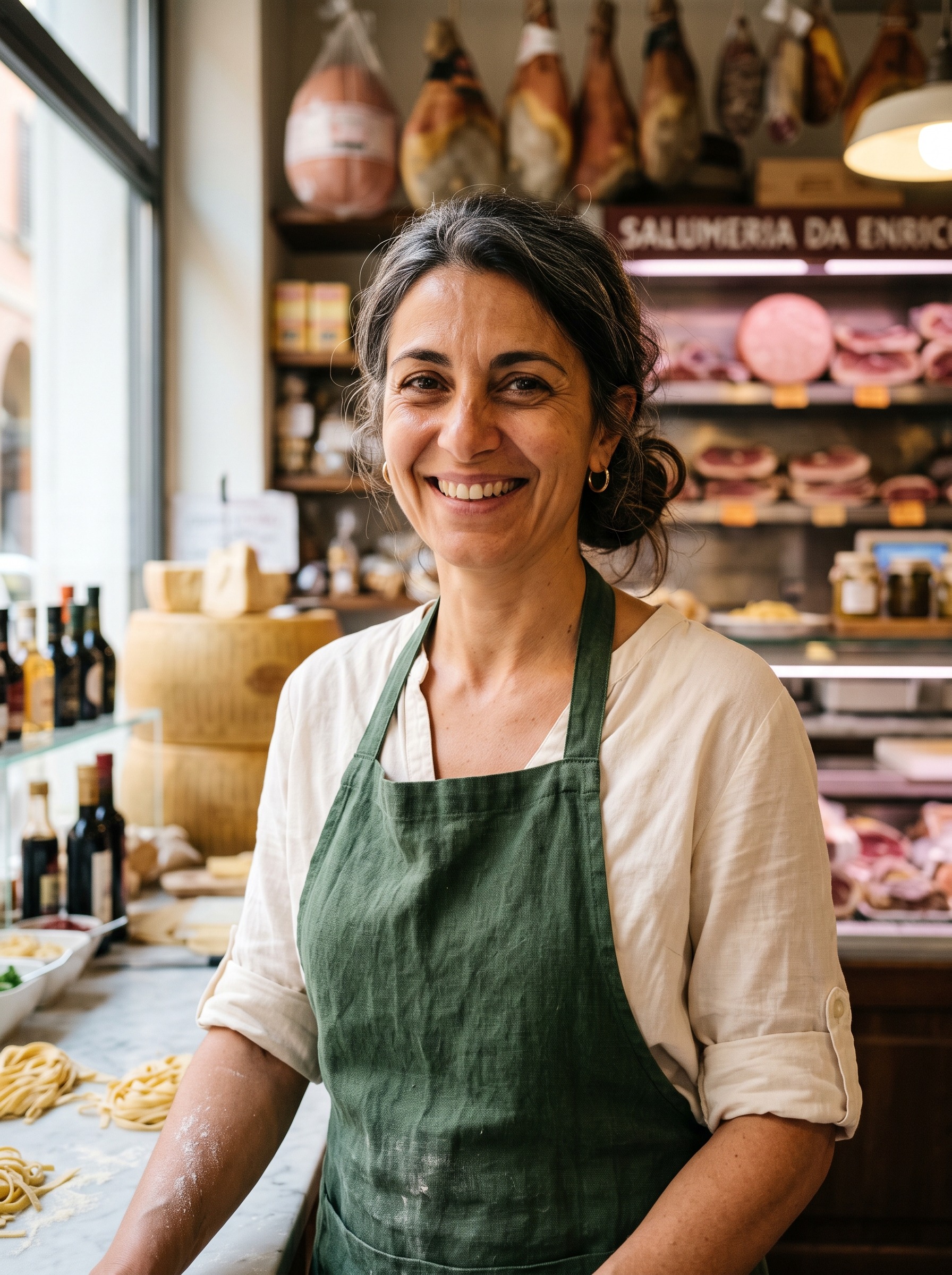

Six narrow lanes behind Piazza Maggiore still obey a Roman grid, and by late afternoon they smell like cured pork, coffee and warm bread. In the Quadrilatero, Bologna does what it has always done best: shop, snack, argue over the right cheese, and then stand in the street with a glass while the evening gathers around the old guild names — Orefici, Pescherie Vecchie, Drapperie, Caprarie, Clavature. It is tiny enough to cross in minutes, but dense enough to make you forget time altogether.
What the Quadrilatero is known for
The Quadrilatero is Bologna’s oldest continuously trading market, and you feel that continuity under your feet as much as in the shop windows. This is the physical heart of La Grassa, the city’s proud nickname for being gloriously, unapologetically well fed. The lanes sit directly behind the Basilica di San Petronio on Piazza Maggiore, laid out on a Roman street plan that has survived two millennia of use, adaptation and excellent appetite. The guild names are not decorative nostalgia; they are the receipts. Via degli Orefici remembers the goldsmiths, Via Pescherie Vecchie the old fish market, Via Drapperie the cloth merchants, Via Caprarie the goat butchers, Via Clavature the locksmiths. The trades have shifted, of course — fish, cheese and salumi have crowded out the metalworkers — but the specialisation remains, which is exactly why the place still feels like a market rather than a theme park.

What makes the Quadrilatero more than a preserved set piece is that locals still come here to buy dinner. You see them threading past tour groups for a mortadella end, a tray of tortellini, a wedge of Parmigiano, a bag of greens from one of the buche — the semi-underground produce stalls that spill fruit and vegetables onto the pavement in the morning and vanish by early afternoon. Then, around six, the whole neighbourhood changes register. The delis pour Lambrusco and Pignoletto. Taglieri appear on paper. The lanes fill with people standing shoulder to shoulder, eating with one hand and balancing a glass with the other. It is loud, warm, slightly chaotic, and refreshingly unpretentious for a place this central.
A few steps away, the city’s big landmarks make the Quadrilatero feel like the middle of the map rather than a side street. San Petronio rises behind the market, a vast Gothic brick church that was meant to outdo St Peter’s when construction began in 1390. The money ran out, the façade stayed half-bare stone, and Bologna, with its dry humour, seems to have worn the unfinished look ever since. The Fountain of Neptune stands nearby with Giambologna’s bronze muscle and theatrical confidence, while the crenellated Palazzo Re Enzo keeps watch over the square. East of the market, the Two Towers lean into the skyline as they always have, though at the moment they are to be admired from below: both Asinelli and Garisenda have been closed to climbers for structural restoration since 2023.

Where to eat & drink
If you come to the Quadrilatero without an appetite, turn back and have a biscuit somewhere quieter. This is a neighbourhood built for grazing, and the best way to understand it is to move from counter to counter, tasting as you go.
Tamburini, on Via Caprarie 1, is the anchor. It has been a salumeria since 1932, and the glass counter is a sermon in Bolognese abundance: mortadella, culatello, tortellini, all arranged with the confidence of a place that knows exactly what it is. Behind it is a tavola calda where you eat standing at narrow counters — lasagne, cotoletta and other warm dishes — or take a mortadella-on-focaccia and a plastic cup of Lambrusco out to the street. There is no need to romanticise this. It is simply very good, and very Bologna.

A few steps along, Salumeria Simoni on Via Pescherie Vecchie 3B has been trading since 1960 and remains the benchmark for a tagliere in these lanes. The board is a lesson in restraint and generosity at once: paper-thin cured meats, Parmigiano dressed with aged balsamic, squacquerone cheese, and a glass that usually comes in around €12–15 for the board-and-drink ritual. If you want the evening version, its Laboratorio annexe on Via Drapperie pours Lambrusco and Pignoletto into the night and turns the deli into a bar without pretending to be anything else.
La Baita Vecchia Malga, on Via Pescherie Vecchie 3A, is the cheese specialist. Go for burrata and truffle plates, and if you have time, the small trattoria upstairs. It is one of those places that reminds you Bologna’s market culture is not only about meat, though the city often behaves as if it were. Cheese here is not a side note; it is a whole vocabulary.
For something more settled, 051 Zerocinquantino on Via Pescherie Vecchie does tigelle and crescentine, those little Emilian breads you split and stuff with salumi and soft cheese. It is the sort of food that makes sense in a standing lane or at a table, and the place understands both moods. In the evening it becomes a lively wine spot as well, which is useful because the Quadrilatero’s social life tends to begin with food and end with another glass.
Then there is Pescheria del Pavaglione, at Via Pescherie Vecchie 14, a working fishmonger that fries up “aperifish” in the evening — seafood fritto misto in a paper cone, meant to be eaten outside with white wine and no fuss. It is one of the loveliest local rituals in the market because it keeps the old trade alive while bending it toward the city’s present-tense appetite. You stand there with the paper cone, the lane around you thick with conversation, and nobody is pretending dinner needs a table to be proper.

For pasta, Sfoglia Rina on Via Castiglione 5B, just off the market, is the reliable choice. It has been serving tortellini in brodo and tagliatelle al ragù since 1963, and it does not take reservations, so the queue is part of the deal. I would not call waiting a pleasure, but I would call the reward worth it. And if you want to cook at home, or simply take a proper piece of Bologna with you, Paolo Atti & Figli on Via Drapperie 6 / Via Caprarie 7 has been doing fresh pasta and bakery goods since 1868. Hand-rolled tortellini, tagliatelle, certosino, pinza: this is the sort of shop that makes a city’s memory edible.

Going out
Nightlife in the Quadrilatero is not about clubs, and thank God for that. The local move is aperitivo, but not the polished, over-designed kind you get in places trying too hard. Here it is closer to a civic habit: buy food, buy wine, stand in the lane, repeat.
The legend is Osteria del Sole on Vicolo Ranocchi 1/D, documented since 1465 and one of the oldest taverns in Italy. It sells only wine and beer — no food at all — which is the whole point. You bring your own mortadella, your own cheese, your own market haul, and sit at a long communal table among students, pensioners and the occasional tourist who has just understood what is happening. Pay in cash at the bar. It opens Monday to Saturday, roughly 11am to 9:30pm, and closes Sundays. If you want a single ritual that explains Bologna better than a thousand guidebook paragraphs, this is it.
The delis themselves become bars from about 6pm. Salumeria Simoni, its Laboratorio, and 051 all pour into the evening, and Via Pescherie Vecchie thickens into a standing party by the weekend. There is a particular pleasure in watching a place that spent the morning selling dinner become, by dusk, the dinner itself. The crowd is mixed — locals, students, visitors, office workers who have decided not to go home yet — and the noise bounces off the old stone until midnight.
If you need something later, or more cocktail-driven, the city offers it a short walk away on Via del Pratello, or around Piazza Santo Stefano and Via Zamboni. But inside the market the rhythm is earlier, wine-soaked and gone by midnight. Which, frankly, is as it should be.
Things to do / what to see
Start where Bologna starts: Piazza Maggiore, the city’s civic living room. It is framed by the Basilica di San Petronio, Palazzo d’Accursio and Palazzo Re Enzo, and it remains one of those places that manages to feel both monumental and everyday. The Basilica is free to enter, and inside lies the world’s longest indoor meridian line, traced across the floor by Giovanni Cassini in 1655. Stand there long enough and you can feel the city’s old confidence in measurement, astronomy and ceremony all at once.
Just off the square, the Fountain of Neptune presides over its own little theatre of movement and pause. Giambologna’s 1567 bronze still has the kind of authority that makes people stop mid-conversation and look up, which is perhaps the highest compliment a fountain can receive. Then slip through the Voltone del Podestà beneath Palazzo Re Enzo and try the whispering corners. Stand in diagonally opposite arches and speak into the stone; your voice carries clearly across the vault. It is a medieval acoustic trick, and one of the few tourist games that never feels silly.
From there, it is a five-minute walk to the Two Towers at Piazza di Porta Ravegnana. Asinelli and Garisenda remain Bologna’s emblem from below, even while climbers are kept off them for restoration. Garisenda, in particular, is considered at risk, which gives the whole skyline a slightly more fragile mood than the postcards suggest. For now, look up, not up the staircase.
If the weather turns, or if you simply want a roof over your head, Mercato di Mezzo on Via Clavature 12 is a restored 19th-century covered market spread over three floors: food stalls and wine on the ground floor, a pizzeria above, a craft-beer cellar below. It is open daily and useful in bad weather, though I would still argue the real attraction in this neighbourhood is the street itself — a slow graze along Pescherie Vecchie and Drapperie, tasting as you go.
{{ATTRACTIONS}}
Shopping & markets
The Quadrilatero is not a place where shopping and eating can be cleanly separated, and that is part of its charm. You buy lunch, you buy dinner, you buy something to take home, and somewhere in the middle you realise you have also bought a better sense of the city.
Tamburini and Salumeria Simoni are the obvious take-home stops for cured meats, vacuum-packed Parmigiano and mortadella. Paolo Atti & Figli is where you go for fresh tortellini, tagliatelle and the regional sweets that Bologna keeps for itself unless you ask nicely: certosino and pinza. La Baita, meanwhile, is for squacquerone and aged Parmigiano-Reggiano, with the sort of cheese selection that makes you plan your luggage around refrigeration.
The greengrocers’ buche deserve mention because they are one of the market’s most distinctly Bolognese forms: little half-sunken produce stalls that seem to rise from the pavement with the day’s fruit, vegetables and mushrooms, then disappear by early afternoon. They are practical, old-fashioned and exactly right for a city that still likes to do its shopping by hand.
Beyond food, Via degli Orefici keeps a thread of its goldsmith past in a few jewellers, while the connecting lanes hold wine merchants, old-school hardware and kitchenware shops, and enotecas selling Emilia-Romagna bottles — Lambrusco, Pignoletto, Sangiovese di Romagna. For broader browsing, Via Rizzoli and the arcaded Via dell’Indipendenza run along the market’s northern edge, and if you want a larger covered food market, Mercato delle Erbe on Via Ugo Bassi is a 10-minute walk west and pairs neatly with a Quadrilatero morning.
Where to stay in the Quadrilatero
Staying here means waking up with the city already moving outside your window. Piazza Maggiore, the towers, the delis and the station transit are all within easy walking distance, and you can roll home from aperitivo in three minutes if you have any sense at all. The accommodation is mostly small and boutique: design B&Bs and apartments carved out of old palazzi on and around Via degli Orefici, Via Drapperie and the streets off Piazza Maggiore, plus a handful of characterful mid-range hotels.
It is not the cheapest part of Bologna, and it should not be. Prices here are the city’s highest, though still markedly cheaper than Florence or Venice, which is one reason central Bologna remains such a sane city break. The trade-off is noise. The aperitivo crowd fills these lanes loudly until late, especially from Thursday to Saturday, so light sleepers should ask for a room off the street or over an inner courtyard. If you prefer more quiet, base yourself a couple of blocks toward Santo Stefano or the university quarter and walk in.
{{HOTELS}}
Getting around
The Quadrilatero is entirely walkable and sits inside Bologna’s pedestrian ZTL, so you will not want a car here, and you certainly will not enjoy trying to park one. The market lanes are car-free, and everything central is minutes away on foot, mostly under the porticoes if the weather turns. Piazza Maggiore is a two- to three-minute walk. The Two Towers, Santo Stefano and the university quarter are all about five to ten minutes away.
Bologna Centrale is roughly 1.5 km north, about a 20-minute walk or a short taxi or city-bus ride. From there, fast trains reach Florence in about 35 minutes and Milan in about an hour. For the airport, Bologna Guglielmo Marconi is 6 km northwest and best reached via the Marconi Express monorail — around seven minutes from Bologna Centrale to the terminal, at about €11–13 each way — so allow roughly 30–40 minutes door to door from the market once you include the walk to the station.
Local buses run along the market’s edges on Via Rizzoli and Via Ugo Bassi, but honestly you will use them rarely. This is a place meant to be crossed by foot, one deli window at a time.
FAQs
Is the Quadrilatero a good area to stay in Bologna?
Yes, if you want to be in the thick of it. It is the city’s most central and atmospheric base: Piazza Maggiore, the best delis and the main sights are all a few minutes’ walk away, and it is superbly connected on foot. The two catches are price — hotels here are Bologna’s most expensive, though still cheaper than Florence or Venice — and noise, since the aperitivo crowd fills the lanes late into the evening. Light sleepers should ask for a courtyard-facing room or stay a couple of blocks over toward Santo Stefano.
Is the Quadrilatero safe?
Very. It is Bologna’s busy central market, full of people day and night, and the porticoed streets are well lit. Bologna has less pickpocketing than Rome, Florence or Venice, but the usual crowded-spot care applies — keep your bag and phone secure in the aperitivo crush around Via Pescherie Vecchie and Piazza Maggiore, and near the train station.
What should I eat and drink in the Quadrilatero?
Build a tagliere from a salumeria like Simoni or Tamburini: cured meats, mortadella, Parmigiano-Reggiano and soft squacquerone, with Lambrusco or still Pignoletto. Add tigelle or crescentine at 051, a fried-seafood aperifish cone from Pescheria del Pavaglione, and, for a sit-down, tortellini in brodo or tagliatelle al ragù at Sfoglia Rina. The signature ritual is to buy your food in the market, then drink it at Osteria del Sole, which serves only wine and beer.
Can I climb the Two Towers from the Quadrilatero?
Not at the moment. The Asinelli and Garisenda towers, a five-minute walk from the market, have been closed for structural restoration since 2023, and Garisenda is considered at risk of collapse, so tower climbs are suspended. For now, admire them from the ground and check Bologna Welcome for reopening news.