Bologna guide
Saragozza, Bologna: the hill district where the porticoes begin
A quieter, greener Bologna unfolds west of the old gate, where Via Saragozza climbs toward San Luca under the longest covered walkway in the world.

Follow Via Saragozza west from the old city gate and Bologna starts to breathe differently. The porticoes warm from centre-city cream to a deeper ochre, the pavements widen, and the hill begins its slow insistence. This is Saragozza: residential, a little greener, and far less interested in performance than the historic core. Locals buy bread here, walk dogs here, argue over the right ragù here. And at the far end of the street, the city’s great covered ascent begins — a 3.8-kilometre ribbon of arches climbing to San Luca, as if Bologna had decided that even its uphill walks should be dignified.
What Saragozza is known for
Saragozza is known, above all, for the Portico di San Luca, the longest covered walkway on earth. It runs from Porta Saragozza to the Sanctuary of the Madonna di San Luca on the Colle della Guardia, through 666 arches and about 3.8 kilometres of stone, shadow and ritual. It is one of those Bologna facts that sounds almost too neat until you walk it and realise the city has, in effect, built itself a sheltered pilgrimage route. The first stretch is gentle, almost conversational, before the portico reaches the Arco del Meloncello and begins to climb in earnest.

The gate itself, Porta Saragozza, is worth a pause before you set off. Its present crenellated form is a 19th-century medieval-revival rebuild, but the gate dates back to the 13th–14th centuries and once served as the ceremonial start of the annual San Luca procession. The old nicknames — Porta Sacra, Porta dei Pellegrini — still carry the smell of old Bologna, of processions and habits repeated until they become civic muscle memory. There is also a more recent layer to the story: in the 1980s, the space inside the gate became home to one of Italy’s pioneering queer collectives and the early headquarters of Arcigay, and Bologna’s long-running LGBTQ+ centre still bears the name Il Cassero.
A little further on, the Arco del Meloncello stands like a theatrical punctuation mark in the street. Designed in 1721 by Carlo Francesco Dotti, it carries the portico over the road and marks the halfway point where the walk changes character. Below it, buses and mopeds continue their ordinary city business; above it, the arches begin to feel more like a promise than a shelter. Locals will tell you the 666 arches were no accident — that the serpentine line of the portico represents the Devil, crushed underfoot by the Madonna at the top. Bologna likes its symbolism practical enough to walk through.
Where to eat & drink
Saragozza feeds you the way Bologna ought to be fed: with handmade pasta, a proper espresso, and no theatrical fuss. The neighbourhood classic is Trattoria Meloncello, an osteria going since 1918 at Via Saragozza 240A, right by the arch that gives it its name. The walls are papered with autographs, and the menu leans into the things you actually came for: ricotta tortelloni with ragù, tagliatelle al ragù, gramigna con salsiccia. Prices sit in the honest range of roughly €11–20 a plate, which in a city like this is not a detail but a moral position. Book ahead; it fills.

A little further along, Trattoria Bertozzi on Via Andrea Costa 84 has been a Saragozza fixture since 2007, and it knows exactly what it is doing. This is where you order tortellini in brodo when the weather asks for it, tagliatelle Bertozzi when it does not, and the cotoletta alla petroniana when you want the city’s veal cutlet done with conviction. The kitchen uses local ingredients, the staff speak English, and the place is popular enough that a reservation is close to essential. In other words: it behaves like a restaurant that expects to be loved, and usually is.
For a more compact, more polished take on Emilian craft, All'Osteria Bottega sits just inside the gate at Via Santa Caterina 51. Chef Daniele Bendanti’s room is tiny, the reservation book is serious, and the food is the sort of thing that reminds you why Bologna’s reputation for eating was never an exaggeration: celebrated mortadella, hand-rolled pasta, braised meats, all of it handled with a confidence that does not need a manifesto. This is not where you come to eat less; it is where you come to eat with better attention.
If you want something lighter, Berberè Porta Saragozza offers long-fermented sourdough pizza from a big garden terrace, and the opening hours are mercifully straightforward: 12:30–14:30 and 19:00–23:30. It is a Gambero Rosso and 50 Top Pizza regular, which is useful to know if you are the sort of person who likes your pizza judged by people with clipboards. Still, the terrace is the real argument here — a place to sit out of the city’s rush and let the evening arrive slowly.

For breakfast, Neri Pasticceria Caffetteria at Via Saragozza 81 is the obvious start. Order a brioche, a wedge of crescenta and a proper espresso under the arcade, and you will understand why neighbourhood bars matter more than fashionable ones. They are where the day begins without ceremony. Later, if you need a sweet finish, La Sorbetteria Saragozza at No. 83 — the younger sibling of the famous Sorbetteria Castiglione — is the place for award-winning creams and chocolate, while Gelateria Islanda at No. 65 keeps things playful with rotating daily flavours and homemade ghiaccioli.

Things to do
The obvious mission is the climb to San Luca, and there is no reason to pretend otherwise. Walking the full Portico di San Luca from Porta Saragozza to the sanctuary takes somewhere between an hour and an hour and three-quarters, depending on how often you stop to look back. It is one of the great walks in Italy, not because it is difficult, but because it is so elegantly hospitable: shelter from sun, shelter from rain, a rhythm of arches that keeps the mind moving even when the legs are tired. The first section is flat to the Arco del Meloncello; beyond that, the hill begins to pull. Bring water. There are no facilities on the upper stretch, and the church closes daily between 12:30 and 14:30.

At the top, the Sanctuary of the Madonna di San Luca rewards the climb with the best panorama of Bologna and the Apennine foothills. The basilica’s pink dome is visible long before you arrive, which is part of the pleasure: the destination keeps reappearing as a promise. If you prefer to save your knees, the San Luca Express tourist train leaves from Piazza Maggiore and runs up to the sanctuary for around €13 return. The sensible local strategy is to ride up and walk the portico back down, all downhill and all in the shade. Bologna, at its best, rewards the person who knows when to let gravity do the work.
Back in the neighbourhood, the hill is dotted with villas and gardens that make Saragozza feel less like a district and more like a slow ascent through layers of domestic ambition. Villa Spada on Via di Casaglia is a Neoclassical mansion set in one of Bologna’s largest gardens, around seven hectares climbing the slope, with terraces that frame the city skyline. Inside, the Museo del Tessuto e della Tappezzeria keeps historic textiles in view, which feels entirely right in a city where fabric — whether of cloth or portico — is always part of the story.
Villa delle Rose, reached by a plane-lined avenue off Via Saragozza, is the venue MAMbo uses for temporary exhibitions, and its garden is planted with exotic evergreens on the first slopes of the Colle della Guardia. It is the sort of place that makes you remember Bologna is not only brick and pasta. It has art, too, and enough quiet to let it breathe.
The final stop inside the gate is the Museo della Beata Vergine di San Luca, tucked into Porta Saragozza itself. It tells the story of the Madonna’s icon and the procession that has climbed this hill for centuries. The room is small, but the meaning is not. In Saragozza, the civic and the devotional still share the same pavement.
{{ATTRACTIONS}}
Shopping & markets
Saragozza is not a district for trophy shopping. It is a place where people buy what they need, and that is part of its charm. Via Saragozza is the spine of the neighbourhood, lined under the porticoes with the everyday machinery of local life: bakeries, delis, greengrocers, a couple of small supermarkets and convenience stores, perfumeries, and a well-stocked comics shop. It is the sort of street where you pick up provisions for a picnic and head uphill rather than hunting for souvenirs. Honestly, that is healthier for everyone.
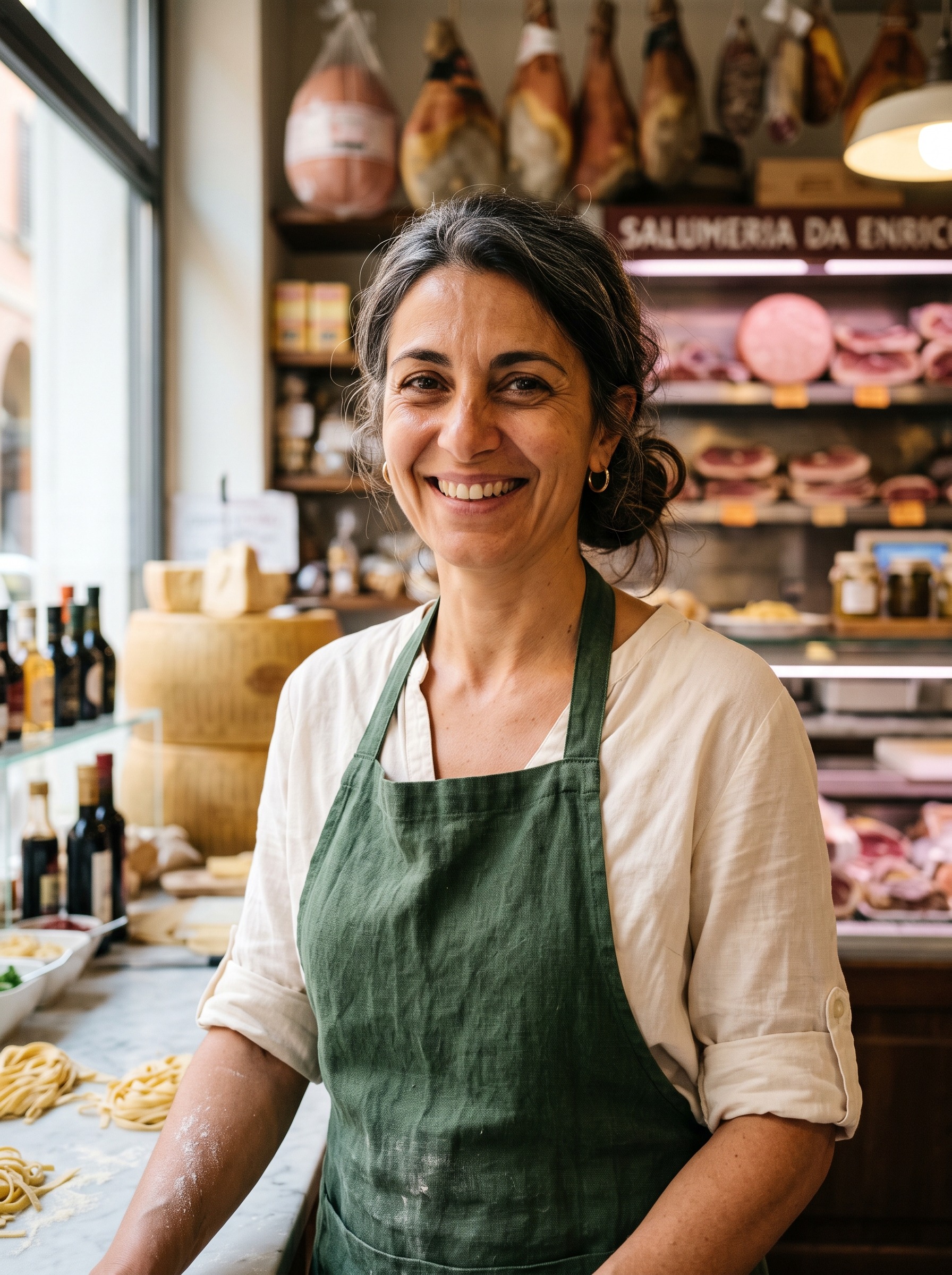
There are a few independents worth a look if you like a rummage. Tweed Saragozza handles menswear and vintage-leaning clothing, and there is a scattering of footwear and homeware shops along the same stretch. But the point here is not retail spectacle. The point is the warm crescenta from the pasticceria, the cured meats from a neighbourhood salumeria, the gelato you carry home before it softens. Saragozza shops like a place that intends to stay put.
Where to stay in Saragozza
Saragozza works best as a quiet base, and that is exactly why many travellers like it. It suits people who want calm residential streets, a bit more room for the money, and the San Luca climb on their doorstep, without needing to be in the middle of every tourist collision. Expect B&Bs, guesthouses and short-let apartments rather than big hotels; this is a residential district, and the accommodation stock reflects that.
The sweet spot is the stretch just inside Porta Saragozza, along and just off Via Saragozza itself. There you are within walking distance of Piazza Maggiore, but wake up on a street that still belongs to its residents. Push further west toward the Meloncello and up the hillside and things get greener, cheaper and more peaceful still. That is lovely if you have a car or want early-morning access to the portico, less ideal if you plan to stumble home from dinner in the centre. Prices tend to sit a notch below the historic core for equivalent comfort, which is the kind of arithmetic travellers understand quickly.
{{HOTELS}}
Getting around
Saragozza is walkable to a fault along its porticoes. From Porta Saragozza, you can reach Piazza Maggiore and the Two Towers in about fifteen minutes entirely under cover, which is one of the city’s small luxuries: you can cross a good chunk of Bologna without opening an umbrella. For the western end of the district and the foot of the hill, bus 20 is the key line, running east–west through the city and out to Meloncello and Porta Saragozza. It is the easy way to reach the start of the uphill portico climb without doing the flat section first.
For San Luca specifically, the San Luca Express tourist train leaves from Piazza Maggiore and drives up to the sanctuary. That saves the legs if you would rather walk down than up, and in this case the cliché is true: the descent is easier, but the view is better when you have earned it. Getting to and from the airport is straightforward as well. Bologna Marconi (BLQ) is only a few kilometres northwest, and the Marconi Express monorail links it to Bologna Centrale in about seven minutes. From there, the centre — and Saragozza just beyond it — is a short ride or walk. Day trips across Emilia-Romagna all leave from Bologna Centrale, with Modena around 20–35 minutes by train.
Saragozza is not the Bologna of postcards and quick hits. It is the Bologna of the walk home, of the bakery opening its shutters, of the hill appearing at the end of the street like a thought you have not yet finished. Come here for San Luca, yes, but stay for the ordinary things that make a district feel inhabited: the trattoria where the ragù still matters, the quiet under the arches, the sense that the city is not showing off. It is simply living.
FAQs
Is Saragozza a good area to stay in Bologna?
Yes, if you prefer quiet streets and better value over being right on the main square. Saragozza is residential, about a fifteen-minute walk from Piazza Maggiore, and it puts the San Luca portico on your doorstep. It suits walkers, repeat visitors and anyone who wants a calmer base; first-timers on a very short trip may still prefer the centre.
How long does it take to walk the Portico di San Luca?
Plan on roughly one hour to one hour and forty-five minutes for the full 3.8-kilometre walk from Porta Saragozza to the sanctuary. The first stretch is flat to the Arco del Meloncello, then it climbs steadily uphill. Bring water, because there are no facilities on the upper section.
Is Saragozza too far from Bologna’s centre?
No. Porta Saragozza is about a fifteen-minute walk from Piazza Maggiore, and you can do it entirely under the porticoes. Bus 20 also links the district with the centre and the Meloncello area. The far western end near the hillside is quieter and a little more of a walk, which is the trade-off for the calm and lower prices.
Should I take the San Luca Express or walk?
If you want the full experience, walk up or down the portico at least once. If you want to save your energy, take the San Luca Express from Piazza Maggiore to the sanctuary for around €13 return and walk back down in the shade. That is the easier option, and in summer it is a very sensible one.