Cairo guide
Islamic Cairo, Cairo: walking the medieval city that never emptied out
A living maze of Fatimid gates, Mamluk stonework, bazaar smoke and floodlit evenings, where Cairo’s medieval quarter still hammers, prays, shops and strolls in the same breath.
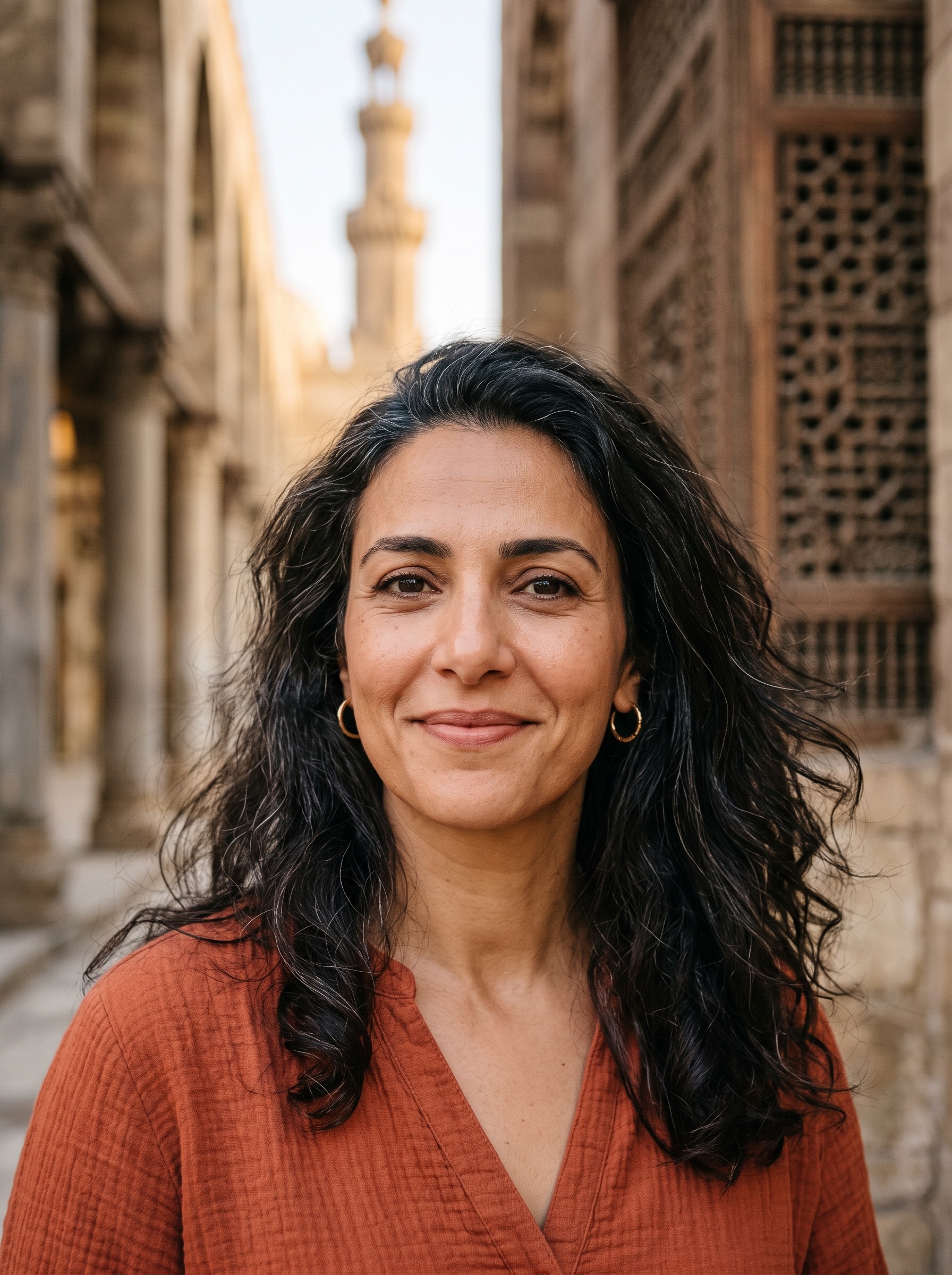

Islamic Cairo begins with a sound before it becomes a sight: the metallic knock of a coppersmith’s hammer in Haret al-Nahaseen, answered a few lanes away by a muezzin, then another, then another, until the call to prayer seems to ricochet off every carved façade on Al-Muizz Street. Come at dusk, when the heat drops and the monuments switch their lights on, and the district reveals its most persuasive trick — that it is not a museum quarter at all, but a working medieval city that never emptied out.
What Islamic Cairo is known for
The spine of the neighbourhood is Al-Muizz Street, a kilometre of Fatimid and Mamluk architecture running between Bab al-Futuh in the north and Bab Zuweila in the south. The street is free and largely pedestrianised, which feels almost mischievous given what lines it: 13th- and 14th-century stonework, keel arches, striped ablaq marble, sabil-kuttabs, merchant houses, mosque façades and minarets stacked so tightly that you spend as much time looking up as forward. UNESCO calls this the highest concentration of medieval Islamic monuments anywhere, and the phrase is not hyperbole here. It is a place where the sacred and the commercial have never been separated, where spice sacks sit beneath prayer niches and handcarts thread past portals older than many nations.

Start in the north near Bab al-Futuh and Bab al-Nasr, where the crowd thins and the stone feels older, quieter, more deliberate. The Al-Hakim Mosque, completed in 1013, carries Cairo’s oldest surviving minarets, and its age has a particular force when you stand in the cool shadow of the gate and hear modern traffic only as a distant murmur. A little farther on, the delicate Al-Aqmar Mosque from 1126 earns its moonlit name with a façade that seems almost filigreed into the street itself. Southward, the rhythm becomes grander and more ceremonial: the Qalawun Complex of 1285, with a mausoleum often described as one of the most beautiful in the Islamic world, and the Mosque-Madrasa of Sultan Barquq from 1386, all carved power and carved patience. Most of these monuments keep roughly to 9am–5pm hours, though Ramadan shortens the day, so the trick is to spend the afternoon inside a couple of interiors and let the street itself carry you into evening.
The southern end is louder, more compressed, more bazaar than boulevard. Khan el-Khalili spreads around Al-Hussein Square like a living spill of brass, perfume, tea steam and souvenir dust. It is the district’s second great identity, and the one that can either seduce you or wear you down, depending on your tolerance for sales patter. But even here, if you step beyond the tourist-facing entrances, the quarter still behaves like a craft economy rather than a prop shop. The old lanes remain full of real trades, and the right turn can take you from a lantern stall to a workshop where metal is still being worked by hand.
Where to eat & drink
The most storied table in the quarter is still El Fishawy, the alley café off Khan el-Khalili that has been pouring mint tea since 1797 and has stayed in the same family for seven generations. Its tarnished mirrors, brass pots and marble-topped tables have the patina of a place that has seen too many famous faces to bother naming them all, though Naguib Mahfouz is the one that matters most here. Order the shai barad, tea heated in a basin of hot sand, and let the apple shisha drift around you while the bazaar keeps insisting on itself outside. It is crowded and the vendors are relentless, but that is part of the point: El Fishawy is not an escape from Islamic Cairo, it is one of its most faithful expressions.

For something more polished, Khan El Khalili Restaurant & Naguib Mahfouz Café offers air-conditioned calm in the middle of the bazaar, with koshari, kebabs, grills and mint tea in glass cups, plus live music after 6pm, including an electric violin. The minimum charge is roughly 600 EGP, and it is the sort of room that becomes especially useful after a long walk through dust and heat. Nearby, Saheb El Sa'ada on Al-Muizz Street, No. 121, keeps the mood more local and theatrical at once: mezze, hawawshi and grills, an indoor hall, an open-air rooftop, and a nightly live show that usually includes a Tanoura dance. It is one of the places where the street’s old fabric and its present-day appetite meet without embarrassment.
Around Al-Hussein Square, the eating gets cheaper and more direct. El-Dahan, on the corner where the square meets Al-Muski Street, is a long-running kababgy known for its grills and for fatta, that deeply satisfying collision of crispy bread, rice, meat and garlic-tomato sauce. El Malki is the sort of institution that makes a neighbourhood feel inhabited rather than curated: a centuries-old sweets-and-food shop on Al-Hussein Square that runs 24 hours, famously never closing, and therefore always available to rescue you at odd hours. For a fast, dependable bite, Gad on Al-Azhar Street does shawarma, grills and sandwiches at low prices, right beside the great mosque traffic of the area. And if you want to finish with a view rather than a sugar rush, climb to Zeeyara or the El-Tekia Tea Lounge at Le Riad Hotel de Charme, where the minarets and Bayt al-Suhaymi sit in your line of sight while the city hums below.
Going out
Islamic Cairo is not a bar district, and it is best loved by people who understand that. Alcohol is scarce, clubs are absent, and the night here is devotional, cultural and social rather than nocturnal in the Downtown sense. What it offers instead is one of the most memorable evenings in Cairo: Wekalet El Ghouri Arts Center, a restored Mamluk caravanserai where the state-run Tanoura troupe performs a free or very cheap whirling-dervish and Sufi folk show several evenings a week, typically Saturday, Monday and Wednesday at around 8pm. The schedule can change, so check the day before and arrive by 7–7.15pm if you want a seat. Under that medieval courtyard, with spinning skirts, tabla and mizmar, the performance feels less like entertainment than an old city remembering itself.

The other essential night out is simply Al-Muizz Street after dark. Once the heat breaks, the entire pedestrian stretch turns into a floodlit promenade, and the crowd changes from day-trippers and shoppers to Cairene families out for a walk. Children eat grilled corn and termis from carts, couples linger in the light, and the old stone takes on a gold that makes the street feel both theatrical and ordinary. This is the hour when Islamic Cairo stops being a place you are visiting and becomes a place you are moving through with everyone else.
If you want a drink with a view, the options stay architectural rather than nightlife-led. Le Riad’s terrace looks over the minarets, and Al-Azhar Park on the eastern edge keeps its terraced restaurants open into the evening with the Citadel and a thousand minarets lit up below. For late bars and a proper club scene, though, you leave this quarter behind and head back to Zamalek or Downtown. That is simply the geography of the city.
Things to do / what to see
The defining move in Islamic Cairo is to walk Al-Muizz Street walk end to end, ideally from the calmer north to the more chaotic south. Begin at Bab al-Futuh and Bab al-Nasr, the great Fatimid gates, and let the street unfurl in layers: one mosque, one madrasa, one sabil, one merchant house, then another, all pressed together so tightly that the city becomes a sequence of thresholds. The street is compact enough that you can do the core in a day, but it rewards slowness more than coverage. Look at the door knockers, the carved lintels, the striped marble, the mashrabiya. Then look again, because the details keep changing as the light moves.

At the southern end, Bab Zuweila is worth the climb. For about 100 EGP you can go up the twin minarets, usually between 9am and 3pm, and get the rooftop view that makes the city’s density legible: domes, minarets and, beyond them, the Citadel. It is one of the few places where Islamic Cairo’s vertical drama becomes visible all at once. Just off the street, Bayt al-Suhaymi on Darb al-Asfar offers a different kind of revelation. This restored 17th–18th-century Ottoman merchant house, around 180 EGP, shows the domestic side of Cairo’s old wealth — a cool courtyard, mashrabiya screens, and a sense of how a family lived when the city’s grand houses were still inhabited rather than interpreted.
From there, a short ride southwest takes you to the city’s monumental pair below the Citadel: the Mosque-Madrasa of Sultan Hassan & Al-Rifai Mosque. The two face each other with a kind of formal tension, one colossal and Mamluk, the other royal and later, and the combined ticket is about 220 EGP. If you want scale, this is where Islamic Cairo goes from intimate to imperial.
Further southwest again, the Mosque of Ibn Tulun & Gayer-Anderson Museum form one of the most satisfying double stops in the district. Ibn Tulun, a 9th-century mosque and one of the oldest and largest in Africa, has a serene courtyard and a climbable spiral minaret that gives a quieter panorama than Bab Zuweila. Next door, the Gayer-Anderson Museum is a pair of old houses with a rooftop so famous it appeared in The Spy Who Loved Me. The joint ticket is around 60 EGP, and the contrast between the vastness of the mosque and the intimacy of the house is exactly the sort of contrast that makes this part of Cairo so addictive.

Crowning the whole district is the Citadel of Saladin & Mosque of Muhammad Ali, the city’s classic skyline stop. The whole fortress costs around 450 EGP and is open roughly 9am–5pm, and while the Alabaster Mosque is the obvious headline, what lingers is the view: Cairo spread out in layers, Islamic Cairo’s minarets rising like a forest below you. Finish, ideally, in Al-Azhar Park, a 30-hectare hilltop garden on the eastern edge with the best panorama of Islamic Cairo and the Citadel, plus restaurants that stay open into the evening. It is the clean visual punctuation mark at the end of a day spent in crowded lanes.
{{ATTRACTIONS}}
Shopping
Shopping in Islamic Cairo means Khan el-Khalili, but it helps to understand that the bazaar has two personalities. Near the Al-Hussein entrances, the merchandise leans heavily toward the mass-produced and the obvious: papyrus, scarabs, camel figurines, anything with King Tut on it. Go a few lanes deeper, though, and the district becomes more interesting, more specific, more alive to craft. In Haret al-Nahaseen, the coppersmiths’ alley off Al-Muizz Street, artisans still hammer trays, coffee pots and pierced lanterns in open workshops. You can watch the work happen, then buy straight from the source. In the Al-Sagha lane, the historic gold-and-silver quarter, jewellers make cartouche pendants with names in hieroglyphs, often while you wait. The Attareen perfumers’ shops sell pure essential oils — jasmine, amber, musk, Egyptian lotus, sandalwood — and the proper way to shop there is to sample before you buy. For spices, skip the entrance stalls and look for a real merchant with hibiscus, cumin, dukkah and Egyptian tea blends.
Just south of Bab Zuweila lies the Tentmakers’ Market (Souk al-Khayamiya), the last home of khayamiya, the hand-stitched appliqué once used for ceremonial tents and now sold as cushion covers and wall hangings. It is often more fairly priced than the main souk, and it has the feel of a craft tradition that survived because it was useful before it became decorative. Bargaining is expected everywhere. The first price is theatre; counter at roughly half and settle around 30–50% of the opening figure, politely and with humour. In this quarter, a good negotiation is part of the social fabric, not an interruption to it.
Where to stay in Islamic Cairo
Most people do not sleep in Islamic Cairo, and that is reasonable. The quarter is loud, dense and short on comfortable beds, so the usual move is to stay in Zamalek, Garden City or a Nile-side Downtown hotel and come in for the day and evening. If you want comfort, a pool or a business-standard room, this is not the base for you.
The one standout reason to stay inside the monuments is Le Riad Hotel de Charme, a 17-suite heritage hotel set directly on Al-Muizz Street facing Bayt al-Suhaymi. Each suite is individually furnished with pieces sourced from surrounding workshops, and the rooftop Zeeyara restaurant and El-Tekia tea lounge look out over the minarets. It is about a five-minute walk into Khan el-Khalili and roughly 30 minutes from the airport, which means you can wake to the call to prayer and step straight into the medieval city before the day-trippers arrive. That trade-off — atmosphere and access over quiet and convenience — is the entire argument for staying here.
{{HOTELS}}
Getting around
Inside Islamic Cairo, you walk. The medieval lanes are too narrow for cars, and the Al-Muizz spine is pedestrianised, so the neighbourhood is best explored on foot in closed, comfortable shoes. The ground is uneven, dusty and busy with handcarts, and the right pace is slower than you think. The district is compact enough to cover the core in a day, though the outlying anchors — the Citadel, Sultan Hassan and Al-Rifai to the south, Ibn Tulun to the southwest, Al-Azhar Park to the east — are better linked by a short taxi or Uber hop between clusters.
By metro, the nearest stations are Attaba and Bab El Shaaria, each about a 10-minute walk from the bazaar. The metro is cheap and safe, but Attaba can be confusing, so first-timers often prefer Uber or Careem, which are plentiful and remove the fare-haggling. A common approach is to be dropped at Bab al-Futuh in the north, walk Al-Muizz Street southward, and pick up a car near Al-Azhar Street or Al-Hussein Square at the end. From Downtown or Zamalek, expect about 15–25 minutes by car depending on traffic; Cairo International Airport is roughly 30–45 minutes away. And yes, you will hear the usual patter — that the mosque is closed today, that there is a special photo spot, that the bracelet in your hand was a gift until it suddenly isn’t. Treat it as sales theatre, not fact, and keep moving with a smile.
FAQs
Is Islamic Cairo a good area to stay in Cairo?
For most travellers it works better as a place to visit than to sleep. The quarter is dense, loud and short on comfortable hotels, so many people base themselves in Zamalek, Garden City or Downtown and come in for the day and evening. The real reason to stay is Le Riad Hotel de Charme on Al-Muizz Street, facing Bayt al-Suhaymi, which lets you wake inside the medieval city and enjoy the floodlit street after the day-trippers leave. If you want a pool, quiet or business-standard comfort, stay elsewhere.
When is the best time to visit Al-Muizz Street and Khan el-Khalili?
Late afternoon into evening is the sweet spot. Midday can be hot and the bazaar at its most chaotic, but as the sun drops the temperature eases and the old stone turns gold. After dark, the pedestrianised Al-Muizz Street is floodlit and full of Cairene families strolling, while ticketed monuments generally close around 5pm, earlier in Ramadan. Fridays and prayer times can affect mosque access, so check before you go.
Is Islamic Cairo safe, and how do I handle touts?
It is generally safe in the ordinary sense: the lanes are crowded and walkable day and evening, and violent crime against tourists is rare. The main nuisance is commercial pressure — vendors calling you in, commission-seekers steering you to a cousin’s shop, people claiming a monument is closed, or pressing a trinket into your hand and then asking for money. Keep walking, say a firm but friendly 'la, shukran', agree taxi fares up front or use Uber/Careem, and keep valuables secure in the crowds.
What should I not miss in Islamic Cairo if I only have one day?
Walk Al-Muizz Street from Bab al-Futuh to Bab Zuweila, climb Bab Zuweila if you can, and make time for one or two interiors such as Bayt al-Suhaymi or the Qalawun Complex. If you want one big panorama, add the Citadel or Al-Azhar Park. For the evening, stay on Al-Muizz after dark or catch the Tanoura show at Wekalet El Ghouri.