Cairo guide
Maadi, Cairo: the garden suburb that learned to move at its own pace
A leafy, walkable Cairo district of numbered roads, serious coffee and sunset Nile walks, Maadi trades noise for shade without losing the city’s pulse.
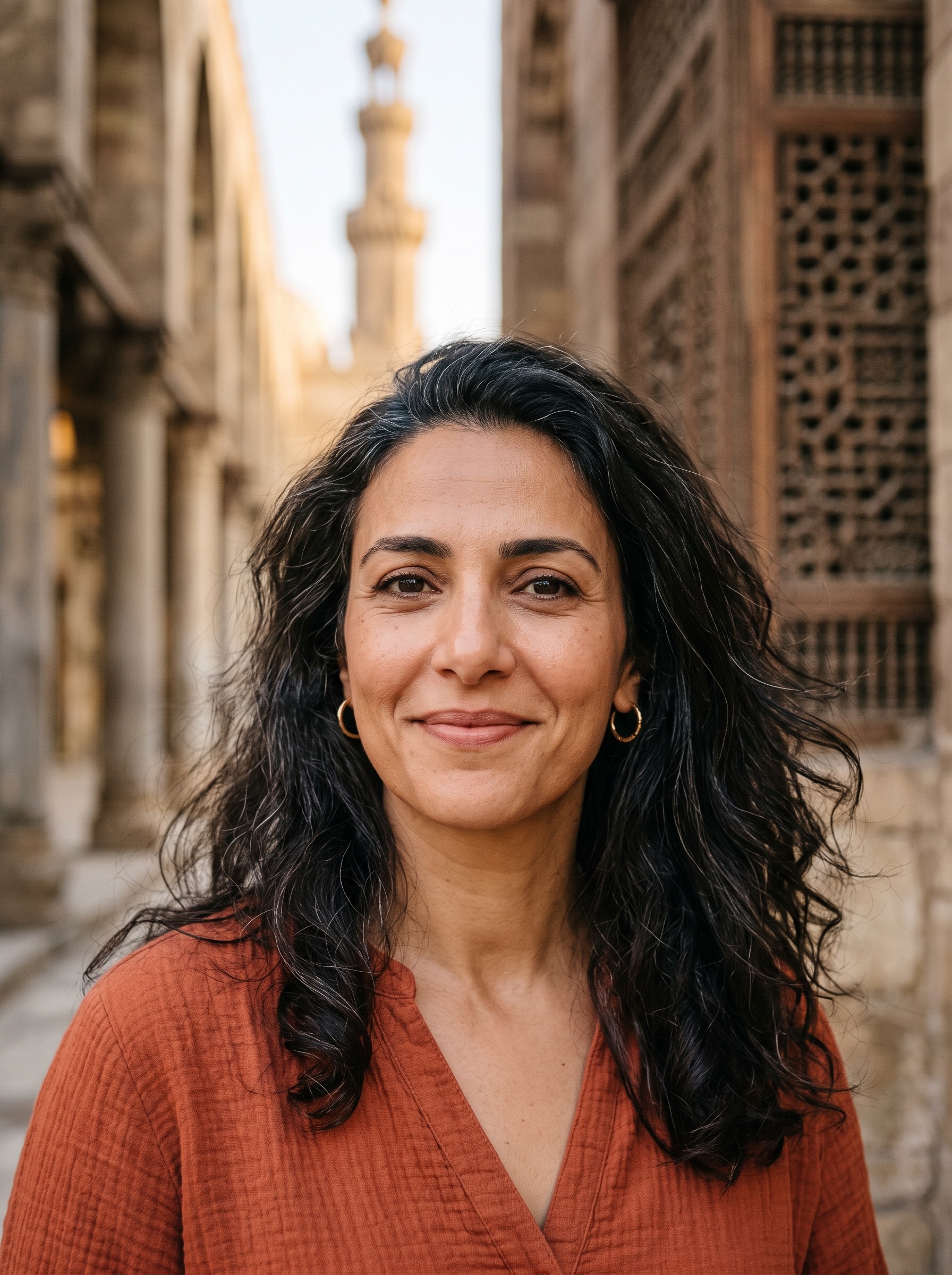

Maadi announces itself not with a monument but with a texture: jacaranda and ficus trees leaning over numbered roads, villas set back behind garden walls, and cafés where laptops, brunch plates and espresso cups share the same table. Laid out by a British engineer in 1907, it still feels governed by that original grid logic — orderly, airy, almost self-contained — even though central Cairo sits only about 12 kilometres to the north. The first thing you notice is the quiet. The second is that, in a city where walking often feels like a tactical exercise, people here actually do it for pleasure.
What Maadi is known for
Maadi’s defining trick is that it feels like a suburb and a small city at once. The old grid of Sarayat and Degla gives the neighbourhood its shape and its temperament: wide pavements, shade, low-rise houses, and enough space between buildings that the air seems to move differently. You can walk for an hour under the trees without giving up on the idea halfway through, which in Cairo is no small thing. The soundtrack is gentler than the rest of the capital too — birdsong, café grinders, the soft hiss of espresso machines, the occasional call to prayer drifting over a wall.
There is also the matter of its people. Maadi has long been home to diplomats, NGO staff and a settled international community, and that has changed the flavour of the streets without sanding off their local character. It is why a Thai family kitchen like Bua Khao can thrive for decades off Horreya Square, why a Korean grill like Gaya can count Korean expats among its most loyal customers, and why third-wave coffee has found such fertile ground here. The neighbourhood has an unshowy cosmopolitanism — practical, lived-in, a little bourgeois, and entirely comfortable with itself.
Road 9 is the stage on which Maadi performs its public life. Coffee-drinkers drift between fruit stalls and bookshops; brunchers claim terrace tables; students and remote workers spread out their laptops; dog-walkers thread through the flow. It has the feel of a street that knows it is being watched and doesn’t mind. For many Cairenes, a drive to Maadi is not an errand but a ritual: coffee, a book, a walk, perhaps the Nile, then home again before the evening collapses into traffic.

Where to eat & drink
Maadi eats internationally, but never at grand scale. The dining rooms are usually small, the mood personal, the best tables the ones where you can hear the owner greeting regulars by name. That intimacy is part of the charm. At Bua Khao, the Thai kitchen off Horreya Square on Road 151 near the top of Road 9, the story is continuity: the same family has run it since 1991, and the restaurant holds a Thai Select certification. Order the chicken with basil, the Tom Kha Gai and the Pad Thai, and what lands is not novelty but reassurance — the kind of cooking that has earned its reputation by repetition and care.
A few streets away in Degla, Gaya on Road 218 is the city’s benchmark Korean grill, owner-run and busy with Korean expats, which is the most telling review it could ask for. The tabletop barbecue gives the room its pulse; the appeal is as much social as culinary, a meal built around smoke, heat and conversation. Then there is Tabla Luna at 41 Road 218, on the corner of 231, a tiny Latin American room with only six or seven tables. It pulls from Peru, Mexico and Argentina, and it rewards the sort of dinner where you plan ahead rather than wander in on impulse. Thursday and Friday nights, especially, call for a booking.
For pizza, What the Crust on Street 275 matters because it is not merely good pizza in Cairo; it is Egypt’s AVPN-affiliated Neapolitan pizzeria, wood-fired by an AVPN-trained pizzaiola. The difference is in the discipline — the dough, the heat, the confidence of a place that knows exactly what it is trying to be. If your appetite leans Egyptian, Zooba on Road 9 is the bright, modern answer, reworking street food into a fast-casual format with build-your-own koshari, freekah bowls and hawawshi. It is one of those places that makes a familiar cuisine feel newly legible without flattening it.
Frank & Co is the easy all-day fallback, and that is meant as praise. In the morning it handles breakfast; by evening it becomes a relaxed bar with wine, cocktails and sangria. In a neighbourhood that winds down earlier than Cairo’s more nocturnal districts, that flexibility matters. You can have dinner and stay put, or you can begin and end your night in the same room, which suits Maadi’s temperament perfectly.

Coffee & brunch
This is where Maadi became a habit for the rest of Cairo. The coffee culture here is not decorative; it is foundational. Café Greco at 64 Road 9 is the old guard, a small room with Greek ruins painted across its walls and a history long enough to feel woven into the street. It sells beans by weight — Kenyan, Costa Rican and a few decafs — and runs a tenth-cup-free loyalty card, which tells you everything about the kind of place it is: practical, beloved, and built on repeat custom. It stays open until late, and for many regulars it is simply the city’s best coffee and the neighbourhood’s default meeting point.

The newer coffee map is spread mostly through Degla and along Street 233. Sacks Specialty Coffee Roasters is both roastery and café, pairing single-origin brews with a proper bakery counter, matcha and signature iced drinks. Villa Sumatra takes a different route: a Bali-inspired garden café in Degla, with directly sourced Indonesian beans and a leafy terrace that seems designed for afternoons that run long. It is the sort of place where time loosens its grip a little.
Then there is the cluster on Street 218. Dark Solution leans into industrial-chic minimalism and meticulous shots; Brown Nose pairs third-wave coffee with Dara’s ice cream. Together they make a convincing case that Maadi’s coffee scene is not a single trend but a whole ecosystem — old guard, roastery culture, terrace cafés, precision espresso, and enough laptop-friendly tables to keep the weekday mornings busy. If you want a neighbourhood where coffee is not merely drunk but discussed, compared and scheduled around, Maadi is the address.
Going out
Maadi’s nights are not built for spectacle, and that is precisely why they work. This is a wind-down neighbourhood, not a club district. Most places call last orders around 2am, which is late enough for a leisurely evening but early enough to preserve the next morning’s calm. The Tap Maadi is the anchor: an unpretentious craft-beer bar with an unmistakable college-bar streak, arcade games, beer-pong nights, hearty bar food and DJs who move from techno to hip-hop, sometimes with live sets in the mix. It is lively without feeling performative, a place that understands the pleasures of low-stakes noise.

Zulu, open since 2017, is the more design-led option, an easy-going restobar conceived as a green escape from the city’s noise. Its cocktail list leans on African ingredients, which gives the evening a quieter kind of originality. And then there is Frank & Co again, which by night becomes an easy bar for wine, cocktails and sangria. That overlap between café, dinner stop and drinking spot is very Maadi: no hard edges, no need to change neighbourhoods to change tempo.
If you are chasing a big-room club night, you will head elsewhere — north to Zamalek or west toward Sheikh Zayed. Maadi does not compete on that stage, and it doesn’t need to. Its appeal is that it lets the evening taper rather than explode.
Things to do / what to see
The obvious move is the Maadi Corniche, the Nile-side road on the western edge of the district. It is a pleasant riverfront walk in itself, but the real Maadi experience comes near the stretch by the Japanese embassy, where felucca captains offer hour-long sails. Go late in the afternoon if you can; the light softens, the breeze lifts from the water, and the city across the river begins to blur. Sunset from a felucca is the single most Maadi thing you can do — not because it is dramatic, but because it captures the neighbourhood’s scale: unhurried, residential, quietly beautiful.

For a different kind of release, Wadi Degla Protectorate sits on Maadi’s eastern edge. It is a 30-kilometre desert valley declared a nature reserve in 1999, with trails for hiking, trail-running and mountain biking. It is genuinely wild and facility-free, which means you bring water, sun cover and cash for the modest gate fee, then let the city fall away behind you. It is the weekend reset button for Maadi’s outdoorsy crowd, and one of the reasons the neighbourhood attracts people who want both urban convenience and access to open space.
Back in the grid, the pleasures are smaller and maybe more lasting. Diwan Bookstore at 1 Road 254 in Degla has the strong English section and café that make it the sort of place where an errand becomes an afternoon. Around Road 9, long-standing antique and vintage-furniture shops reward a slow browse, and the everyday rhythm of fruit stalls, bakeries, florists and delis keeps the streets feeling lived in rather than curated. The real pleasure here is not a checklist of sights but the act of moving through the district at walking speed, coffee in hand, noticing how much of Cairo can disappear when a neighbourhood is allowed to breathe.
{{ATTRACTIONS}}
Shopping & markets
Maadi shopping is boutique and browsable, never mall-scale, and that is part of its appeal. Road 9 is the spine: independent cafés, small fashion boutiques, bookshops and grocers, all arranged in a way that encourages wandering. The district’s antique and vintage-furniture dealers cluster around the same corridor, which gives the area a slightly collectorly feel — as if every other storefront is offering a fragment of a previous Cairo. You come for one thing and leave with another.
Diwan deserves a second mention because it is more than a bookstore here; it is a social anchor. At 1 Road 254 in Degla, with its café and serious English-language section, it is the kind of place where people arrive to buy a novel and end up staying for lunch, or at least for a second coffee. Weekend mornings bring pop-up stalls and neighbourhood markets to the district’s squares, where produce, plants and the odd craft item turn the streets into a softer kind of commerce. Even the daily necessities — fruit stalls, bakeries, florists, delis — feel part of the neighbourhood’s character rather than an interruption to it.
The point is not abundance. It is scale. Maadi gives you enough shops to browse, enough streets to wander, and enough reasons to stay on foot. That is a rarer luxury in Cairo than any flagship mall.
Where to stay in Maadi
Maadi rewards longer, calmer stays more than a two-night sprint. The signature address is Villa Belle Époque, a 1920s villa set on a 1,300-square-metre garden plot with a pool, period furnishings and 33 rooms. It is Egypt’s original boutique hotel, about a 12-minute walk from Maadi metro, and it leans fully into old-world Maadi: high tea by the Nile, walking tours of the historic villas, and a sense that the house itself is part of the neighbourhood’s memory.
The district is otherwise light on big-brand hotels, which means serviced apartments and boutique rentals take up much of the accommodation landscape, especially through Degla and Sarayat. That suits the place. Maadi is built for people who want trees, quiet and space, not a lobby full of strangers. The trade-off is straightforward: you gain calm and lose proximity. Downtown is still a metro ride away, and the pyramids are further still, so the neighbourhood makes most sense if you are staying long enough for the commute to stop feeling like a compromise.
If you want cafés and transit on your doorstep, stay near Road 9 or the metro. If you want pure residential quiet, go deeper into Degla. Either way, Maadi is at its best when you treat it like a place to live in, not merely to sleep.
{{HOTELS}}
Getting around
Maadi is one of the easiest parts of Cairo to move through because it was built for walking. The numbered grid of Sarayat and Degla has real pavements and shade, and Road 9 keeps the cafés, shops and metro within a stroll. For most of the district, your feet are enough — and that is exactly why people fall for it.
The key transit link is Maadi station on Metro Line 1, the red line, which runs directly north into Downtown at Sadat station in Tahrir Square. The fare is flat and very cheap, trains come every few minutes, and the journey takes roughly half an hour door to door. For the pyramids, the Grand Egyptian Museum, or a night out in Zamalek, Uber and Careem are the simplest options. They are cheap and plentiful by Cairo standards, though you should still allow 45 to 60 minutes to reach Giza or the airport depending on traffic, and longer if the city is in one of its slower moods.
The Corniche is best reached on foot or by a short cab to the western edge of the district. But within the grid, the pleasure is in not needing transport at all. Maadi is a neighbourhood that lets you move at human speed, and in Cairo that changes everything.
FAQs
Is Maadi a good area to stay in Cairo?
Yes, if you value calm over convenience. Maadi is green, walkable, safe and full of strong cafés and international restaurants, so it works especially well for families, remote workers and longer stays. The trade-off is distance: Downtown is about 30 minutes by metro and the pyramids are roughly 45 to 60 minutes away by car.
How do I get from Maadi to Downtown Cairo and the pyramids?
Downtown is easy: take Metro Line 1 from Maadi station to Sadat in Tahrir Square, a straight shot of roughly half an hour with trains every few minutes and a very cheap fare. For the Giza pyramids and the Grand Egyptian Museum, there’s no direct metro, so Uber or Careem is the simplest option; allow 45 to 60 minutes depending on traffic.
Where’s the best coffee and brunch in Maadi?
Road 9 and Degla are the heart of it. Café Greco at 64 Road 9 is the classic, with beans sold by weight and a long reputation for excellent coffee. For the newer wave, head to Sacks Specialty Coffee Roasters on Street 233, Villa Sumatra in Degla, or Dark Solution and Brown Nose on Street 218. Frank & Co is the reliable all-day brunch pick.
What is Maadi best for?
Maadi is best for slow stays, coffee and brunch culture, family-friendly streets and remote work in a green, walkable suburb. It is not the right base for a fast, sight-packed Cairo trip or a late-night clubbing agenda, but it is ideal if you want space, shade and an easy daily rhythm.