Casablanca guide
Oasis, Casablanca: the quiet quarter that keeps its own rhythm
A residential Casablanca of station platforms, villa streets and a cooperative market, Oasis is the city at rest — practical, leafy and knowingly unshowy.
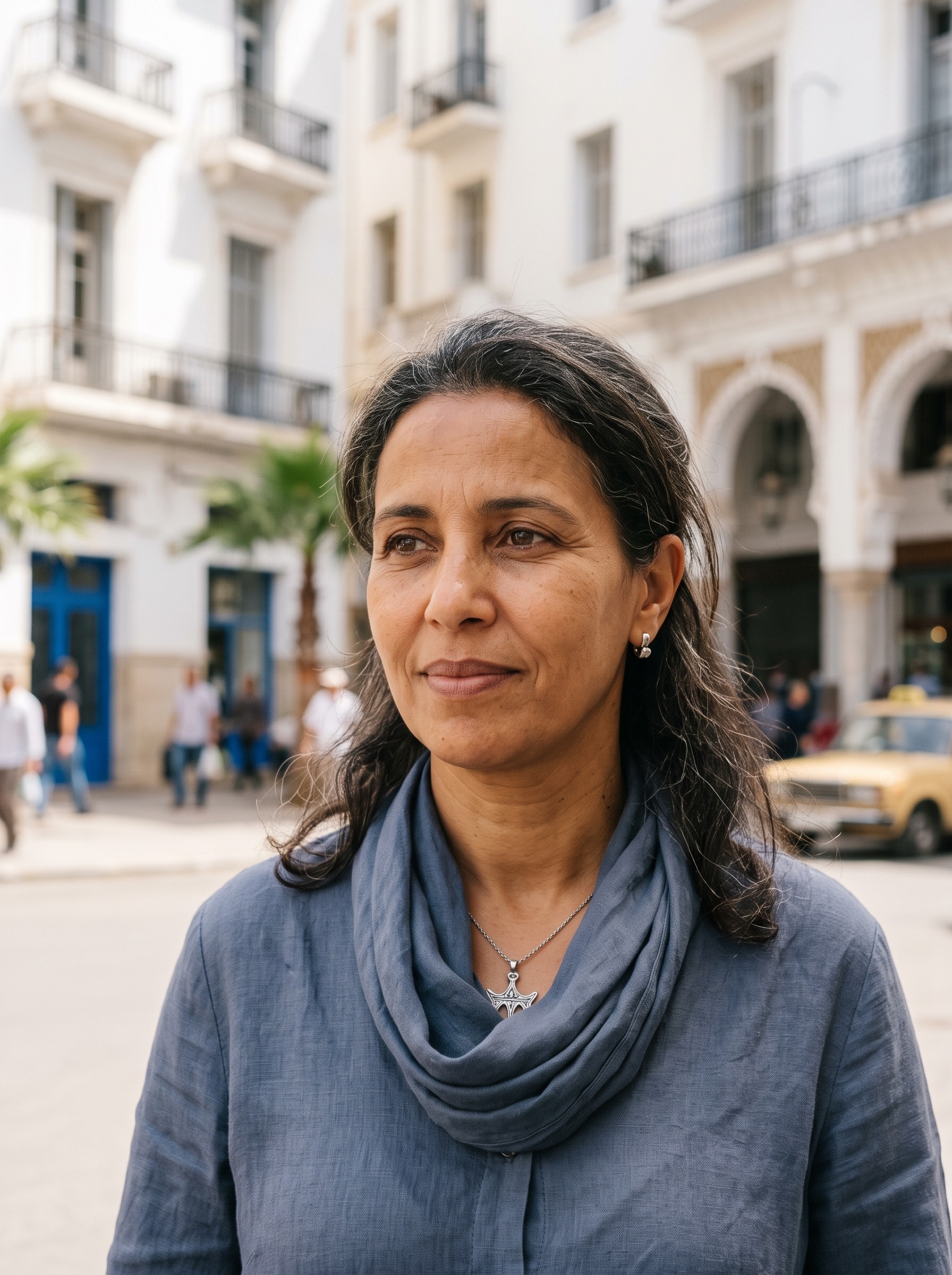 By Leila Tazi

Route de l’Oasis runs south out of Casablanca’s busier centre, and the change arrives quickly: the traffic loosens, the buildings drop to three or four storeys, and walled villas with jacaranda in the front garden begin to take over. Oasis does not announce itself. It simply settles around you — a district built for living, not for being looked at, where the day is shaped by school runs, train departures, pharmacy errands and coffee taken without hurry. In a city that so often pulls the eye toward the sea or the monumental, Oasis keeps its pleasures domestic. That is precisely why people who know Casablanca well choose it.
What Oasis is known for
Oasis is known, above all, as one of southern Casablanca’s most desirable residential quarters: calm, well-off, and much more interested in family life than in spectacle. The streets are lined with gated villas, low modern residences and the sort of front gardens that make a neighbourhood feel inhabited rather than merely planned. There is a green hush to it, even when the boulevard is busy. You feel the district’s rhythm in the small things — the muezzin threading through traffic, a child being walked to school, the slide of a train into the station, the low domestic noise of a place where people actually live.
Its public face is surprisingly compact. The first landmark is Casa-Oasis train station on Route de l’Oasis, the neighbourhood’s busiest point and the reason many travellers know the area at all. The second is École Ernest Renan on rue de la Pie, the AEFE primary school that anchors a French-Moroccan and international community. The third is football: Complexe sportif Raja-Oasis, the old Stade de l’Aviation, where Raja Club Athletic trains and develops its academy players. That alone tells you something important about Oasis. This is not a neighbourhood that performs for visitors; it has institutions, routines and loyalties of its own.

The station is also the reason the quarter is so useful. Oasis sits in the city’s south, around 15 minutes by car from much of Casablanca when the boulevards are clear, and the station links it to Rabat, Marrakech and El Jadida without forcing you through the busier Casa-Voyageurs terminal. That makes the neighbourhood feel less isolated than it first appears. It is quiet, yes, but not cut off. Oasis is one of those Casablanca districts that work best for people who already understand the city’s scale and want to live inside it with less friction.
The local population reflects that. The area skews family and expat, with the French school drawing in households who want a stable, residential base. The villa market is among the most sought-after in Casablanca, and the streets show it: not flashy, but careful, maintained, lived in. If you are looking for the city’s postcard version, this is not it. The postcard sits to the north, by the medina or the corniche. Oasis offers something more useful and, for some, more honest: a calm room in which the city can be lived rather than consumed.
Where to eat & drink
Oasis eats like a neighbourhood that knows its own needs. There is no restaurant district here, no parade of destination dining rooms. Instead, the pleasures are local, reliable and quietly well made — the sort of places where breakfast stretches into lunch and lunch is allowed to become an afternoon.
The standout is OLEA, a Mediterranean café-restaurant at 264 Route de l’Oasis, opened with chef Rachid Maftouh. It serves continuously from 7am to 10pm every day, which tells you almost everything you need to know about its role in the neighbourhood. You can come for coffee in the morning, a salad at lunch, or a proper dinner without changing address. The dining room looks out over a sports complex and a children’s play area, and that view gives the place its easy, family-first character. It is the kind of room where the pace stays gentle because the clientele expects it to.

A short walk away, on the corner of Route de l’Oasis and rue d’Aix, La Fabbrica Café Restaurant & Pâtisserie does a different job. It is part café, part pizzeria, part bakery, and in Oasis it has the feel of a dependable anchor. Locals rate the bread and pastries highly, and the counter stays open late, which is not a small thing in a city where good viennoiserie can disappear early. Its appeal is practical as much as culinary: a place for a quick bite, a pastry to take home, or a late stop when the neighbourhood is winding down but you still want something sweet.

For everyday supplies and a more intimate sense of the district, Le Marché Solidaire across from the station is where Oasis reveals its working heart. It is not a restaurant, but it belongs in any account of what and how the neighbourhood eats. Downstairs, you find produce, a butcher, a fishmonger, olives, dates, honey and oils; upstairs, the market turns to crafts. The whole place feels less like a commercial stop than a cooperative commons — useful, modest and rooted in real households rather than tourist appetite.
Come evening, most residents who want a bar or club head north to Gauthier, Maârif or the Ain Diab corniche. Oasis itself does not pretend to compete. It empties out, and that is part of the bargain. The neighbourhood keeps its energy for the daytime, for the school run, the coffee stop, the market visit, the train connection. At night, it prefers to be a place to return to.
Things to do / what to see
Oasis is not a sightseeing quarter, and trying to force it into one would miss the point. Its value is as a calm base. Still, there is more to do on the doorstep than the residential surface suggests, and the best stop is one that feels entirely of the neighbourhood rather than imported into it.
Le Marché Solidaire (Oasis) sits on Route de l’Oasis directly across from the station, and it is the most rewarding place to spend an hour here. The market is a two-floor cooperative project that gathers work from hundreds of craftswomen and cooperatives across Morocco — more than 5,000 products from over 60 regions under one roof. Downstairs is the food hall, with produce, butcher, fishmonger, olives, dates, honey and argan and olive oils. Upstairs is the craft level, where carpets, pottery, leather, cedarwood, cosmetics and traditional clothing are displayed with a social mission that sends money back to rural cooperatives. It is open daily, roughly 10am to 8pm, and it offers something rare in Casablanca: a shopping experience that feels calm, fair and unforced.

The market matters because it gives Oasis a public life without turning it theatrical. You can come for olives and honey, for a rug or a ceramic bowl, or simply to watch the neighbourhood move through its errands. There is no hard sell here, no tourist pressure. That alone makes it worth the detour, even if you are staying elsewhere in the city.
The other draw is football. Complexe sportif Raja-Oasis, the old 1932 Stade de l’Aviation, is Raja Club Athletic’s academy and training base, and it is currently being renovated as part of Casablanca’s stadium upgrades ahead of the 2025 Africa Cup of Nations. The complex gives the district a quiet sporting undertow. On training days, the neighbourhood seems to gather a little more of itself around the pitches.

Beyond that, Oasis is best used as Casablanca’s useful pause button. The station opens the city outward: day trips to Rabat, El Jadida or Marrakech are all within easy reach, and the tramway line-T1 also serves the area. If you are the sort of traveller who likes to return in the evening to somewhere calm, Oasis gives you that without making you feel detached from the city.
{{ATTRACTIONS}}
Shopping
Shopping in Oasis is practical and local rather than boutique-led. That is not a compromise; it is the neighbourhood’s character. The anchor remains Le Marché Solidaire on Route de l’Oasis, opposite the station, which is the best single place in this part of Casablanca to buy real Moroccan produce and crafts without the hard sell. Argan and olive oils, honey, dates, spices, cosmetics, ceramics, rugs, leather and traditional clothing all come through cooperatives, and that social mission gives the market a different moral texture from the usual retail stop.
Day to day, Route de l’Oasis supplies the essentials: pharmacies, patisseries, small grocers, banks and the bakery counters at La Fabbrica. The street is not glamorous, but it is the kind of strip that makes a longer stay easy. Everything necessary is nearby, and the pace stays human. For a full shopping mall, cinema and the international-brand fix, residents drive west and north to the larger centres around Maârif and the CIL–Bourgogne axis. Oasis itself does not need to imitate that. It has what it needs, and enough more besides.
Where to stay in Oasis
Oasis is a stay-here-and-commute kind of base, and the accommodation reflects that. You will find serviced apartments, aparthotels and residences rather than a strip of tourist hotels, which suits the neighbourhood’s natural audience: business travellers, longer stays and families who want a kitchen, parking and quiet over a compact room in the centre. Several residence-style properties sit on and around Route de l’Oasis, offering apartments with kitchens, air conditioning and on-site parking, often at better value per night than equivalent downtown hotels.
The best streets to aim for are the calm villa roads off Route de l’Oasis, close to the station. They give you the neighbourhood’s quiet and the ability to walk to trains, the market and cafés in a few minutes. That convenience is what makes Oasis work. You are not sleeping in Casablanca’s most famous quarter; you are sleeping in one of its most livable ones.
The trade-off is the same one that defines the whole area: you will rely on taxis or the train for the city’s major sights, because the corniche, the mosque and the medina are all a drive away. If your Casablanca is more meetings-and-mornings than monuments, or if you simply want somewhere restful to come back to, Oasis is a smart-value choice.
{{HOTELS}}
Getting around
The keystone is Casa-Oasis train station on Route de l’Oasis. First opened in 1912 and fully modernised in a 2005 ONCF overhaul, it now handles the southern intercity lines so you do not have to fight through the busier Casa-Voyageurs terminal. Trains run to Rabat, Marrakech and El Jadida, plus the fast TNR shuttle services, and there is a rail link out to Mohammed V Airport. A Casablanca Tramway line-T1 stop also serves the area, tying Oasis into the wider light-rail network.
For everything the train does not cover, taxis are the tool. Petit taxis are the red, metered cars for short hops within the city; grands taxis handle longer runs. In normal traffic, reckon on roughly 10 to 20 minutes by cab to the centre, Maârif or the Ain Diab corniche. Mohammed V International Airport sits southeast of the city, and a taxi typically takes about 30 to 45 minutes and costs 250 to 300 MAD, though you can also take the train from Casa-Oasis.
Oasis itself is walkable within its own streets, which is part of its charm. You can move between cafés, the market and the school run on foot. But the district is spread out, and the tourist sights are not within walking distance, so plan on wheels for those. That is not a flaw. It is simply the shape of the place.
Why Oasis works
For the right traveller, Oasis solves a very specific Casablanca problem. It gives you calm without severing you from the city, and it does so in a district that still feels recognisably local. The neighbourhood’s safety and affluence are part of the appeal, but so is its ordinariness: the pharmacies, the patisseries, the school gates, the station platform, the cooperative market. These are not the ingredients of a glossy itinerary. They are the ingredients of a livable quarter.
If you are staying for work, Oasis makes practical sense. If you are in Casablanca for longer, it makes domestic sense. If you are returning to the city and already know its major landmarks, it makes emotional sense too. This is a neighbourhood that does not ask to be admired from a distance. It asks to be used well.
FAQs
Is Oasis a good area to stay in Casablanca?
Yes — if you want calm and value over sightseeing. Oasis is a quiet, well-off residential quarter with serviced apartments, its own train station and easy taxi links, so it suits business travellers, longer stays and families more than first-timers. The Hassan II Mosque, medina and corniche are a drive away rather than a walk.
Is Oasis safe?
Yes. Oasis is one of southern Casablanca’s calmer, more affluent residential districts, with villas, a French school and families. It feels noticeably quieter and lower-key than the centre; use the usual big-city precautions after dark, but it is a comfortable base.
How do I get from Oasis to central Casablanca and the sights?
By taxi or train. Casa-Oasis station handles the southern intercity lines and connects to the tramway, and petits taxis are metered for short hops. Budget roughly 10 to 20 minutes by cab to the centre, Maârif or the Ain Diab corniche in normal traffic.
What is the best thing to do in Oasis?
Le Marché Solidaire (Oasis) is the standout. It is a two-floor cooperative market opposite the station, with fresh food downstairs and crafts upstairs, and it offers a calmer, more authentic shopping experience than the tourist bazaars.