Cologne guide
Belgisches Viertel, Cologne: where Cologne keeps its cool
A walk through Cologne’s most design-forward quarter, from Brüsseler Platz’s evening spill to the city’s best little bars, boutiques and jazz rooms.
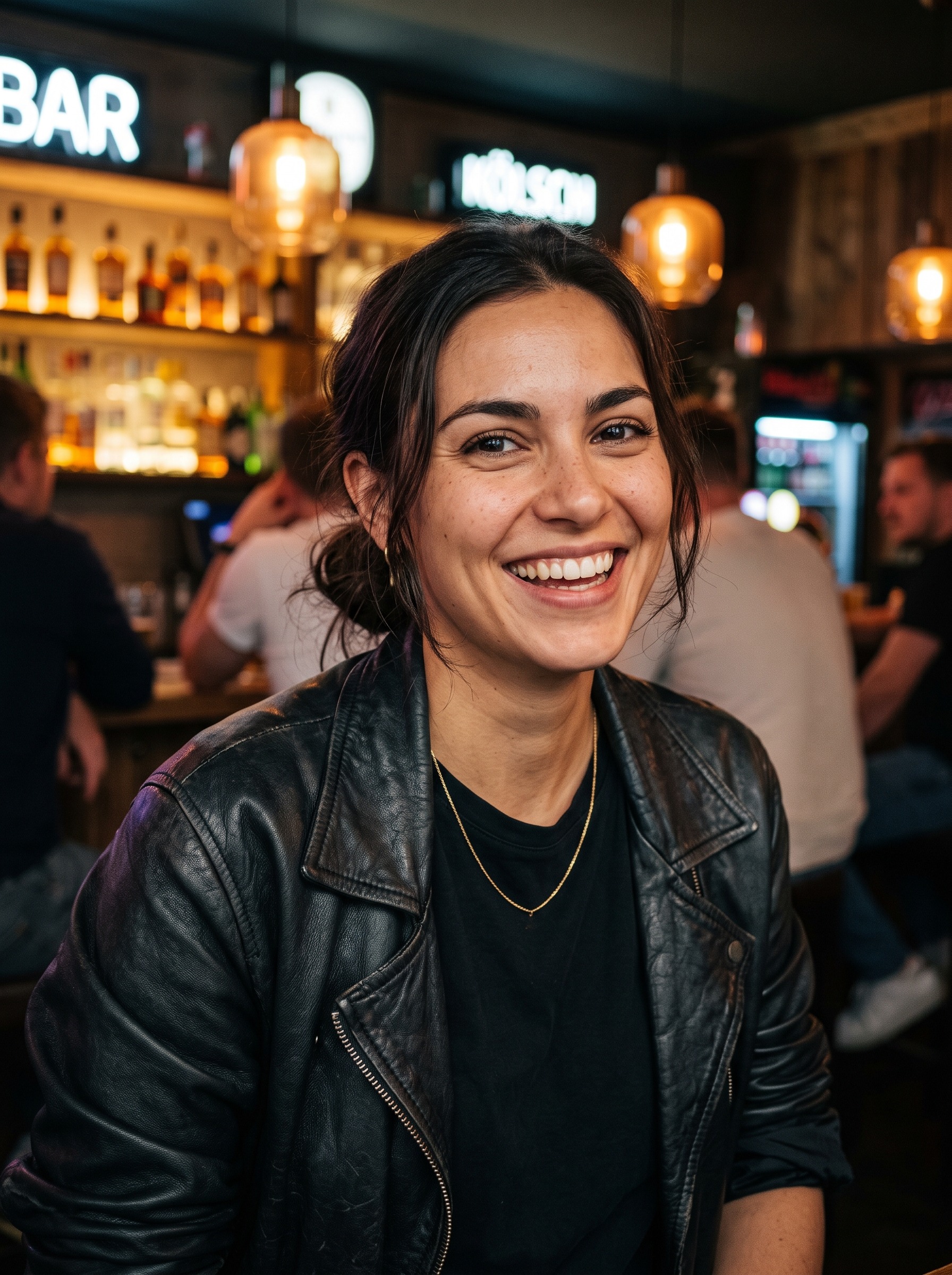 By Miriam Esser

On the first warm evening of the year, Belgisches Viertel does what it always does: it empties itself into Brüsseler Platz. Bottles of Kölsch appear in hands as if issued at the door, the steps of St. Michael fill up, and that grey hooded figure on the balcony opposite keeps watch over the whole ritual. It is a neighbourhood that knows exactly how it looks from the street and is not especially embarrassed by it. The facades are tall and ornate, the blocks are tidy and walkable, and the mood is somewhere between café terrace and after-hours salon — Cologne with a cleaner shirt on.
What the Belgisches Viertel is known for
The easiest way to understand the Belgisches Viertel is to read the street signs. Brüsseler, Antwerpener, Maastrichter, Brabanter, Flandrische — the quarter wears Belgian and Dutch names like a badge, while Moltkestraße and Spichernstraße at the northern edge remind you that Cologne also has a Prussian streak and a memory for generals. That odd little map of names gives the place its character: cosmopolitan, but not in the airport-lounge sense. More like a city district that has spent decades curating its own taste.
At the centre of it all is Brüsseler Platz and St. Michael church, the square that turns into the neighbourhood’s living room the moment the weather behaves. St. Michael itself is neo-Romanesque, built from 1902 to 1906, and large enough to anchor the whole scene without trying too hard. On warm evenings the square becomes a public sitting room with no clear owner, just a lot of people on the church steps and the low kerbs, talking over one another and nursing drinks. Cologne has many places to have a beer; this is one of the few where the beer feels like an urban habit rather than an outing.

Then there is the Mark Jenkins balcony sculpture opposite the church, the grey hooded figure perched on a first-floor railing. First-timers always do the same double take. They look up, assume a neighbour is watching from the balcony, then realise the “neighbour” is art. It is a neat little joke for a district that likes its references visible but not over-explained.
The quarter’s real claim, though, is not one landmark but a concentration of habits: independent boutiques, galleries, concept stores, small theatres, proper bars, and restaurants that do not bother pretending Cologne begins and ends with beer halls. It is the city’s fashion and creative mecca, yes, but that phrase can make a place sound more brittle than it is. Belgisches Viertel still works because people actually use it. They live here, shop here, meet here, and stay out too late here.
Where to eat & drink
Start where the neighbourhood starts its day: Rosa on Brüsseler Platz 1. It is the sort of all-day place that earns its keep by being useful at every hour — coffee from 9am, croissants, cake in the afternoon, then aperitivo when the square begins to hum. By evening it becomes part of the open-air flow outside, with olives, bread and Gaffel Kölsch doing the practical work of keeping people put. Rosa is not trying to be the most interesting room in Cologne. It is trying to be the room everybody returns to.

A few steps away, Hallmackenreuther on Brüsseler Platz 9 carries the kind of retro-sixties fittings that could feel precious elsewhere and somehow do not here. It has been going since 1990, which is old enough in restaurant years to have earned a little authority. Breakfast, coffee, late drinks — it is a café-bar hybrid that understands the quarter’s rhythm and does not fight it. If Rosa is the dependable host, Hallmackenreuther is the slightly more mischievous friend who stays until the lights come up.
Dinner in Belgisches Viertel is where the district flexes. Tigermilch on Brüsseler Straße 12 does modern Peruvian ceviche and pisco sours as sharing plates, which is exactly the sort of sentence that would sound overworked if the room were not full of people genuinely happy to share. Mandalay on Brüsseler Straße 53 is billed as Cologne’s only Burmese restaurant, and that alone makes it worth a seat, if only because the quarter’s appetite for global cooking is not a gimmick but a pattern. Shaka Zulu on Limburger Straße 29 goes communal and tapas-style with South African plates, while Tanoshii on Brabanter Straße 3 handles sushi and poké with the kind of confidence that suggests the kitchen has long since stopped needing to prove anything. Wen Cheng on Flandrische Straße 2 pulls its noodles by hand, which is a small piece of theatre with a very good payoff.

For something more rooted in the bistro register, Belgischer Hof on Brüsseler Straße 54 turns out flammkuchen and French-German brasserie cooking, the sort of menu that can quietly solve an evening without making a speech about it. And then there is Limbourg, with its changing four- or six-course seasonal tasting menu and wine pairings — a place for when you want the quarter’s polish without the perfume. This is one of the reasons the Belgisches Viertel matters: it is not a single-food neighbourhood, not a schnitzel-and-lager postcard. It eats like a district that reads.
Going out
If you want to understand why people keep calling this one of Cologne’s best drinking quarters, begin with Little Link on Maastrichter Straße 20. Stephan Hinz’s bar has been named the city’s most innovative, and the drinks do not arrive as decoration. They arrive with intent — precise, a little theatrical, and built by someone who knows that a cocktail should be a conversation, not a costume. The mini-burgers are there for the same reason the bar stools are comfortable: to keep you there a bit longer than planned.

If Little Link is the sharp end of the quarter, Spirits on Engelbertstraße 63 is the classic counterweight. It has been pouring since 1999 under crystal chandeliers and mirrors, with DJs moving from jazz to house while the bar team makes the sort of proper classics that reassure you somebody in the room still respects the martini. Not every stylish place in Cologne needs to behave like a concept. Spirits knows that a good room can simply be a good room.
For a more local, less polished night, Das Scheue Reh by the West-Bahnhof on Hans-Böckler-Platz 2 is the terrace-and-DJ institution people mention first. It has been part of the quarter’s fabric since around 2010, with live acts, readings and a programme that feels more like a neighbourhood calendar than a nightlife brand. That matters. Belgisches Viertel is not built on one giant club or one festival-sized story. It is built on lots of smaller nights that can be stitched together on foot.
And then, when the evening gets darker and the bass starts to matter more than the garnish, the quarter’s lower-lit side opens up on Aachener Straße. Sixpack has been going since 1987, a windowless electronic dive with giant fridges of bottled Kölsch — which is exactly the kind of detail that tells you everything you need to know. Nearby, Reineke Fuchs keeps house and techno moving on a lit dancefloor, while Coco Schmitz does funk and electro in a mirrored basement. It is not a warehouse scene. It is tighter, sweatier, more compact than that. Which is probably why it lasts.
Things to do / what to see
The most honest advice in Belgisches Viertel is simple: walk. Start at Brüsseler Platz and St. Michael church, sit for a while, and let the square tell you what sort of evening it wants to be. Then look up for the Mark Jenkins balcony sculpture opposite, because the quarter does like a small visual prank. From there, the pleasure is in the streets themselves — the broad, tree-lined grid, the five-storey Jugendstil facades, the quiet confidence of a district that survived enough of the war to feel intact without becoming museum-piece pretty.

The headline cultural stop is Stadtgarten at Venloer Straße 40 on the northwest corner of the quarter. It is a European-recognised jazz concert hall, upgraded in 2018 to a European Center for Jazz and Current Music, and awarded the German Jazz Prize in 2022. Those are the official words. The lived reality is better: over 400 events a year, the intimate JAKI club downstairs, and one of Cologne’s prettiest fairy-lit beer gardens opening onto the Stadtgarten park. It is the sort of place that can carry an entire evening without needing a big announcement.
Beyond that, the quarter rewards the eye more than the checklist. Brüsseler, Maastrichter and Antwerpener Straße are the obvious wandering lines for gallery and boutique-hopping, but the whole district is stitched with small surprises: street art, stickers, jewellery workshops, concept stores and the occasional small theatre. Brüsseler Straße is especially good for the improvised stuff — a wall that changes, a sticker that lasts a week, a facade that looks one way at lunch and another at night. If you like your cities to show a bit of weathering under the polish, this is your material.
When you need green, Stadtgarten park sits right there at the edge, as if the neighbourhood remembered to leave room for breath. It is not a grand landscape, and that is the point. It is where you take a coffee and sit on the grass before heading back into the bars, or the shops, or the next meal. The shopping-and-café Ringe are only a two-minute walk east, which means you are never far from another layer of the city.
{{ATTRACTIONS}}
Shopping
Belgisches Viertel is Cologne’s independent-shopping heartland, and the pleasure here lies in the fact that nothing feels mass-produced. You browse slowly. You make decisions with your hands in your pockets. Brüsseler, Maastrichter, Antwerpener and Brabanter Straße are the streets to give yourself to, because that is where the quarter keeps its best little temptations.
Boutique Belgique has been a fashion touchstone since 2010, with a tightly edited selection of women’s apparel and accessories. It is not trying to be all things to all people, which is often the first sign that a shop knows what it is doing. Fairfitters, in a former garage, stocks ethically produced clothes, shoes and accessories for men and women and sits squarely in the quarter’s eco-fashion streak. Magasin Populaire on Brüsseler Platz mixes established labels with young designers and individual jewellery in a space that feels more like a lived-in salon than a retail machine.
Record people make a beeline for Groovy, the vinyl staple that has outlasted the digital age by being useful and unpretentious. Design-minded browsers should not miss Siebter Himmel, the bookshop-cum-gift store packed with illustrated books, travel guides, cards, lamps and mugs. Between them, the streets hide jewellery workshops, concept stores and one-off boutiques, the sort of places that make you forget you were only meant to “have a look.” That is the danger of the quarter, and also the fun.
Where to stay in the Belgisches Viertel
If you want to stay here, stay here properly: close enough to hear the quarter’s pulse, but not so close to Brüsseler Platz that you end up sleeping through a chorus of open-air drinkers on a warm night. The sweet spot is around Brüsseler and Maastrichter Straße, where cafés, bars and boutiques are on the doorstep, or along the Aachener Straße and Moltkestraße edges, where transport is a touch easier and value can be a little less punishing while you still remain walkable to everything.
This is Cologne’s most fashionable and most expensive inner-city quarter, so the price of admission is real. You are paying for the location, the atmosphere and the ability to step out into a district that already feels like an evening plan. It suits repeat visitors, design-minded couples and solo travellers who prefer natural wine to steins, and it works especially well if you want a stylish base that is still local rather than hotel-polished. The cathedral and Rhine are a 15-to-20-minute walk or a short tram ride away, so the old town is never far. It just is not the point.
{{HOTELS}}
Getting around
The Belgisches Viertel is blessedly flat and compact, which is Cologne’s way of saying you should walk. Most of what matters sits within a 15-minute stroll of Brüsseler Platz, and the grid makes wandering easy even when you do not know exactly where you are going. The quarter is ringed by tram stops rather than centred on one: Rudolfplatz, Friesenplatz, Hans-Böckler-Platz/Bhf West and Moltkestraße all get you to an edge of the neighbourhood, with lines 1, 3, 4, 5, 7, 12 and 15 in the mix. The 12 and 15 run the western Ring past Friesenplatz and Rudolfplatz, which is useful if you are arriving from somewhere else in the city and want to avoid overthinking it.
From Friesenplatz or Rudolfplatz, the cathedral and Hauptbahnhof are only a couple of U-Bahn stops or a 15-minute walk away. For Köln/Bonn Airport, take the S-Bahn S13 or S19 from Köln Hauptbahnhof and budget roughly 30 to 40 minutes door to terminal once you include the hop to the station. Cycling works well on this flat grid, and rental bikes and e-scooters are easy to find. A car, as ever in central Cologne, is mostly a way of paying for parking and regret.
The neighbourhood is lively and generally safe, with the usual big-city common sense after dark. The real hazard is not trouble but noise, especially around Brüsseler Platz on warm evenings when the square fills and no one seems in a hurry to go home. That is part of the bargain. Belgisches Viertel is not the Cologne of postcards and beer-hall folklore. It is the city’s other face — quieter on architecture, louder on taste — and if you let it, it will keep you out far longer than you intended.
FAQs
Is the Belgisches Viertel a good area to stay in Cologne?
Yes, if you want Cologne’s stylish, local side rather than the cathedral-and-Rhine tourist core. It’s walkable, safe and packed with independent restaurants, bars and boutiques, with the old town about a 15–20 minute walk or a couple of tram stops away. The trade-off is price: this is Cologne’s most expensive inner quarter.
What is the Belgian Quarter known for?
Independent fashion boutiques and concept stores, a strong bar and restaurant scene, and café culture centred on Brüsseler Platz around St. Michael church. It’s also known for the Stadtgarten jazz venue and beer garden, the Mark Jenkins balcony sculpture, and its Belgian and Dutch street names.
Is the Belgisches Viertel safe at night?
Yes, it’s generally a lively and safe part of central Cologne. Usual big-city common sense applies late at night, but visitors don’t need to avoid any particular area. The bigger issue is noise around Brüsseler Platz on warm evenings.
How do I get around the Belgisches Viertel?
Mostly on foot. The quarter is flat and compact, and tram stops like Rudolfplatz, Friesenplatz, Hans-Böckler-Platz/Bhf West and Moltkestraße sit around its edges. Cologne Hauptbahnhof is about 15 minutes away on foot, and the airport is roughly 30–40 minutes door to terminal via S-Bahn and the station hop.