Florence guide
Santa Croce, Florence: leather, late nights and the city’s living pantheon
A walk through Florence’s most human quarter, where Franciscan tombs, schiacciata queues, leather workshops and after-dark aperitivo all crowd into a few stubbornly alive streets.
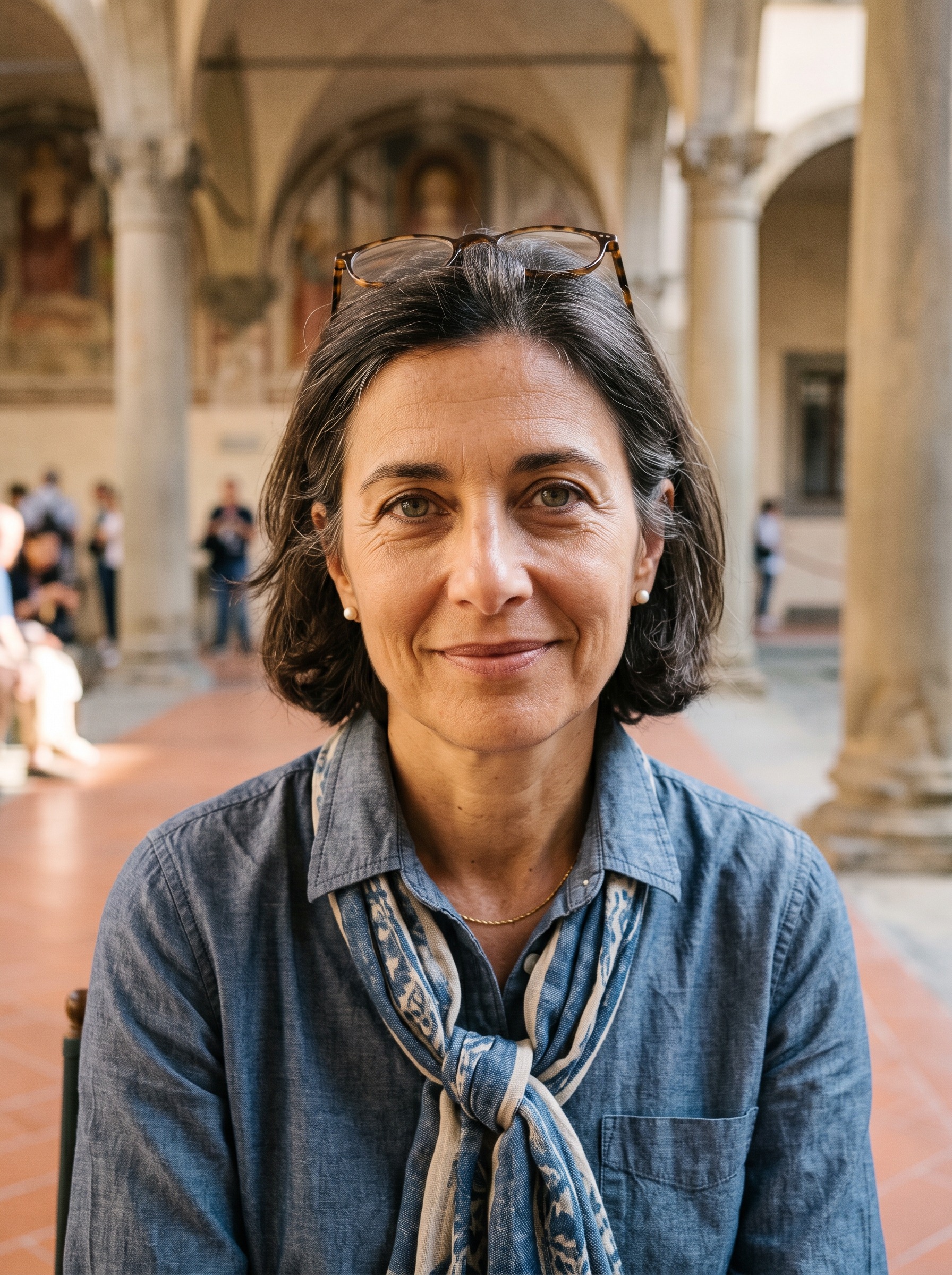

Santa Croce announces itself first by sound: scooters ticking over on the edge of Piazza Santa Croce, a church bell cutting through the chatter, and somewhere nearby the rustle of paper around a schiacciata the size of a paving slab. Ten minutes east of the Uffizi, the city loosens its tie. The streets narrow, the crowds thin just enough to let the quarter breathe, and Florence starts to look less like a postcard than a place where people still go to work, eat lunch, argue over football and linger for one more glass.
What Santa Croce is known for
The neighbourhood takes its name, and most of its gravity, from the Basilica di Santa Croce, the great Franciscan church that functions as Italy’s pantheon with a distinctly Florentine sense of self-regard. Michelangelo lies here. So do Galileo Galilei, Niccolò Machiavelli and Rossini, while Dante gets a cenotaph rather than a grave, because Florence, like any family with a long memory, is capable of both devotion and a little passive-aggressive correction. The basilica’s scale is part of the point: this is the largest Franciscan church in the world, and it was built to hold not just worship but civic pride.
Inside, the place rewards anyone willing to slow down. Giotto’s frescoes in the Bardi and Peruzzi chapels are not to be rushed past in a tourist’s blur; they still have the grain of hand and plaster, the old fresco tooth that tells you where the wall ends and the illusion begins. Brunelleschi’s Pazzi Chapel, in the cloister, is the opposite of theatrical. It is serene, geometric, almost severe, one of those small Renaissance rooms that feels less like architecture than a proof.

The square outside has always been for spectacle. Piazza Santa Croce is wide, faintly scruffy, and honest about it. Every June it is covered in sand for Calcio Storico Fiorentino, the brutal old game that is part football, part rugby, part wrestling and part municipal bad temper. Two semi-finals and a final are played before the feast of San Giovanni on 24 June, with the local Azzurri representing this quarter. It is one of those Florentine rituals that sounds folkloric until you see the bodies collide and realise the city means it quite literally.
Santa Croce is also the old leather district, and that matters because Florence still has a habit of making its luxury by hand. The tradition survives most authentically at the school tucked behind the basilica, where the air smells of hide and beeswax rather than souvenir-shop varnish. That distinction is the whole neighbourhood in miniature: one foot in the museum, the other in the workshop.
Where to eat & drink
If Santa Croce has a culinary spine, it is Via dei Neri, the food-lover’s gauntlet running from behind the Uffizi toward the basilica. It is a street of queues, cones, napkins, and the sweetly dangerous optimism that says lunch can be eaten standing up. The most famous line belongs to All’Antico Vinaio, the Mazzanti family’s schiacciata institution on Via dei Neri 65-78, open since 1991 and now occupying several shopfronts. The sandwiches are the sort of thing that make sensible people queue: enormous slabs of oil-slicked Tuscan flatbread stuffed with pecorino, truffle cream, prosciutto and grilled vegetables, roughly €8-12 depending on how ambitious you feel. Go early or late unless you enjoy watching your lunch become a civic event.

A few doors along, Gelateria dei Neri is where locals actually stand in line for gelato, and that distinction matters more than any slogan. The board runs from pure dark chocolate to ricotta-and-fig, the sort of range that tells you the shop is not trying to be clever, only good. If you want the old Florentine school, walk to Vivoli on Via dell’Isola delle Stinche 7r, the city’s oldest gelateria, family-run since 1929. Its affogato — espresso poured over gelato — is the obvious order, but the rice-pudding flavour is the one that reminds you how much of Italian dessert history is built on thrift, milk and patience. Cups only here. Florence can be vain, but Vivoli knows when a cone is unnecessary.
For a sit-down meal near the church, Baldovino on Via di San Giuseppe 22r is a bright, long-running bistro-pizzeria a hundred metres from the basilica, doing wood-fired pizza alongside Tuscan primi and fresh fish. It has the useful virtue of not trying too hard. Toward Sant’Ambrogio, the Cibrèo family of restaurants, founded by the late Fabio Picchi and now run by his son Giulio, anchors the food scene with the kind of authority that comes from having been a reference point for years. And if you want to finish the argument entirely, Enoteca Pinchiorri on Via Ghibellina 87 is Florence’s only three-Michelin-star restaurant, with one of Italy’s great wine cellars to match. That is not a casual dinner. It is a decision.
Going out
Santa Croce is the closest the walled centre gets to a nightlife district, and it behaves accordingly. The axis is Via de’ Benci, the street linking the Arno to the basilica, with bars and aperitivo spots packed so tightly that the evening seems to spill from one doorway into the next. Moyo on Via de’ Benci 23r is the dependable anchor: all-day, then into late, with a generous Italian-style aperitivo spread early in the evening before the crowd thickens. It is the kind of place where the first drink is practical and the second becomes a social theory.
A few doors up, the Red Garter on Via de’ Benci 33-35r claims the title of oldest American-style bar in Italy, open since 1962. The claim is part of its charm, along with the live music and the student-and-stag crowd that keeps the room humming late. No one comes here for hushed sophistication. They come because the night in Santa Croce has momentum.

On warm nights, though, the real action may be simpler than any bar menu: Piazza Santa Croce itself, and the side streets around it, where a younger crowd gathers with cheap spritzes and beers once the day-trippers have gone. It is lively rather than exclusive, loud rather than polished, and that is precisely why it works. Central Florence can be precious; this corner prefers to stay awake.
Things to do
Begin, inevitably, with the Basilica di Santa Croce, and do not insult it with a rushed loop. The ticket is around €12 and covers the church, the cloisters, the Pazzi Chapel and the museum. It opens Monday to Saturday roughly 9:30am-5pm, with Sunday afternoons, and the unhurried hour you give it is the difference between ticking a box and actually seeing the place. The tombs, the Giotto frescoes and Brunelleschi’s chapel are the obvious draw, but the building itself teaches a useful Florentine lesson: masterpieces here are not isolated objects, they are part of a civic ecosystem of patronage, memory and pride.
Behind the church, through a courtyard off Via San Giuseppe 5r, is the Scuola del Cuoio, the leather school founded in 1950 by Franciscan friars to teach war orphans a trade. The showroom is free to visit, and you can watch craftspeople gild and stitch under frescoed 15th-century vaults. That detail matters. Florence sells a great deal of leather to people who would not know a stitch from a souvenir if it bit them. This is the genuine article, still working, still teaching, still smelling faintly of the thing itself.

For a change of pace, wander north to Piazza dei Ciompi, recently landscaped around its umbrella pine and the restored Loggia del Pesce. It hosts a monthly comics-and-vintage market, which is exactly the sort of slightly eccentric urban afterlife a square deserves. Nearby, Largo Annigoni now holds the relocated antiques and flea market, a reminder that Florence’s appetite for old things extends well beyond altarpieces. And if your timing is right in June, Calcio Storico turns the main square into a spectacle you won’t see anywhere else in the city.
{{ATTRACTIONS}}
Shopping & markets
Leather is the local specialism, but buy it with your eyes open. The stalls fanning out from the basilica sell plenty of low-quality goods aimed at tourists, and Florence is old enough to know that not everything with a hide smell deserves your wallet. The real craft is at the Scuola del Cuoio behind the church and in the handful of genuine bottega workshops scattered through the quarter, where pieces are cut and stitched on site. If you want to understand why Florence’s leather reputation has lasted, watch a craftsperson at work rather than a salesman under a sun umbrella.
For everyday life, walk five minutes northeast to the Mercato di Sant’Ambrogio, where Florentines actually shop. It is a covered hall ringed by open-air produce stalls, open mornings until around 2pm and closed Sundays. This is the antidote to the more touristed Mercato Centrale: less performance, more shopping bag. The surrounding streets are dense with delis, bakeries and cheap lunch counters, which is to say with the sort of places locals rely on and visitors often miss because they are looking for something photogenic.
On the fourth weekend of each month, Piazza dei Ciompi hosts its Fumetti e dintorni market of comics, vinyl and vintage clothing, while the relocated antiques and flea market now trades from the modern structure at nearby Largo Annigoni. If Santa Croce can seem all Renaissance gravity and aperitivo noise, these markets are the proof that the quarter still knows how to be practical.
Where to stay in Santa Croce
Santa Croce is one of the smartest choices for a central base that still feels lived-in. You are within a flat ten-minute walk of the Duomo, the Uffizi and Ponte Vecchio, but you will usually pay a little less and get more neighbourhood atmosphere than staying right on the main tourist squares. That combination is hard to beat if you like to step outside and have Florence rather than a hotel corridor waiting for you.
The quieter pockets around Via Ghibellina and toward Sant’Ambrogio suit travellers who want to eat where locals eat and sleep in relative calm. The blocks nearest Piazza Santa Croce and Via de’ Benci put you in the middle of the bar scene, which is a blessing if nightlife is the point and a curse if you wake at the slightest raised voice. Prices run the full range, from budget guesthouses and B&Bs near the market to riverside four-stars along the Lungarno with terraces looking across the Arno.
{{HOTELS}}
Getting around
Santa Croce is compact and made for walking. Almost everything in the quarter is within a few minutes of the piazza, and the Duomo, Uffizi and Ponte Vecchio are a flat 10-15 minute stroll west. From Santa Maria Novella station, the square is about 1.1km, roughly a 15-minute walk, which is useful to know when you arrive with a suitcase and the Florentine confidence that comes from thinking the city is flatter than it is.
Small electric buses, lines C1, C2 and C3, thread through the historic centre and stop near the basilica and along Via de’ Benci, with standard ATAF tickets around €1.70 valid for 90 minutes. Do not plan on driving in. The whole area sits inside Florence’s ZTL limited-traffic zone, where unauthorised cars are fined automatically, so use a garage outside the centre. For the airport, the T2 tram links SMN to Florence’s Peretola airport in about 20 minutes, an easy connection once you have walked the short distance to the station.
Santa Croce works because it is not trying to be either a monument or a mood board. It is a neighbourhood with a basilica large enough to contain the city’s dead, a square that still stages a fight every June, and a food scene that moves from a €10 sandwich to a three-star cellar without losing its accent. That is very Florentine: a little grand, a little rough around the edges, and happiest when the day ends with leather dust on one street, gelato on another, and a spritz on the steps as the bells start again.
FAQs
Is Santa Croce a good area to stay in Florence?
Yes. It is one of the best central bases if you want real neighbourhood life rather than just monuments. You are a flat 10–15 minute walk from the Duomo, Uffizi and Ponte Vecchio, with excellent food and lively bars nearby, and you usually pay a little less than on the main tourist squares. The trade-off is noise: streets near Piazza Santa Croce and Via de’ Benci stay busy late, so lighter sleepers should look toward the quieter blocks near Sant’Ambrogio and Via Ghibellina.
What is Santa Croce known for?
Above all, the Basilica di Santa Croce: the Franciscan church that holds the tombs of Michelangelo, Galileo and Machiavelli, plus Giotto frescoes and Brunelleschi’s Pazzi Chapel. The area is also Florence’s traditional leather district, home to the Scuola del Cuoio behind the church, a street-food magnet along Via dei Neri, the city’s oldest gelateria at Vivoli, and the setting each June for Calcio Storico on the sand-covered main square.
Where should I eat in Santa Croce?
For a quick iconic bite, join the queue at All’Antico Vinaio on Via dei Neri for a schiacciata sandwich, then finish with gelato at Vivoli or Gelateria dei Neri. For a proper sit-down meal, Baldovino near the basilica does wood-fired pizza and Tuscan classics, while the Cibrèo family toward Sant’Ambrogio is a Florentine institution. At the top end, Enoteca Pinchiorri on Via Ghibellina is the city’s only three-Michelin-star restaurant.
Is Santa Croce noisy at night?
It can be. The bars around Via de’ Benci and Piazza Santa Croce stay lively late, especially on warm nights and at weekends. If you want a quieter sleep, choose accommodation closer to Sant’Ambrogio or Via Ghibellina rather than the square itself.