Frankfurt guide
Westend, Frankfurt: the quiet elegance behind the towers
A walk through Frankfurt’s most polished district, where Gründerzeit villas, diplomatic hedges and parkland sit just minutes from the banking skyline.
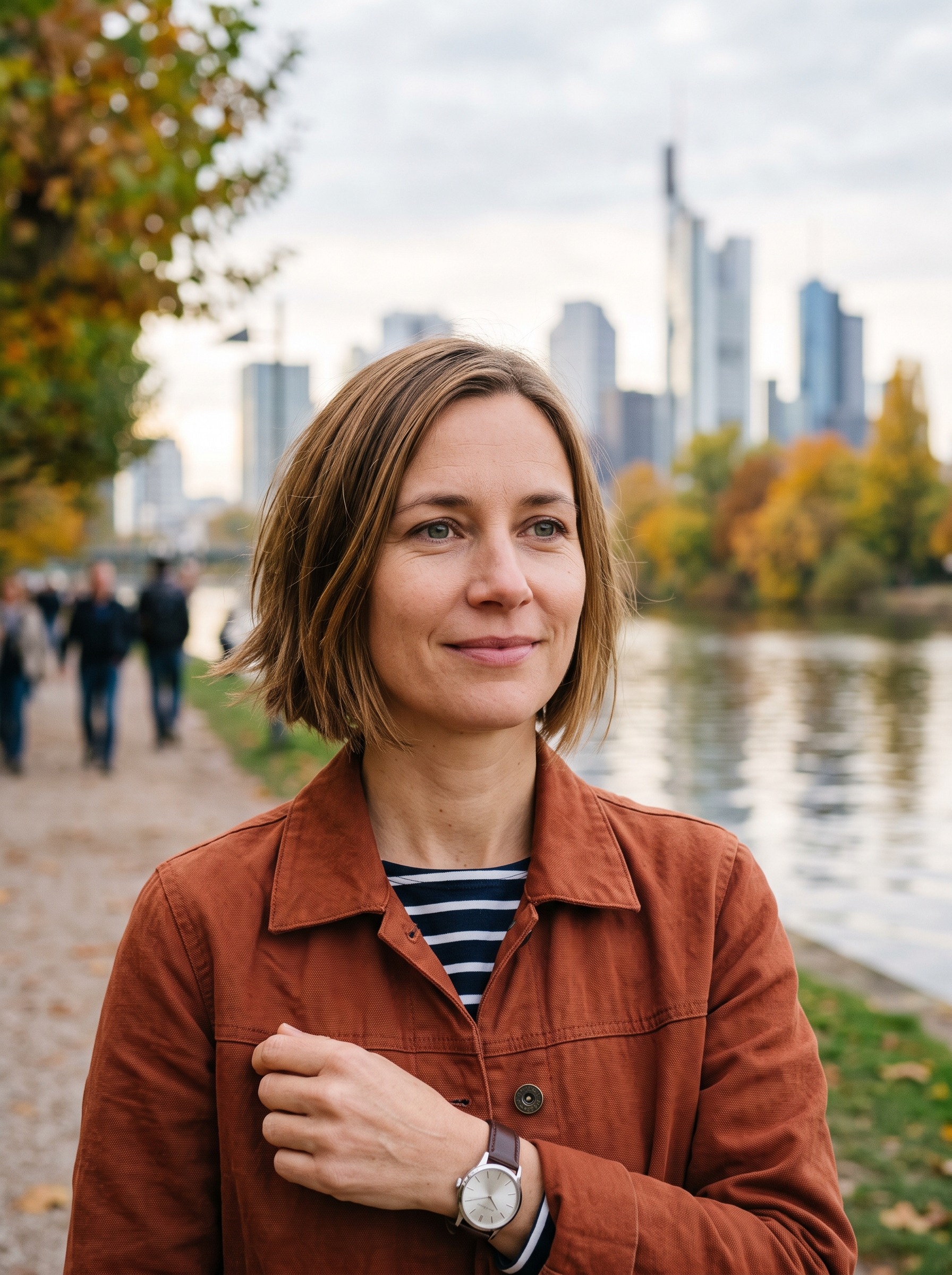 By Elena Vogt

Walk five minutes north of the Alte Oper and the city changes its tone. The towers are still there, glinting above the treetops, but at street level Westend gives you chestnut-lined avenues, wrought-iron gates and stucco villas built for bankers and merchants in the years of Wilhelm II. The money is obvious if you know how to look for it, yet it rarely raises its voice. Here, a glass of Sicilian white at a corner cantina feels more in character than any rooftop DJ ever could.
What Westend is known for
Two things define Westend, and they sit side by side with a kind of Frankfurt confidence: money and greenery. The district’s late-19th-century villas were built when the city’s commercial class wanted room, light and a little grandeur, and the streets around Grüneburgweg, Feldbergstraße and Bockenheimer Landstraße still carry that Wilhelminian poise. Many of the fin-de-siècle mansions have been divided into apartments, embassies or consulates; north of Grüneburgpark, the pocket known as the diplomatic quarter feels especially discreet, all hedges, nameplates and quiet comings and goings.

The other defining feature is the green. Palmengarten, the Botanical Garden, Grüneburgpark and Rothschildpark knit together along the western edge into a broad, walkable belt of lawns and trees. It is one of the pleasures of Westend that you can move from a designer boutique to a picnic blanket in a handful of minutes, with the skyline appearing and disappearing through branches like a careful reveal. Grüneburgpark is the local favourite for that last light of day, especially from its open lawns, where the city’s towers line up beyond the grass. Tucked into one corner is the Korean Garden, with two pavilions gifted by South Korea during the 2005 Book Fair — a small, unexpected pocket of calm that feels entirely right here.

Westend is also where Frankfurt’s financial skyline presses closest to the domestic scale of the neighbourhood. On the southern flank, the crown-topped Westend Tower rises at Westendstraße 1, its steel corona a nod to the imperial coronations that once gave the city its ceremonial language. It is the sort of building that reminds you, even in a district of villas and gardens, that Frankfurt never quite stops being Frankfurt.
Where to eat & drink
Westend eats with restraint and confidence. The mood is Italian-leaning, polished, and deeply attached to wine. On Feldbergstraße, Isoletta at number 31 has been a fixture for around 40 years, a Cavallo-family trattoria that still does classic Italian cooking and pours boutique-winery imports without fuss. It has the reassuring feel of a place that knows exactly who it is. A few doors away in spirit, if not in style, Vetro Vero Cantina Westend at number 3 turns dinner into something looser: a cosy neighbourhood cantina where the sommelier pours from close to a hundred labels and the modern Italian plates keep the room humming well into the evening.

The current name on everyone’s lips is Naná on Grüneburgweg 95, where refined Sicilian fine dining unfolds in a protected building. It is the sort of table that gets booked out, and the sort of place that makes Westend’s quiet glamour legible in one sitting. The cooking is polished rather than showy, and the setting — a listed building on one of the district’s most walkable streets — fits the neighbourhood’s habit of keeping its best things a little understated. Naná is closed Mondays, which feels almost proper for a room that asks you to slow down.
At the top end of the district, in the diplomatic quarter, Restaurant Villa Merton at Am Leonhardsbrunn 12 is one of Frankfurt’s serious dining addresses: a one-Michelin-star kitchen inside a listed 1927 villa, serving creative, produce-led modern German cooking. Lunch brings a bistro menu; behind the house, a terrace opens into the greenery. It is a meal that belongs to the district’s more formal side, but the villa setting keeps it from feeling stiff. You come for the cooking, yes, but also for the sense that Westend still understands how to make a meal feel like a private occasion.
On the southern edge by the Alte Oper, Moriki at Taunusanlage 12 caters to the edge where Westend meets the city centre: sleek modern Japanese and sushi, the kind of place that catches the banking crowd on the way between office and evening. It is a useful reminder that Westend is never far from the city’s commercial pulse, even when it feels as though the pulse has been softened by trees.
For daytime, the neighbourhood’s grande dame is Café Laumer at Bockenheimer Landstraße 67. Open since 1919, once a daily haunt of Theodor W. Adorno and the Frankfurt School, it remains the place to come for coffee, cake and a proper Sunday breakfast in the garden. There is a continuity to Laumer that suits Westend perfectly: the room has seen generations of readers, thinkers and neighbours pass through, and it still feels like a café that belongs to the city’s inner life rather than its performance of itself.

For something more casual, Sunny Side Up on Bockenheimer Landstraße 9 does all-day breakfast, pancakes and bowls for a younger crowd. It is the kind of place that keeps the neighbourhood from seeming too polished for its own good — a reminder that Westend can be soft-edged and easy without losing its manners.
Going out
Westend is not a going-out district, and locals would be the first to say so. There are no clubs here, and precious little that runs past midnight. The neighbourhood’s idea of a big night is a bottle at a wine bar with the windows open, and that is not a complaint so much as a statement of character. If you want bass and late hours, you go elsewhere. If you want to end the evening with the sound of a glass being set down carefully on a table, Westend has you covered.
The place to know is Westlage at Grüneburgweg 92, a wine bar and delicatessen rolled into one. You can drink in, buy a bottle to take home, and linger over the sort of conversation that stretches without being rushed. It is very Westend: practical, well-stocked, and quietly indulgent.

Vetro Vero and Isoletta on Feldbergstraße also slide easily from dinner into an unhurried evening over Italian labels. That is the rhythm here. The night does not build to a climax; it settles. And if you do want more noise, more late movement, more of the city’s sharper edges, the options are close enough to feel like extensions rather than escapes. The bars of the Bahnhofsviertel are ten minutes south, the rooftop bars of the banking quarter sit nearby, and Sachsenhausen’s apple-wine taverns are a tram or short ride across the river. The advantage of staying in Westend is that you can step out into all of that and still come home to streets that have gone quiet.
Things to do / what to see
In Westend, the main event is the green. Palmengarten deserves a couple of unhurried hours, not least because it gives you a miniature world tour under glass: palms, cacti, alpine beds and carnivorous plants arranged with the kind of Victorian ambition that still feels charmingly serious. The Palmen Express is there for anyone with children, though adults are perfectly allowed to enjoy it too. Admission is roughly €9 for adults and €3 for children; the garden opens daily from 9am, closing at 6pm in summer and 4pm in winter.
Next door, the Botanical Garden is free, which makes it one of the district’s easiest pleasures: a place to drift into without a plan, then emerge an hour later with the sense that your day has been quietly improved. Beyond that, Grüneburgpark is where you actually come to lie on the grass. Its 29 hectares, old trees and open sightlines make it an easy sunset choice, and on a good evening the skyline feels almost staged for the lawn.
If the weather turns, head to the Senckenberg Naturmuseum on the district’s edge. It has Germany’s biggest run of dinosaurs, including a T. rex and Diplodocus in the hall, and through 2026 it is running the special exhibition Edmond: The Last Days of the Dinosaurs, open from September 2025 to August 2026. It is the kind of rainy-day stop that can swallow a whole afternoon without apology.
Architecture is the quieter pleasure here, and perhaps the one that best rewards a slow walk. Wander the villa streets for the Gründerzeit facades, then make for Campus Westend to see the monumental IG Farben (Poelzig) Building. Hans Poelzig’s 1930 masterpiece was once Europe’s largest office block and later US Army HQ; now it belongs to Goethe University. The grounds are free to explore, and if you can get into the common areas, the paternoster lifts are a small architectural curiosity that still feels wonderfully out of time.
On the district’s western side, Rothschildpark gives you a smaller, storied pause: a park on the site of the old Rothschild palace, with a surviving neo-Gothic tower. It is not the grand sweep of Grüneburgpark, but that is part of its appeal. Westend likes its scale adjusted just so, whether the subject is a villa, a lawn or a memory of a palace.
{{ATTRACTIONS}}
Shopping
Westend’s shopping is boutique rather than high-street, and that feels exactly right for a district that prefers discretion to display. The place to drift is Grüneburgweg, which locals half-jokingly call their village high street. Along it you find independent fashion, a French pâtisserie, delicatessens and specialist wine shops, including Westlage at number 92, where the deli counter and the bar share a room. It is a street for grazing rather than raiding: a bottle here, a wedge of cheese there, pastries for later, perhaps a stop that turns into an hour because the window light is good and the street is calm.
For more serious retail, you drift south to the district’s edge, where Westend folds into the city centre. There, Goethestraße offers Frankfurt’s designer-mile version of luxury, while the pedestrianised Freßgass brings food and café bustle a few minutes away. But within Westend itself, the shopping remains calibrated to the neighbourhood’s temperament: considered, expensive, and pleasantly unhurried.
Where to stay in Westend
Westend is for travellers who want calm and green over noise, and who do not mind paying for the privilege. Accommodation here sits among the priciest in Frankfurt, much of it in converted historical buildings. The signature stay is Hotel Beethoven, a boutique hotel occupying half a genuine Westend villa close to the Palmengarten and the university. Its top suite opens onto a roof terrace with a full skyline view, and the Messe is an easy 20-minute stroll away. It is exactly the sort of place that makes sense in Westend: a villa repurposed without losing its dignity.
Aim for the streets around Grüneburgweg and Bockenheimer Landstraße if you want cafés and boutiques on your doorstep with the park a short walk away. The calmer diplomatic-quarter pocket north of Grüneburgpark gives you near-total silence. The southern edge near the Alte Oper and Taunusanlage keeps you close to the centre and the banking-quarter rooftop bars while still feeling residential. Whichever pocket you choose, expect leafy, well-kept, safe streets — and to be within walking distance of the centre, the Messe and the parks.
{{HOTELS}}
Getting around
Westend is compact and genuinely walkable. From most of the district, you can reach the Alte Oper and the city centre on foot in well under 15 minutes, and the Messe is either a short stroll or one stop away. The core U-Bahn stops are Westend on the U6 and U7, about two minutes from Grüneburgpark; Bockenheimer Warte on the U4, U6 and U7 by the university and Palmengarten; and Alte Oper on the U6 and U7 for the southern edge. Any of these gets you to Frankfurt Hauptbahnhof in a few minutes.
For the airport, take the U-Bahn or walk to the Hauptbahnhof and change to an S-Bahn — the S8 or S9 — to Frankfurt Flughafen. The whole trip runs roughly 20 to 30 minutes door to platform. Cabs and rideshares are plentiful, which is no surprise in a district with so many bankers, and the flat, tree-lined streets are pleasant to cycle.
Westend’s deeper appeal is that it makes the city feel legible. You can read Frankfurt’s ambitions in the skyline, its old wealth in the villas, its civic pride in the parks, and its self-control in the way a good dinner, a good walk and a quiet street all seem to belong to the same neighbourhood. It is not the part of town that shouts. It is the part that knows exactly where to put its hands.
FAQs
Is Westend a good area to stay in Frankfurt?
Yes — if you want calm, greenery and elegance rather than nightlife. Westend is central, walkable and safe, with boutique hotels in real villas, easy access to the Alte Oper, the parks and the Messe. The trade-off is price: it’s among Frankfurt’s most expensive areas, and the after-dark scene is deliberately quiet.
Is Westend safe?
Very. Westend is one of Frankfurt’s safest and most desirable districts: leafy, residential, well-lit and well-policed. It’s popular with families, diplomats and finance professionals, and normal city-centre awareness is enough, especially near the busier southern edge.
What is there to do in Westend besides the parks?
Quite a lot. You can see dinosaurs at the Senckenberg Naturmuseum, walk the free grounds of the IG Farben (Poelzig) Building on Campus Westend, admire Gründerzeit villa architecture, book a Michelin-star dinner at Villa Merton, and browse the boutiques and wine bars along Grüneburgweg.
How do you get around Westend?
It’s a compact, walkable district. Westend, Bockenheimer Warte and Alte Oper U-Bahn stations cover the area, and the city centre, Messe and Hauptbahnhof are all close by. The airport is usually a 20–30 minute trip via the Hauptbahnhof S-Bahn connection.