Hanoi guide
The Old Quarter, Hanoi: guild streets, beer corners and the city’s loudest heart
A walk through Hanoi’s Old Quarter is a lesson in speed, smoke and memory: silk lanes, bia hoi stools, temple bridges and the kind of street life that never quite lowers its voice.
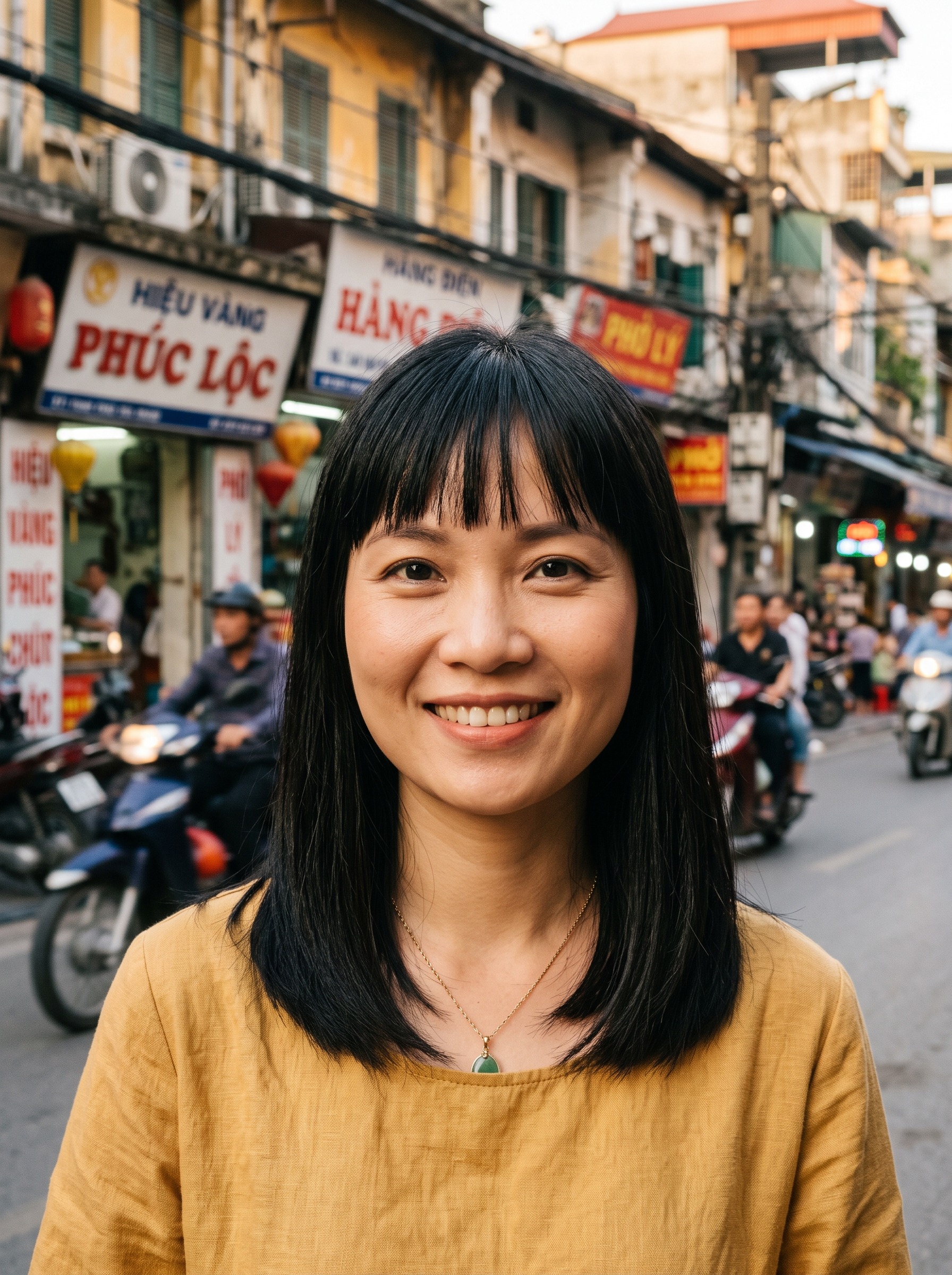 By Linh Pham

Thirty-six ancient guild streets still fold north of Hoan Kiem Lake, and the first thing you notice is not a landmark but a rhythm: scooters slipping past your knees, shopfronts half-open to the pavement, and the old names on the street signs telling you what each lane once made. Hang Gai for silk. Hang Bac for silver. Hang Ma for paper offerings. In the Old Quarter, history is not preserved behind glass; it is still being traded, grilled, folded, mended and shouted across the road.
The district can feel like a dare at first. It runs on overload, on the constant negotiation between foot traffic and motorbikes, between old tube-houses and new bars, between a family living room and a storefront that never fully closes. But that same density is what makes it so compelling. You can take a bowl of pho, follow it with egg coffee, wander into a temple, get lost in a market hall, and end the evening on a plastic stool with a beer that costs less than a bottle of water in many cities. The Old Quarter is loud, yes, but it is also legible if you let it be: a compact map of Hanoi’s appetite, commerce and memory.
What the Old Quarter is known for
The district’s structure is its history. From the 15th century, the area organised itself into trade guilds, and the street names still carry that original logic. Hang Gai remains the silk street, lined with bolts of fabric and tailors who can turn around a bespoke ao dai in a day or two. Hang Bac still leans into jewellery and money-changing, a reminder that this was once the street of silversmiths minting coins for the court. Hang Ma glitters with paper lanterns, festival decorations and joss offerings, and before Tet or the Mid-Autumn Festival it seems to catch fire in colour.
That old system survives in the modern chaos, not as a museum piece but as a working city script. You can feel it most clearly when you walk slowly enough to read the street by its goods: silk shimmering under fluorescent bulbs, stacks of paper votives, tiny counters where gold chains and wedding rings sit under glass. The Old Quarter is where Hanoi still performs itself in public, and often at full volume.
Everything orbits Hoan Kiem Lake at the southern edge, and the lake gives the quarter its breathing space. Cross the scarlet The Huc Bridge to reach Ngoc Son Temple on its island, then look back for the Turtle Tower out on the water. It is a short, almost ceremonial pause in a district otherwise built for motion.

A little farther north, the district changes scale again at Dong Xuan Market, the Old Quarter’s biggest market, and at the Thang Long Water Puppet Theatre on Dinh Tien Hoang, where the centuries-old art of puppets dancing on water still draws audiences several times a day. This is a compact, walkable circuit, and the pleasure is in letting the route loosen. In the Old Quarter, getting pleasantly lost is not a mistake. It is the point.
Where to eat & drink
This is ground zero for northern Vietnamese street food, and the simplest rule is still the best one: eat where the queue is Vietnamese and the menu is short. The quarter is full of places that have become famous, but the famous ones are famous for a reason. They are the places where the city keeps coming back.
At Pho Gia Truyen, 49 Bat Dan, the line is self-service, the room is bare-bones, and the beef pho comes out in the morning and again in the evening only. It has been ladled here since the 1960s and now carries a Michelin Bib Gourmand, but the real draw is the bowl itself: clear broth, soft noodles, beef that disappears into steam. A bowl runs about 50,000-70,000 VND.

For bun cha, the Hanoi dish of grilled pork and vermicelli in warm dipping broth, Bun Cha Dac Kim at 1 Hang Manh is the institution to know. It has been going since 1966, and the smoke drifts out into the lane in a way that seems to announce lunch before you see the sign. This is one of those places where the street itself does part of the cooking.
Cha ca, turmeric-and-dill grilled fish sizzling at the table, is so tied to this quarter that a street was renamed for it. Cha Ca La Vong at 14 Cha Ca has served that single dish for five generations. There is something beautifully stubborn about that: one dish, one address, and a lineage long enough to make repetition feel like craft rather than routine.

For something quicker, Banh Mi 25 at 25 Hang Ca draws a steady queue from 7am, its crisp baguettes moving fast enough to make a meal feel like a small victory. And no visit feels complete without egg coffee, ca phe trung: thick, custardy whipped yolk over strong coffee, invented in 1946 at Cafe Giang. The family-run cafe is tucked down an alley at 39 Nguyen Huu Huan, and a cup is around 35,000 VND. It tastes like dessert and caffeine deciding to stop arguing.

If you want a more playful, social stop, The Note Coffee at 64 Luong Van Can spreads over four floors papered in sticky notes and looks out toward Hoan Kiem Lake. It is part cafe, part scrapbook, part reminder that the quarter is also a place where visitors leave traces of themselves, however briefly.
Going out
Nightfall changes the district’s grammar. The stools come out, the lanes tighten, and Ta Hien becomes what everyone calls Beer Street. At the Luong Ngoc Quyen corner, bia hoi flows into plastic cups for as little as 7,000-15,000 VND, and the whole scene has the energy of a block party that forgot to end. You drink it on a kindergarten-sized stool with your knees round your ears while the crowd spills into the road. It fills from early evening and peaks around 10pm, loudest from Friday to Sunday.

It is easy to romanticise this kind of scene, and just as easy to dismiss it as tourist theatre. The truth sits somewhere in between. Ta Hien is crowded, rowdy and undeniably built for visitors now, but it still delivers the old Vietnamese pleasure of drinking outside, shoulder to shoulder, with the road as your floor and the city as your soundtrack. If you want quiet, this is not your lane. If you want a Hanoi night that feels alive in all directions at once, it is hard to beat.
For a roof and a cocktail list, 1900 Le Theatre at 8 Ta Hien is the quarter’s best-known club, built inside a converted colonial theatre with a mezzanine over the dance floor and running until roughly 1am. The setting gives it a little more drama than the average basement bar, though the real draw is still the same one that pulls people to Ta Hien in the first place: the promise that the night can keep going a little longer.
On the western edge by St Joseph’s Cathedral, Pasteur Street Brewing Co. pours Vietnam’s best-known craft beer across two levels with breezy upstairs seating. It is a useful counterpoint to the bia hoi scrum a few streets east, especially if you want a quieter pint without leaving the quarter’s orbit. Between these poles, the smaller bars along Ta Hien and Ma May keep the noise going most of the night, which is precisely why light sleepers are wise to stay elsewhere.
Things to do
Start with the lake and its temples, then simply wander. That is the Old Quarter’s deepest offering: not a sequence of attractions so much as a city that rewards drift. Hoan Kiem Lake & Ngoc Son Temple are the district’s heart, and the red The Huc Bridge gives the whole scene a ceremonial glow, especially when the light is soft and the water turns dark and still.
A visit to the Thang Long Water Puppet Theatre is the one booked-in-advance cultural fixture worth building an evening around. The shows run several times daily, and even if you have seen water puppetry elsewhere, there is something satisfying about seeing this centuries-old form where so much of the quarter’s life still happens at street level, in public, in motion.
If you want the classic market hall, Dong Xuan Market is the old quarter’s largest, a 19th-century three-floor hall that feels most itself when the aisles are crowded and the goods stack up in every direction. On a weekend, the surrounding streets become part of the attraction too, because the Hanoi Weekend Night Market closes the core route from Hang Dao up to Dong Xuan to traffic on Friday, Saturday and Sunday evenings, roughly 6pm to midnight, with food stalls, buskers and knock-off stalls stretching the length of the route. It is one of the few times the quarter becomes even denser than usual.
If the famous train shot is on your list, the celebrated stretch of Train Street sits about a 15-minute walk south-west near Le Duan. Access comes and goes with police crackdowns, and the cafes only admit visitors with a booking, so check the current situation and the train timetable before you go rather than turning up cold. That warning matters; the quarter is no place to assume anything stays open, or accessible, just because it was there yesterday.
{{ATTRACTIONS}}
Shopping & markets
In the Old Quarter, shopping is not an activity separate from the neighbourhood; it is the neighbourhood. The guild streets are the shops. Hang Gai remains the place for silk scarves, lacquerware and made-to-measure clothing, with tailors turning around an ao dai or a shirt in a day or two. Hang Bac keeps its silversmithing heritage in a run of jewellery shops. Hang Ma is the most photogenic of the lot, a riot of lanterns, paper and festival kit, especially before Tet and Mid-Autumn.
For everyday chaos, Dong Xuan Market packs three floors with fabric, household goods and cheap clothing, while Hang Duong nearby sells candied fruit, mut, and dried snacks. Haggling is expected in the markets and street stalls, less so in the fixed-price boutiques on Hang Gai. That distinction matters here; it is one of the ways the quarter still sorts itself into old commerce and newer retail.
Keep an eye on your bag in the densest crush around the market and the night market. The quarter is lively and safe, but it is also crowded enough that a hand can disappear into a zip faster than you notice. The same advice applies to the beer lanes after dark. The city is not asking you to be afraid. It is asking you to be alert.
Where to stay in the Old Quarter
The Old Quarter is the default first-timer base because everything is on foot from here, but where you sleep inside it matters a great deal. Avoid booking directly on or beside Ta Hien, Luong Ngoc Quyen and Ma May unless you plan to be out until closing, since the bia hoi noise carries past 2am. Streets a couple of blocks back, or towards the lake and the quieter western lanes near St Joseph’s Cathedral, give you the same walkability with a fraction of the racket.
Look for a room down a blind alley or facing an internal courtyard rather than the street. That small choice can be the difference between waking up to scooters and waking up to a little pocket of calm above the noise. Budget hostels and dorms are plentiful and cheap; there is also a strong band of smart boutique hotels, several of them from the well-regarded La Siesta group, at mid-range prices. The area works best when you use it as a base rather than a retreat: somewhere to drop your bag, shower off the heat and go back out again.
{{HOTELS}}
Getting around
The Old Quarter is small and best covered on foot; almost everything above is within a 10-15 minute walk. There is no metro stop inside it, so within the city you rely on walking, ride-hailing or taxis. Grab is the easiest way to get a car or motorbike ride and avoids fare haggling; if you flag a metered taxi, stick to reputable firms like Mai Linh or Taxi Group.
The French Quarter, with its wide boulevards and the Opera House, is a flat 10-15 minute stroll south. That proximity is part of the Old Quarter’s appeal: you can move from narrow lanes and market crush to broader colonial avenues without changing your whole day.
Noi Bai International Airport is about 27-30km north; a metered taxi or Grab runs roughly 300,000-350,000 VND and takes 30-60 minutes depending on rush-hour traffic, while the airport bus 86 is the cheap alternative.
The best way to understand the Old Quarter is to stop trying to master it. Let the street names do the work. Let Hang Gai pull you toward silk, Hang Bac toward jewellery, Hang Ma toward paper lanterns. Sit down for pho, cross the road at a steady pace, and let the scooters flow around you. In a city that can feel like it is always moving too quickly, this is one place where the rush is the point, and where Hanoi still shows its age in public.
FAQs
Is the Old Quarter a good area to stay in Hanoi?
For most first-time visitors, yes. It puts you within walking distance of Hoan Kiem Lake, the main sights, street food and nightlife, and it has the widest choice of hostels and boutique hotels. The main caveat is noise: stay a couple of streets back from Ta Hien, Luong Ngoc Quyen and Ma May, and ask for a room off the street if you want sleep before the small hours.
Is the Old Quarter safe?
It is generally very safe, including at night, with crowds and street life keeping the lanes busy. The real risks are traffic and petty theft: cross the road at a slow, steady pace without stopping so scooters can flow around you, and keep bags zipped and phones secure around Dong Xuan Market, the night market and Beer Street.
How many days do you need in the Old Quarter?
Two to three days is enough to eat your way through the street food, walk the guild streets, see the lake and temples, catch a water-puppet show and spend a night on Ta Hien. Many travellers use it as a base for longer Hanoi stays or day trips farther afield.
What is the best thing to do first in the Old Quarter?
Start at Hoan Kiem Lake and Ngoc Son Temple, then wander north without a fixed plan. The quarter works best as a walk: the street names, food stalls, markets and temples reveal themselves gradually rather than all at once.