Hong Kong guide
Tsim Sha Tsui, Hong Kong: Harbour Light, Curry Heat and the Golden Mile
From the 8pm Symphony of Lights to Chungking Mansions curry and the harbour-front hotels, Tsim Sha Tsui is Hong Kong at full volume, all day and all night.
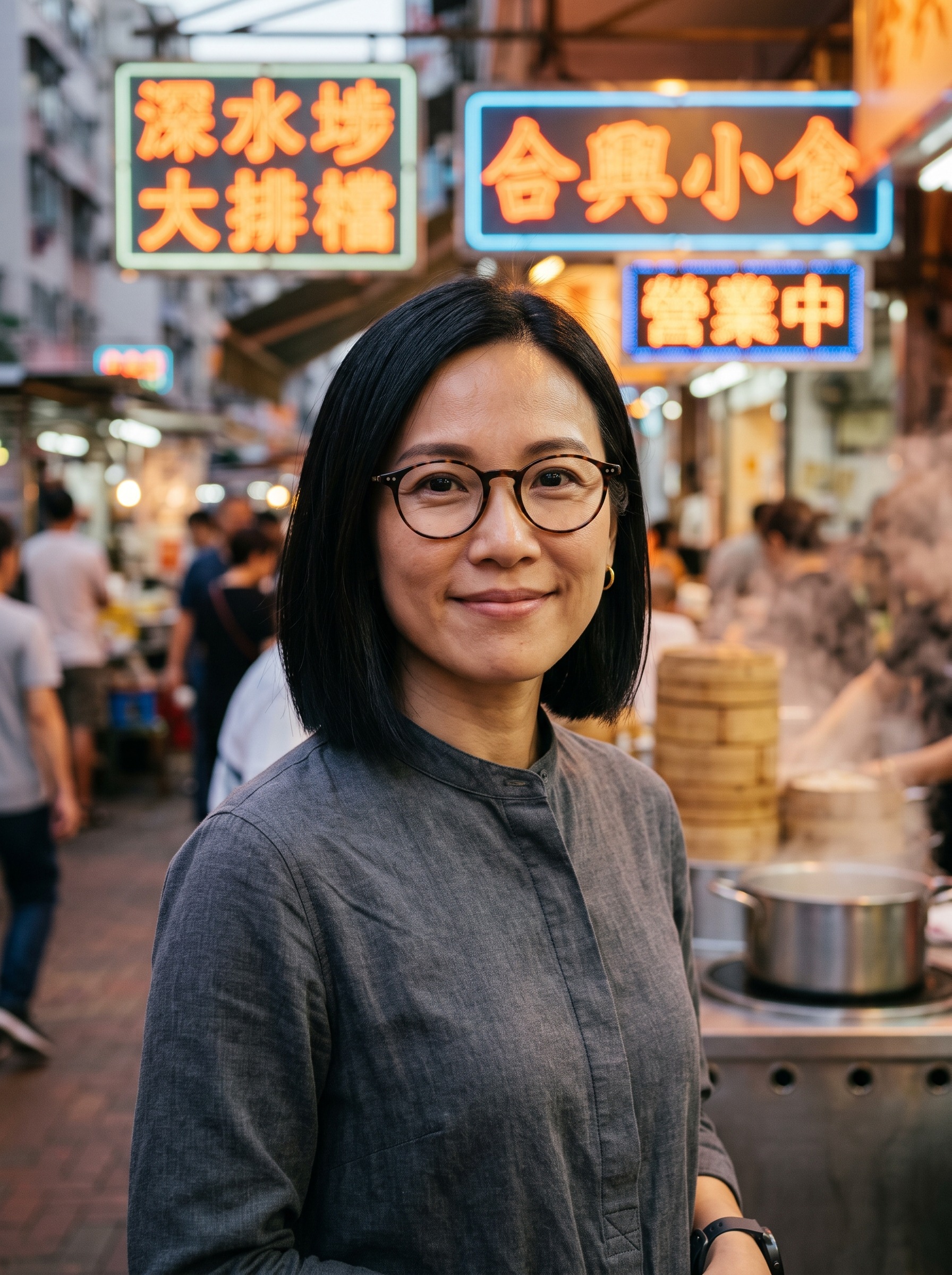 By Carmen Ho

Every evening at 8pm, the towers across Victoria Harbour start to talk to each other in beams of light, and the best free seat is still the railing of the Tsim Sha Tsui Promenade. That is the first truth of TST: this is Hong Kong as a public spectacle, a place where the skyline is not something you admire once and move on from, but the thing the whole district is built to frame. Stand by the water and you get the postcard. Turn inland and you get the city’s hard pulse — neon, hard sell, watch counters, curry steam, hotel lobbies, and the constant friction of people arriving, spending, eating, leaving, and arriving again.
What Tsim Sha Tsui is known for
Tsim Sha Tsui, or TST if you want to sound like you belong, is the Kowloon peninsula’s most overworked piece of real estate and its most useful. It is loud, bright and permanently in motion, the densest concentration of tourists, traders and neon in Kowloon. But the waterfront is the calm bit, and that contrast is the whole trick. The Tsim Sha Tsui Promenade runs along the harbour edge from the Star Ferry pier east past the Cultural Centre, with couples posing against the skyline and tai-chi practitioners sharing the paving with camera tripods. It is a broad, open strip of pavement where Hong Kong Island rises like a wall of glass across the water, and where the city suddenly makes sense in one glance.

At the heart of that waterfront is the Avenue of Stars, the reopened walk honouring Hong Kong cinema with celebrity handprints and bronze statues of Bruce Lee and Anita Mui. It can be touristy, of course it can, but that is not an insult here. This district is built on crowds and spectacle. The handprints, the statues, the sweep of the harbour, the nightly show — they all belong to the same city mood. And every night at 8pm, weather permitting, A Symphony of Lights turns dozens of harbour-front buildings into a synchronised light-and-sound show. The promenade outside the Cultural Centre and the Avenue of Stars are the prime free viewing spots, and you should take the free seat without apology.
The other identity is shopping and grandeur. Nathan Road, the Golden Mile, is the neon spine, lined with watch and jewellery shops, with signs stacked so high they seem to lean toward each other overhead. It is the kind of street where your neck starts to ache from looking up. At the western waterfront, Harbour City sprawls over the old Ocean Terminal cruise berth, one of Hong Kong’s largest malls, while The Peninsula Hong Kong on Salisbury Road keeps its old-colonial poise, open since 1928, with a colonnaded lobby and afternoon tea under live strings. Between the malls sits the 1915 Former Kowloon-Canton Railway Clock Tower, a lone survivor of the terminus that once launched trains to London via the Trans-Siberian. That clock tower is a stub of another era, but it matters because TST is full of these collisions: old and new, polished and battered, the official and the improvised.
Where to eat & drink
TST packs more range into a few blocks than almost anywhere on earth, and the range is not theoretical. At the top end, T'ang Court at The Langham on 8 Peking Road is one of the very few Cantonese kitchens anywhere to hold three Michelin stars, and the dish to know is the stir-fried lobster with three kinds of onion. That is the kind of room where the service is as measured as the plating, where you understand why Hong Kong still treats Cantonese dining as a serious art rather than a nostalgic one.

Not far away, Lai Ching Heen at the reopened Regent Hong Kong keeps a four-decade reputation for refined Cantonese in a harbour-front room, while Sun Tung Lok in Mira Place at 132 Nathan Road has been a high-end dim-sum name since 1969. If you want to eat well in TST without chasing novelty, these are the names that have earned their place. For something more contemporary, CHAAT at Rosewood is a Michelin-starred Indian kitchen plating elevated street food, which is a very Hong Kong way to think about luxury: take what is familiar, sharpen the edges, and serve it with a view.
But the soul of the area is the cheaper eating, and this is where TST gets honest. Cheung Hing Kee at Shop 6A, 48 Lock Road is a Bib Gourmand shrine to Shanghainese sheng jian bao — pan-fried, soup-filled pork buns crisped on the base. You hear the sizzle before you see the tray. That’s the sound of a good stop in Hong Kong: oil hitting hot metal, steam escaping, someone moving fast behind the counter.

Then there is Bakehouse at G/F, 44 Hankow Road, where all-day queues form for Grégoire Michaud’s sourdough egg tarts with their dark, caramelised crust. It is one of those places that has become a ritual for visitors and locals alike, and the queue is part of the scene, not an inconvenience. Across the street, Tai Ping Koon at 40 Granville Road is the old soy-sauce Western institution that invented the sticky Swiss-sauce chicken wings now copied all over the city. “Soy-sauce Western” is one of those Hong Kong phrases that tells you everything and nothing at once; you just have to go and taste the strange, sweet logic of it.
Inside Chungking Mansions on Nathan Road, where Wong Kar-wai set Chungking Express, the mood changes again. The lower floors are a maze of currency counters, phone stalls and cheap, brilliant curry, and long-running houses like The Delhi Club and Khyber Pass Mess Club serve mutton rogan josh, cheese naan, smoky tikka and biryani for a fraction of the price of the malls a block away. Bring cash. Bring patience. Bring appetite. This is not polished dining, and thank God for that.

Going out
The Kowloon night runs on height and cocktails rather than clubs, and the harbour view is the whole point. The crown is Ozone on the 118th floor of the Ritz-Carlton in the ICC tower on the West Kowloon waterfront, billed as the world's highest bar at some 480 metres, with a terrace looking straight down the harbour. It is the sort of place that reminds you how vertical Hong Kong really is. You ride up and up, and then there you are, drinking above the city as if gravity were a suggestion.
Closer to the promenade, Aqua has moved to the 17th floor of H Zentre on Middle Road, pairing Italian-Japanese plates with two open terraces over the skyline, while Eyebar on the 30th floor of the iSquare mall sits right above Nathan Road with a floor-to-ceiling view of Victoria Harbour. These are not hidden rooms; they are lookout posts with drinks. In TST, that is a feature, not a flaw.

For serious drinks rather than altitude, the neighbourhood hides a run of destination bars. DarkSide on the 2nd floor of Rosewood is a jazz-and-cigar cocktail parlour that has repeatedly made Asia’s 50 Best Bars, pouring rare aged spirits under live music. It is dark in the right way, the way that lets you settle in and stay. Tucked into Mody House at 30 Mody Road are two tiny Japanese-style institutions: Butler, an 18-seat, reservation-only mixology bar run by master bartender Masayuki Uchida, and Bar Buonasera upstairs, deep on whisky. They are the kind of bars where the room is small enough that every pour feels deliberate.
For something rowdier and open-air, Knutsford Terrace is TST’s compact bar alley — thirty-odd restaurants, pubs and shisha lounges packed along one short pedestrian street, busiest once the office crowd clocks off. It is not subtle. It does not need to be. Hong Kong after dark can be all precision and skyline, but it can also be a little messy, a little loud, and very alive.
Things to do
Start on the water. Cross the harbour on the Star Ferry — the green-and-white boats have plied between TST and Central since 1888, and the upper-deck crossing is still the cheapest, most romantic skyline ride in the city, costing only a few Hong Kong dollars. It is one of those rare city experiences that is both practical and beautiful, and TST is lucky to have it on the doorstep. Back on the Kowloon side, walk the Tsim Sha Tsui Promenade & Avenue of Stars east along the harbour, then time your evening around the 8pm Symphony of Lights at the railings by the Cultural Centre.
TST is Hong Kong’s museum quarter, and the museums are not afterthoughts. The Hong Kong Museum of Art sits right on the waterfront by the Cultural Centre, free to enter, with Chinese antiquities and local modern art. Next door, the dome of the Hong Kong Space Museum houses a planetarium and Omnimax theatre on Salisbury Road; adult exhibition entry is a token HK$10, and it is closed Tuesdays. A short walk east in TST East, the Hong Kong Museum of History on Chatham Road South tells “The Hong Kong Story” through a revamped permanent exhibition. It is the sort of place that makes the neighbourhood feel less like a shopping district with a view and more like a proper civic centre.
For a view without a bar tab, hike ten minutes up to Signal Hill Garden, where an Edwardian tower once dropped a time-ball for ships in the harbour and the platform still frames a fine skyline. It is free and rarely crowded, which in this district feels almost subversive. And for pure spectacle, K11 Musea at Victoria Dockside folds art installations, green walls and a Gold Ball atrium into a museum-meets-mall you can wander for free. It is glossy, yes, but it understands that in TST, display is part of the architecture.
{{ATTRACTIONS}}
Shopping & markets
TST is one of the great shopping districts in Asia, and it works in layers. At the waterfront, Harbour City is the flagship — a vast interconnected complex on Canton Road with hundreds of shops, from luxury flagships to mid-market chains, plus dozens of restaurants and its own cruise terminal. If you like your malls large enough to require orientation, this is your place. Beside the Avenue of Stars, K11 Musea is the art-driven alternative, where the boutiques share space with sculpture, green walls and a rotating programme of installations.
Nathan Road, the Golden Mile, is the traditional strip — watches, cameras, gold and tailors, with the caveat that the pushiest “copy watch” and tailoring touts cluster here, so know your prices and be firm. The rewards are on the side streets. Granville Road and its lanes are the fashion hunting ground, mixing independent boutiques with thrift and sample stores popular with a younger crowd. That is where the district loosens its tie a little.
For everyday Hong Kong texture, the lower floors of Chungking Mansions on Nathan Road run a warren of currency exchanges, SIM-card and phone stalls, and South Asian grocers. Bring a card for the malls and cash for the markets and Chungking; haggling is expected on the street, not in the department stores. TST shopping is not just consumption. It is choreography: the polished mall, the watch counter, the thrift rack, the money changer, the phone stall, the man calling you over in three languages.
Where to stay in Tsim Sha Tsui
TST is the classic first-timer’s base in Hong Kong: central, ferry- and MTR-connected, and home to the postcard skyline you came for. The waterfront band along Salisbury Road holds the legends — The Peninsula (1928, all colonnaded grandeur and afternoon tea), the ultra-modern Rosewood at Victoria Dockside with its harbour-facing infinity pool, and the reopened Regent right on the water, where a harbour-view room delivers the light show from your window at a serious price. One step back, the blocks around Nathan Road, Kimberley Road and Mody Road carry the mid-range and business hotels, well-priced and steps from the MTR, though rooms are compact and the streets are bright and busy late. Budget travellers have long headed for the guesthouses stacked inside Chungking Mansions and nearby Mirador Mansion — genuinely cheap, genuinely no-frills, and best researched before you book. Wherever you land, you trade quiet for convenience: this is a loud, luminous district, so light sleepers should ask for a room away from Nathan Road.
{{HOTELS}}
Getting around
TST is compact and walkable — you can cross the tourist core on foot in fifteen minutes, and an air-conditioned network of underground and elevated walkways links the MTR to the malls when it rains. Tsim Sha Tsui station on the Tsuen Wan line and the connected East Tsim Sha Tsui station on the Tuen Ma line sit under the district, with Exit E dropping you near the Star Ferry pier and promenade. That matters, because in TST the best route is often the simplest one on foot.
The Star Ferry is a destination in itself but also a genuinely useful, cheap way to reach Central and Wan Chai on Hong Kong Island in under ten minutes. Buses and cross-harbour tunnel taxis fill the gaps, and a Hong Kong Island cross-harbour trip by taxi is quick outside rush hour. For the airport, the fastest route is the Airport Express: ride the MTR one stop to Kowloon station, or catch a cross-harbour link, then the Express reaches Hong Kong International Airport in about 20–25 minutes; door-to-door from a TST hotel is roughly 40–50 minutes. Central Hong Kong is one Star Ferry hop or two MTR stops away. In other words: TST is not peaceful, but it is easy. And in Hong Kong, easy is a kind of luxury.
FAQs
Is Tsim Sha Tsui a good area to stay in Hong Kong?
Yes. It’s one of the best bases for first-time visitors, with the harbour skyline, the Star Ferry, museums and major malls close by, plus two MTR lines and a fast airport link. The trade-off is noise and crowds: this is a bright, busy district, so light sleepers should choose a room away from Nathan Road.
What is Tsim Sha Tsui known for?
The Victoria Harbour skyline and the nightly 8pm Symphony of Lights, best seen free from the Tsim Sha Tsui Promenade and Avenue of Stars; the Star Ferry to Central; the museums; and the shopping on Nathan Road, Harbour City and K11 Musea. It’s also famous for food ranging from three-Michelin-star Cantonese to cheap curry in Chungking Mansions.
Is Tsim Sha Tsui safe at night?
Yes, it’s very safe to walk at night, and the promenade and main streets stay busy and well lit. Use normal city common sense for pickpockets in crowds, and expect touts on Nathan Road offering copy watches, tailoring and bar deals; a firm no is enough.
What should I eat first in Tsim Sha Tsui?
If you’re splashing out, book T'ang Court for its stir-fried lobster with three kinds of onion. If you want the district’s everyday pulse, go for Cheung Hing Kee’s sheng jian bao, Bakehouse’s sourdough egg tarts, or curry inside Chungking Mansions.