Istanbul guide
Kadıköy & Moda, Istanbul: the Asian Side at Full Volume
A ferry-first feature on Istanbul’s liveliest Asian-side neighbourhood, where market lanes, bar streets and a grassy sunset shore make the city feel gloriously local.
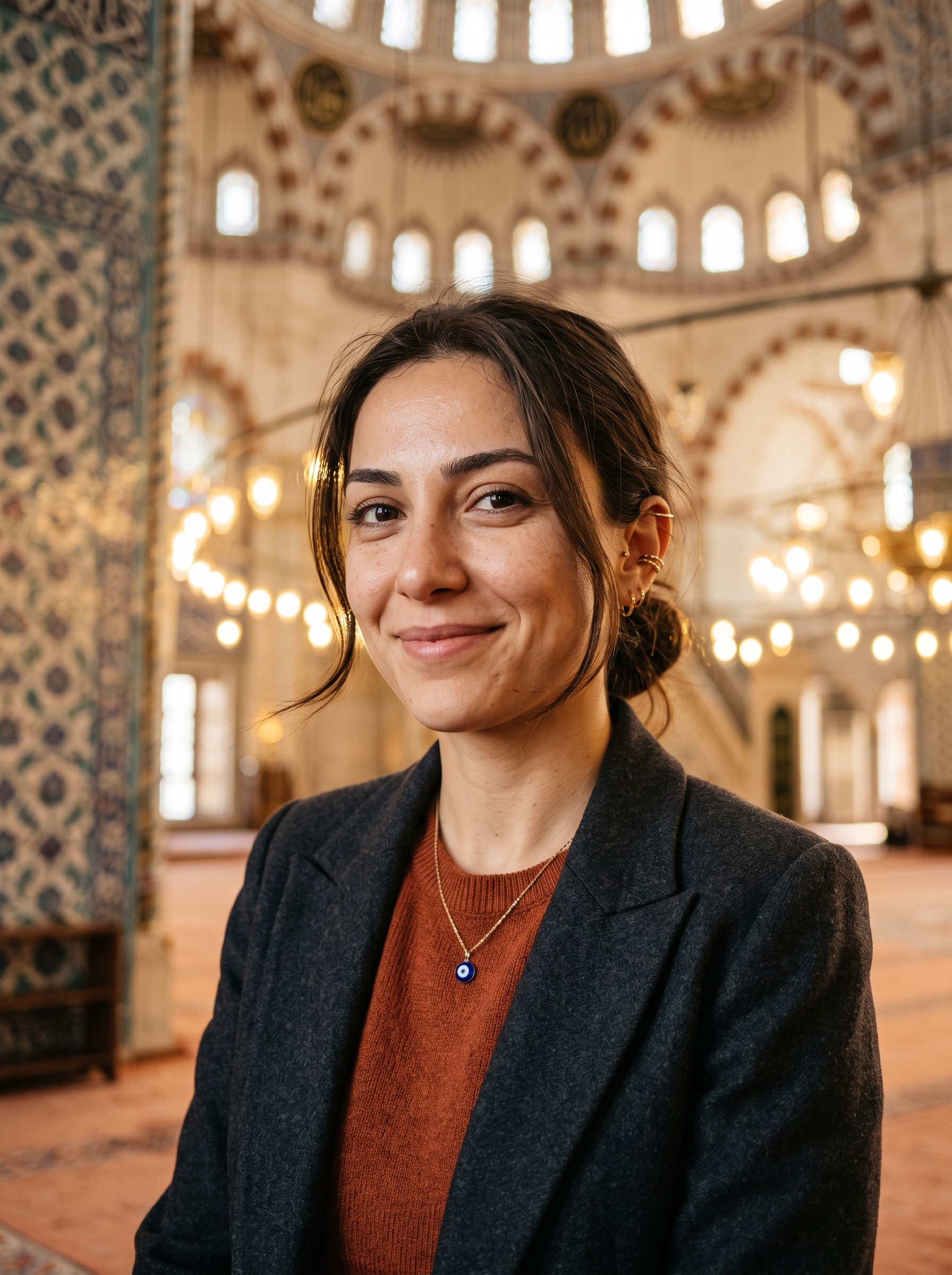 By Deniz Yalçın

Step off the ferry at Kadıköy and the neighbourhood starts talking before you’ve even found your bearings: fishmongers hosing down mackerel off Güneşlibahçe Sokak, cheese sellers lifting wedges the size of bricks, coffee roasting somewhere nearby, and the whole place vibrating with the ordinary business of being lived in. This is Istanbul without the museum hush. It is younger, cheaper and less varnished than the postcard peninsula across the water, and that is precisely why people keep coming back.
What Kadıköy & Moda are known for
Kadıköy runs on a simple but irresistible equation: market by day, bars by night, and enough culture in between to keep the whole thing from feeling like an accident. The market — the çarşı — is the anchor, a compact grid threaded through Güneşlibahçe and Serasker streets where fish, produce, cheese, pickle, spice and dried-fruit stalls do the work that glossy neighbourhood branding usually pretends to do. Here, the city’s creative class rubs shoulders with students, musicians and traders, and the result is a place that feels noisy in a useful way. Cats sleep on shop counters. Secondhand record crates spill onto the pavement. Teenagers carry guitars along the seafront. Even the meeting point has a personality: the bronze Bull Statue at Altıyol is where people say “meet me at the bull,” which is a lot more efficient than trying to explain a crossroads in a city this large.

What makes the district more than a food-and-drink stampede is the layering. The restored Süreyya Opera House on Bahariye Caddesi still stages opera, ballet and concerts; Rexx Cinema clings on at the edge of the bar street as one of the city’s last classic independent picture houses; Tellalzade Sokak near the market is lined with antique and secondhand-record dealers, the sort of street where an hour disappears without any dramatic event at all. Then Moda shifts the mood. Walk fifteen minutes south and the density falls away into low-rise streets, old mansions, ice-cream queues and a shoreline where the neighbourhood gathers for sunset. The city changes register there — less clatter, more breeze.

Where to eat & drink
If you want to understand Kadıköy through your mouth, start at Çiya Sofrası on Güneşlibahçe Sokak, No. 43. Musa Dağdeviren’s place is not interested in simplification; it is a living archive of regional Anatolian cooking, made famous far beyond Istanbul by Chef’s Table. The ritual is old-fashioned in the best sense: cold mezes chosen by weight, warm dishes by portion, and a menu that changes constantly because the point is not consistency but memory. Dishes rescued from villages across the south-east arrive here with their edges intact. Trust the counter. Point. Eat. Weekends get busy, which is less a warning than a reminder that good things attract queues.

For fish, the market’s own restaurants are the move, and Kadı Nimet Balıkçısı on Serasker Caddesi makes the logic almost embarrassingly clear. It is a fishmonger as well as a restaurant, so what lands on your plate is what was on ice out front a moment earlier. The levrek marin — marinated sea bass — is the starter to order, and the raki-and-meze ritual is the point rather than the sideshow. There is something satisfying about eating seafood in a district that still knows where seafood comes from.
For old-school Ottoman home cooking, Yanyalı Fehmi Lokantası has been on Güneşlibahçe since the 1920s, serving lokanta-style from steam trays with the kind of reliability that makes a traveller relax. It is cheap, practical and unshowy, which in a city full of culinary self-mythology counts as a virtue. Over in Moda, Aida — Vino e Cucina offers a gentler detour: homestyle Italian, handmade pasta, handmade bread, and a pace that suits the neighbourhood’s more residential street life.
Coffee in Kadıköy is not an afterthought; it is part of the district’s self-image. Fazıl Bey’in Türk Kahvesi on Serasker Caddesi has roasted its own beans on antique machines since 1920, and the chocolate-dark Turkish coffee tastes better for being drunk standing at the market’s edge, with the whole district moving around you. A few streets away, Baylan Pastanesi, a pastry house dating to 1923, keeps one of the city’s most beloved desserts in circulation: the Kup Griye, a tall goblet of ice cream, caramelised almonds and Chantilly that feels almost stubbornly unchanged by time.

Going out
Kadife Sokak is where Kadıköy’s night lives, and it has the right kind of messiness: music-first, grungy, and completely uninterested in dress codes. Arkaoda, at Kadife Sk No. 18, is the elder statesman here — a café by day, a DJ bar and club by night, and one of the places most often credited with kicking off Kadıköy’s cool-neighbourhood era in 1999. It has the easy confidence of somewhere that has already seen several scenes come and go and is still standing with its velvet armchairs intact.

A few doors along, Karga — often written KargArt — occupies a candlelit nineteenth-century wooden mansion spread across several dark floors. It runs live gigs, screenings and shows most nights, which is another way of saying that if you go in for one drink, the building may decide your evening for you. Dorock XL, off Bahariye, is the larger-ticket end of the live-music spectrum: one of Istanbul’s biggest enclosed concert venues, rock-leaning, with acts most nights of the week until the small hours. The surrounding lanes off Kadife are packed with smaller bars, so the honest strategy is not to over-plan. Start somewhere you know, then follow the noise. That is the whole point of Barlar Sokağı.
Things to do / what to see
The single best thing to do in Kadıköy is also the cheapest: take the ferry over and walk. Arrive in late afternoon and you have enough light to make your way south to Moda, either on foot along Moda Caddesi or by hopping the T3 nostalgia tram, the heritage single-carriage line that loops the headland in about fifteen minutes. The tram is wonderfully unhurried, a small mechanical reminder that a neighbourhood can be legible without being flattened into a theme park.
Moda seafront is the district’s evening argument for staying put. It is a grassy, gently sloping shoreline where locals spread out with beer, sunflower seeds and dogs to watch the sun drop behind the old-city skyline. The view is real, but the appeal is not just the view; it is the social choreography of it, the way the whole neighbourhood seems to arrive at once and then settle into the same patch of grass. At the point sits the restored Moda İskelesi, the Historic Moda Pier, a pretty 1917 waterfront building now housing a city café and library. It is the sort of civic reuse that feels both practical and slightly hopeful.
Back toward the centre, Bahariye Caddesi carries the cultural spine. The Süreyya Opera House, restored from 1927, stages opera, ballet and concerts on the Asian side, while Rexx Cinema remains a proper independent picture house at the edge of the bar street, on a site tracing back to the 1870s. Neither needs much embellishment; they simply give Kadıköy a civic life that outlasts the last round. If you want a more rummage-based afternoon, Tellalzade Sokak is the antiques street by the market, where vintage records, cameras, glassware and ephemera make browsing feel like a low-stakes archaeology.
If you have half a day, push north into Yeldeğirmeni, the former Jewish and railway-worker quarter that has become an open-air gallery of large-scale street-art murals. It is a useful reminder that Kadıköy’s energy is not only commercial; it also has a visual language, and not all of it comes from shopfronts.
{{ATTRACTIONS}}
Shopping & markets
The market is the reason many people come in the first place and the reason they stay longer than planned. Around Güneşlibahçe and Serasker streets, the stalls sell cheese, olives, dried fruit, spices and Turkish delight at prices that make the tourist bazaars across the water look theatrical. This is not shopping as performance. It is shopping as appetite management. Come with an empty bag and some restraint, if you have any.
Tellalzade Sokak is the place for things with a little patina: old cameras, vinyl, gaslamps, glassware and printed ephemera, stacked in a way that rewards patience rather than speed. Bahariye Caddesi, the pedestrianised spine carrying the nostalgia tram, does the everyday work of a high street — clothes, shoes, books, cafés — while the lanes around it hide independent bookshops, record stores and small design and vintage boutiques. On Tuesdays, the Kadıköy Salı Pazarı spreads out nearby for textiles, clothing and household goods, though it is better treated as a short taxi or bus outing than a casual stroll from the core. For sweet souvenirs, Turkish delight and dried fruit are the obvious move; for dessert, the neighbourhood has already made the case for itself.
Where to stay in Kadıköy & Moda
Kadıköy has always been better for eating and drinking than for sleeping, which is useful to know before you book. The accommodation is weighted toward boutique hotels, aparthotels and rentals rather than big international chains, and that keeps the area cheaper than Beyoğlu or Sultanahmet. Where you stay changes the rhythm of the trip. By Altıyol and the ferry terminal, you are on top of the market, the bar street and the boats — a superb practical position, but one that comes with noise if you are within earshot of Kadife Sokak, where the night runs past 2am. Moda is the prettier, quieter choice: leafy residential streets, a short walk or tram ride to the seafront, and a calmer, more local feel while still being ten minutes from the action. Yeldeğirmeni sits neatly in the middle, characterful and arty without being directly in the party lane. Wherever you land, the ferry pier is the neighbourhood’s front door, and proximity to it is worth more than proximity to any single sight.
{{HOTELS}}
Getting around
The ferry is the star, and there is no reason to pretend otherwise. Şehir Hatları and İDO boats run frequently from Eminönü, Karaköy and Kabataş on the European side to Kadıköy, a roughly 20-minute crossing that costs only a few lira on an Istanbulkart. Buy the card at any station machine and tap on. It is scenic, efficient and, unlike many city transfers, genuinely enjoyable. If you are coming from the old city or Yenikapı, the Marmaray rail tunnel runs under the Bosphorus to Ayrılık Çeşmesi / Söğütlüçeşme, a short walk or connection from Kadıköy centre, and links to the M4 metro out toward Sabiha Gökçen Airport on the Asian side.
Once you are here, the core is flat and walkable: market, bar street and Bahariye are all within ten minutes of the pier on foot. To reach Moda without climbing, take the T3 Kadıköy–Moda nostalgia tram, a single heritage carriage that loops the headland in about fifteen minutes. Taxis are plentiful, but traffic on the Asian side is heavy enough to make the ferry feel like common sense. For the European sights, the boat usually beats a car. Reckon on 40–60 minutes door-to-door to Sultanahmet via ferry plus tram, and about an hour to Sabiha Gökçen Airport.
Kadıköy & Moda work because they do not try to be the old city. They are not selling you domes from a distance and calling it culture. They are selling you a market where the coffee has been roasting since 1920, a bar street that gets going on a Tuesday, a grassy shore where locals watch the sun fall behind the skyline, and a district that still feels like somewhere people live, eat, argue and stay out late. That may sound simple. In Istanbul, simple is usually the hardest thing to keep.
FAQs
Is Kadıköy a good area to stay in Istanbul?
Yes — if you want local life, food and nightlife over monuments, Kadıköy is a strong base. It’s cheaper and more residential than Sultanahmet or Beyoğlu, with a constant ferry to the European sights. Stay in Moda or Yeldeğirmeni for a quieter feel; stay by Altıyol if you want the market and bars on your doorstep.
How do you get from Kadıköy to the old city and Sultanahmet?
The easiest route is the ferry from Kadıköy to Eminönü or Karaköy, which takes about 20 minutes on Istanbulkart, then the T1 tram or a short walk to Sultanahmet. Door to door, allow roughly 40–60 minutes. Marmaray is faster in some cases, but the ferry is the scenic choice.
What should you eat in Kadıköy?
Start with regional Anatolian mezes and stews at Çiya Sofrası, fresh fish and raki at Kadı Nimet Balıkçısı, and Turkish coffee at Fazıl Bey’in Türk Kahvesi, which has roasted its own beans since 1920. Leave room for the Kup Griye at Baylan Pastanesi.
What is Kadıköy best known for?
Kadıköy is known for its market culture, food scene and nightlife — especially the çarşı around Güneşlibahçe and Serasker, Kadife Sokak’s bar street, and Moda’s sunset shoreline.