Johannesburg guide
Parkhurst, Johannesburg: 4th Avenue’s Walkable High Street
A leafy Joburg suburb with a real high street, Parkhurst turns one ten-minute stretch of 4th Avenue into dinner, drinks, antiques and design, all on foot.
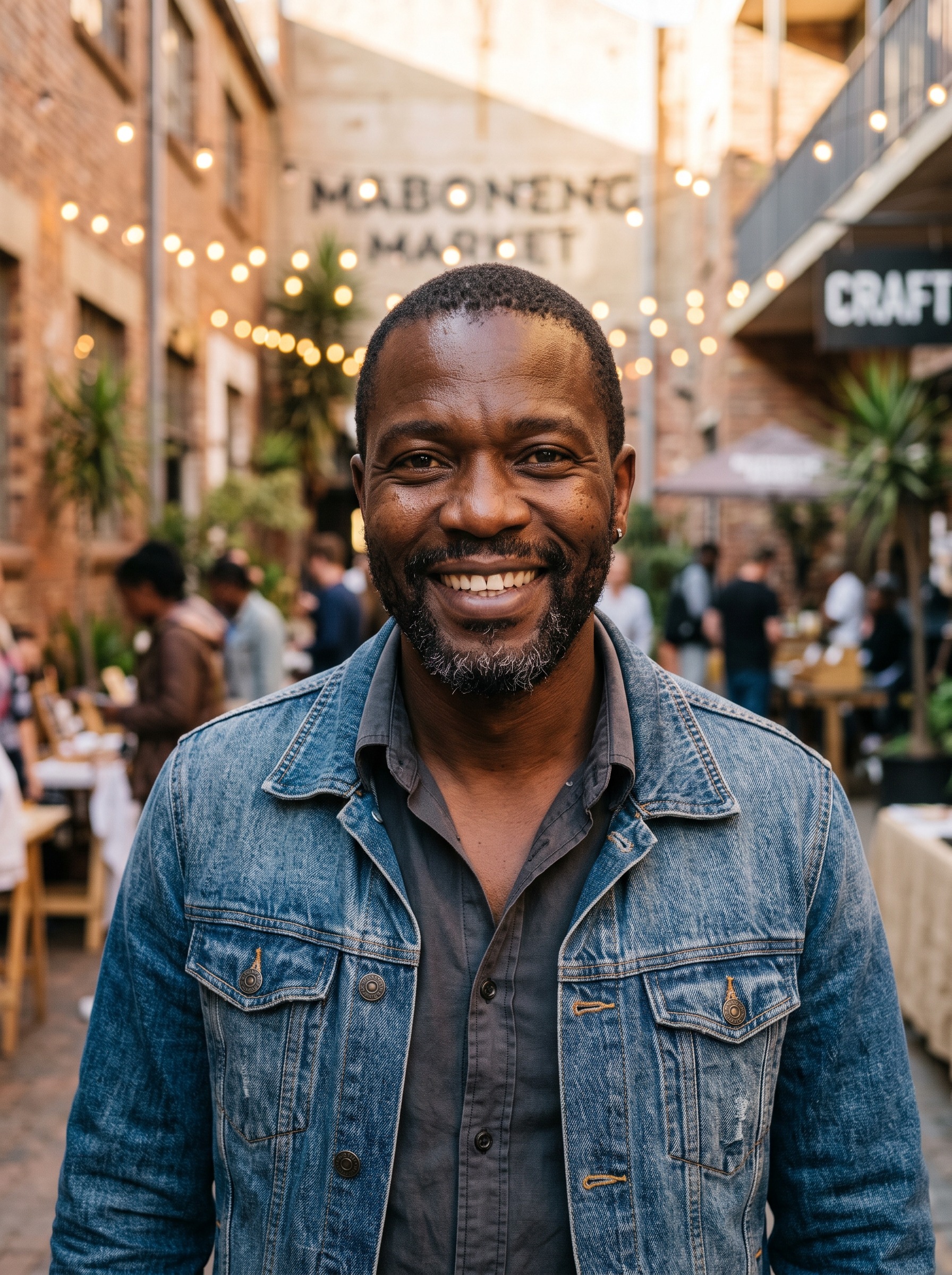

The first thing you notice on 4th Avenue is not a landmark but a rhythm: a steakhouse with its fire going, a Greek verandah filling up, a whisky wall glowing behind a small bar, and people actually walking between them with a proper sense of purpose. In Johannesburg, that still feels mildly radical. Parkhurst has turned a few blocks north of Rosebank into a place where you park once, loosen your shoulders, and let the evening take care of itself.
What Parkhurst is known for
Parkhurst is known for 4th Avenue, full stop. The strip is the reason people cross town to come here, and it earns that reputation the honest way: by being both a serious restaurant run and one of Johannesburg’s old antiques quarters. On one side of the pavement, dinner has real weight; on the other, you can still stumble into the afterlife of mid-century furniture, silverware and lamps. That overlap is the whole trick. Parkhurst is not trying to be a polished mall district or a nightlife precinct in borrowed clothes. It is a leafy residential grid that happened to grow a genuine high street through the middle of it, and the suburb has the good sense to leave it alone.
The streets themselves are part of the charm. Numbered avenues run one way, numbered streets the other, and 4th Avenue cuts through the centre like a social nerve. Shops open directly onto the pavement. Tables spill outside. Dogs are walked. Coffee is taken slowly. By day, the light pours through big shopfront windows; by evening, the noise rises to a warm hum, but never the hard-edged throb of a club strip. This is grown-up Joburg, the kind that wants a second glass rather than a queue.

The antiques story is not decoration; it’s baked into the street’s identity. In the 1970s, Parkhurst got its first antique store, others followed, and before long the stretch was nicknamed Antique Alley. That heritage still shows in the way the street mixes old and new without making a fuss about it. A dining room can sit next to a dealer in vintage decor and nobody acts surprised. That, more than anything, is Parkhurst’s personality: practical, local, and slightly smug in the best possible way because it knows it has something rare in this city — a place where residential and sociable life share the same narrow, tree-lined stage.
Where to eat & drink
The heavyweight on the street is The Blockman at 33 4th Avenue, and it arrives with the confidence of a place that knows exactly what it is doing. Chef-owner Vassilios Holiasmenos runs it as a fire-and-butchery steakhouse, with cuts dry-aged and broken down in-house before going over hardwood coals. You can even choose your own steak from the visible aging room, which is the sort of detail that separates a serious meat place from one just wearing a leather apron for the photographs. The Blockman landed at number 97 on the 2025 World’s 101 Best Steak Restaurants list, and that feels about right: this is not a gimmick, but a disciplined, smoke-scented operation where the meat leads and the room follows.

Holiasmenos also gives Parkhurst two more reasons to linger. Modena Italian Eatery, in the Cobbels Centre, is the pasta stop with a local following, and the key detail is simple enough to matter: every pasta shape is made in-house. That alone would make it worth a detour, but Modena has also become known for breakfast, which is how a neighbourhood place quietly becomes part of people’s routines rather than just their special-occasion plans. Then there is Kolonaki Greek Kouzina on the corner of 4th and 9th, a big-verandahed Greek room where slow-cooked lamb is the thing to order and booking ahead is wise because it fills. Parkhurst likes a room with a proper appetite, and Kolonaki answers with one.
For something a touch more polished, Embarc sits on the corner of 4th and 13th and keeps the mood contemporary without trying too hard to be trendy. Head chef Aren Pollack took over in 2025, and the menu leans Asian and Mediterranean. The example that tells you enough is kataifi prawns with tom-yum cream, a dish that sounds like it has been thought through rather than assembled for a menu meeting. Most dishes come in starter or full size, and mains sit around the R225 mark, which is useful to know before you settle in and decide whether this will be a light lunch or a longer night.

Then there is Bottega at 22 4th Avenue, a small Italian bistro with one of the best whisky walls in the city. It also pours South African wines and gin, and owner Sav Cardillo runs regular tastings, which is exactly the sort of thing that turns a snug bar into a neighbourhood institution. The room is small, the bottles climb, and the mood is unhurried. If Parkhurst has a liquid heart, Bottega is somewhere close to it.

Going out
Parkhurst does not do clubs, and thank heaven for that. The night here is built on sequence rather than volume: eat well, keep the table for another glass, then wander a few doors down for a nightcap. That is the whole social script, and it works because the street is compact enough to make it feel effortless. The most playful after-dinner room is The Station at 24 4th Avenue, an award-winning gin bar themed on the London Underground. Hanging handlebars, a wall of screens playing a station platform, more than 150 local and international craft gins behind the counter — it is theatrical, yes, but it still feels like a neighbourhood bar rather than a theme park with ice.
The Station also doubles as a burger kitchen, which is useful if you arrive hungry and decide, with admirable honesty, that dinner should have been longer. There is something very Parkhurst about that: the room is a bit of a wink, but the food and drinks are not. The point is not to party until dawn. The point is to have a relaxed, safe, grown-up evening on foot and to finish at a civilised hour without feeling like you have missed anything.
Bottega is the whisky answer, and the whisky wall is not just for show. Tastings run every few months, which is the sort of regularity that tells you the bar understands its role in the neighbourhood. Beyond that, the dining rooms on 4th — Embarc, Kolonaki, The Blockman and the rest — all help carry the evening with proper wine and cocktail lists, so the natural rhythm is to graze along the street rather than commit to one big venue and then sit there like a hostage.

Things to do and what to see
The main activity in Parkhurst is walking 4th Avenue slowly, and the street rewards that kind of attention. This is not a neighbourhood of blockbuster sights or one big must-see monument. It is a place to potter, browse, eat and sit outside with a coffee while the day unfolds around you. That may sound modest, but in Johannesburg it is a rare pleasure. The city is built around driving; Parkhurst is one of the few places that lets you put the car away and behave like a pedestrian for a while.
The antique dealers are still the spine of the experience. Billymoon & Agatha’s Antiques, on the corner of 4th and 6th, specialises in mid-century design and stocks art, jewellery, silverware and furniture. It is the kind of place where you go in looking for one thing and come out with a story about a lamp. Further along, Objects is a trove of vintage decor, with lamps, crockery, rugs and interesting one-offs. Together they keep the street’s Antique Alley reputation alive, but they also do something more useful: they make browsing feel like a legitimate afternoon plan rather than a prelude to shopping.
Between those anchors sit interior-design boutiques, independent fashion and gift shops, and a cluster of hair salons and beauty parlours. The mix matters. It means the street is not a one-note restaurant strip that empties out once the plates are cleared. There is movement through the day, and that movement gives Parkhurst its village feel. You can grab a table outside in the morning, watch the regulars drift by with coffee, then return later for brunch or a glass of wine in the late afternoon sun. The pavement-cafe culture here is not an imported concept; it is the street’s daily habit.
Objects is worth a proper pause if you like the slightly chaotic poetry of old things with a second life. There is no attempt to make it sterile or glossy. It is simply full of useful, curious, lived-in objects, the sort of stock that makes a browser slow down and start imagining rooms that do not yet exist.
The other thing to do is not really a thing so much as a way of being there: sit outside and watch the strip go by. Parkhurst is at its best when you let the street do the work. The leafy canopy, the low-rise buildings, the people moving between tables and shops — all of it adds up to an atmosphere that feels local without being parochial, relaxed without being sleepy. If you want grand cultural programming, Rosebank is a few minutes away. If you want a neighbourhood that can keep you entertained with coffee, antiques and a long lunch, Parkhurst has you covered.
{{ATTRACTIONS}}
Shopping
Shopping is half of what 4th Avenue is for, and it is refreshingly un-mall-like. There are no parking garages swallowing you whole, no escalators, no retail theatre. Instead you get shopfronts at street level, the kind you reach on foot because that is the point. The offer runs from mid-century antiques and vintage homeware to interior-design studios, custom-made pieces, African contemporary fashion and small independent boutiques. It is an easy place to spend an hour you did not mean to spend.
The antiques heritage is the anchor, and Billymoon & Agatha’s Antiques and Objects are the names that keep it honest. Even if you are not buying furniture, they are worth the browse for smaller finds, the sort of objects that travel home in a suitcase or a back seat and then become the thing people ask about. Around them sit gift and clothing shops and the salons and beauty spots that make the street feel lived in rather than curated for visitors.
Parkhurst does not have a formal market on the strip itself, but it sits minutes from Rosebank, whose long-running Sunday market and mall shops fill that gap. That proximity matters. It means you can base yourself in Parkhurst for the calm and the walkability, then dip into Rosebank when you want a bigger retail net. The neighbourhood works best when you come with time and no fixed list. That is the old Johannesburg trick: wander first, decide later.
Where to stay in Parkhurst
Parkhurst is a residential neighbourhood first, so accommodation here means guesthouses, garden cottages and self-catering homes on the quiet numbered streets rather than hotel towers. That is the trade-off and the appeal. You get a calm, leafy, secure base, often within a block or two of 4th Avenue, at prices well below the big Sandton and Rosebank hotels. If you are the sort of traveller who likes to step out the door and be on a restaurant street within minutes, this is your kind of arrangement.
Aim to stay as close to 4th Avenue as you can, so the whole strip is a short, safe walk from your door and you can leave the car overnight. Streets a block back from the avenue stay peaceful even when the strip is busy, which is exactly the sort of detail that makes a neighbourhood stay feel smart rather than merely convenient. Many local guesthouses now run backup power and water, worth confirming when you book given the region’s load-shedding, and gated, off-street parking is standard. The overall feel is mid-range and homely: charming, personal and quiet, with the eating and drinking of a whole neighbourhood on your doorstep and Rosebank and Sandton a few minutes’ drive away.
{{HOTELS}}
Getting around
Once you are in Parkhurst, you walk. That is the whole point, and 4th Avenue is compact enough to cover end to end in about ten minutes on foot. The street is the neighbourhood’s social spine, so one parking stop can cover an entire evening, and that is still a novelty in a city where many suburbs seem designed to punish the pedestrian for existing.
Getting to Parkhurst is usually a short drive rather than a train ride. The nearest Gautrain station is Rosebank, roughly 2km and about five minutes away by car, and that links to Sandton, the northern suburbs and O.R. Tambo International Airport. Rosebank itself is a five-minute hop, and Sandton City is about 5km on. Coming from the city, the usual approach is up Jan Smuts Avenue, turning off into the numbered avenues to reach 4th. There is no rail or metro on the strip itself and buses are limited, so most visitors arrive by car or e-hailing; Uber and Bolt are plentiful and the easiest way in and out at night.
Street parking runs along and around 4th Avenue with informal marshals, and because the neighbourhood is genuinely walkable, you do not need to be shuttling between venues. From the airport, budget roughly 30 to 45 minutes by car depending on traffic. That is the arithmetic of Parkhurst: not the most connected place on paper, but one of the easiest places to enjoy once you are there.
Parkhurst’s gift is simple. It gives Joburg a street that behaves like a small town without pretending the city has vanished. You come for the restaurants, the whisky wall, the antiques, the pasta made by hand, the slow-cooked lamb, the gin bar with a bit of theatre. You stay because, for once, the night can unfold on foot.
FAQs
Is Parkhurst a good area to stay in Johannesburg?
Yes — if you want a calm, walkable base with proper eating on your doorstep rather than a big hotel. Most stays are guesthouses and garden cottages around 4th Avenue, and you can spend a whole evening on the restaurant strip without driving. It’s less handy if you need to be right on the Gautrain or want a five-star tower.
Is Parkhurst safe?
Parkhurst is one of Johannesburg’s safer, more walkable neighbourhoods, and 4th Avenue feels comfortable by day and in the evening. Use normal big-city sense after dark, stay on the busy strip, keep valuables out of sight, and use Uber or Bolt late at night. Most guesthouses have gated, off-street parking.
What is Parkhurst’s 4th Avenue known for?
It’s Johannesburg’s most walkable dining street and its old ‘Antique Alley’. A few blocks pack in independent restaurants, gin and whisky bars, mid-century antique dealers, design boutiques and pavement cafes, all reachable on foot.
Do you need a car in Parkhurst?
Not once you’re there. 4th Avenue is compact enough to walk end to end in about ten minutes, and one parking stop can cover an entire evening. You’ll still likely use a car or e-hailing to get in and out, especially at night.