Krakow guide
Kazimierz, Krakow: where synagogues, zapiekanka and late nights share the same cobbles
Krakow’s old Jewish quarter is still the city’s best place to eat, drink and wander after dark, with memory and nightlife stacked street by street.
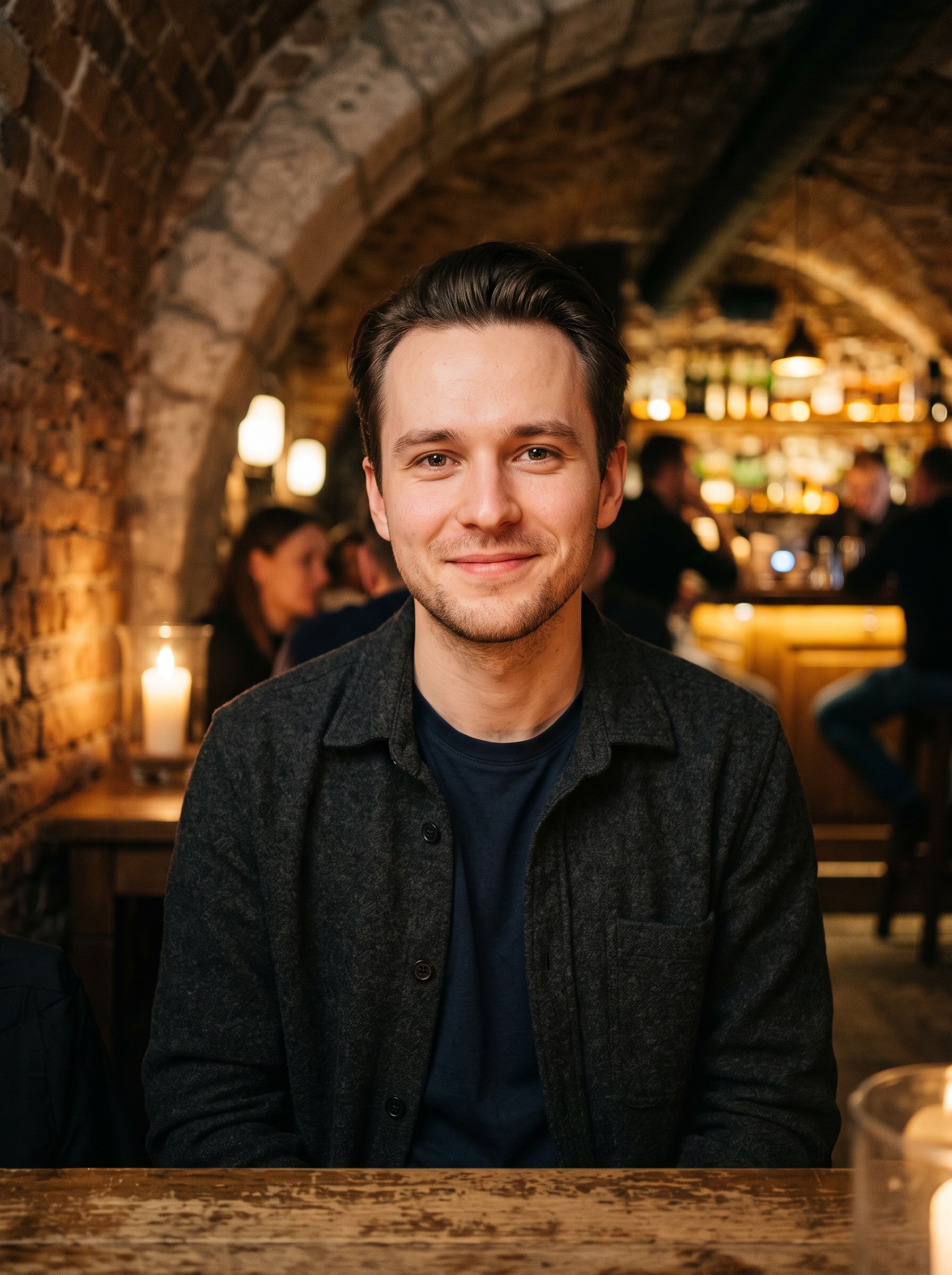 By Tomasz Nowak

Kazimierz begins on Szeroka, where the stone opens out a little and the air feels older than the bars around it. One side of the street still belongs to prayer and memory; the other, by nine at night, is already leaning toward the first round. That is the trick of this district. For roughly 500 years it was a walled Jewish town in its own right, separate from Krakow until the 19th century, and the past never really left. It just learned to share the pavement with cocktail rooms, cellar tasting menus and the smell of melted cheese drifting out of the Okrąglak after midnight.

What Kazimierz is known for
Kazimierz is Krakow’s historic Jewish quarter, but that phrase only gets you so far. The real answer is that it is the city’s most layered neighbourhood, the place where heritage, hedonism and a slightly scruffy kind of style all sit on the same block. Szeroka remains the spine. It is broad enough to feel like a square, old enough to feel ceremonial, and still home to four surviving synagogues within a short walk. The district’s other magnetic point is Plac Nowy, the square built around the Okrąglak, a round former poultry-and-slaughter hall whose hatches now sell the cult zapiekanka baguette. That’s Kazimierz in one sentence: one foot in ritual, one foot in late-night hunger.
The district’s modern life is inseparable from the way it was filmed, emptied, and then refilled. Steven Spielberg shot much of Schindler’s List here in 1993, and the crumbling courtyards that looked so haunting on screen are the same ones bars and galleries moved into afterwards. Some of the rough edges have been sanded down by money, sure, but not enough to make it feel fake. That’s why Kazimierz still works. A 16th-century synagogue can sit beside a bar with Singer sewing machines for tables, and nobody blinks. The place still carries the weight of what happened here, but it also knows how to stay up late.
By day, the whole district runs slow and cinematic. You get peeling facades, courtyard cafés, and the smell of coffee and cardamom drifting out of Cheder. By night, the volume climbs on Estery, Józefa and Nowy, and the streets fill with drinkers spilling onto the cobbles. The crowd is a proper mix: art-school locals nursing one Żywiec for two hours, stag groups doing the Plac Nowy circuit, older Cracovians who remember when the buildings were derelict, and visitors who’ve come for the memory but stay for the bars. That friction is the point.
Where to eat & drink
Kazimierz has the widest eating range in Krakow, and the range matters because it tells you what the neighbourhood has become without erasing what it was. At the top of the table is Bottiglieria 1881 on ul. Bocheńska, Poland’s only two-Michelin-star restaurant, tucked into a restored brick wine warehouse. It serves creative tasting menus built on Polish and Nordic produce, and it is very much a book-well-ahead kind of place.

A step down in formality, but still firmly on the Michelin radar, Noah on ul. Meiselsa does shared-plates Israeli cooking with proper market flavours from the Eastern Mediterranean. Folga on Plac Nowy takes a different route: a modern bistro with a serious wine list, and the sort of room that can take you from lunch into a long evening without any fuss. If you want French rather than Israeli or Polish, Zazie Bistro on the corner of ul. Józefa is the long-running standby. Go for mussels with Belgian-style frites and the Gallic classics; reserve ahead, because everyone else knows it too.
For Polish cooking that still feels local rather than packaged for visitors, Starka on ul. Józefa is the reliable answer. The rooms are red-walled and hung with interwar prints, and the menu leans into pierogi, beef cheeks and beetroot soup, alongside its own barrel-aged and infused vodkas. A few doors away, Youmiko does inventive sushi using local trout and eel instead of flown-in tuna, which is exactly the kind of Kazimierz move I like: respect the form, then make it yours. Hana Sushi on ul. Kupa is the other quality Japanese option if you want to stay in that lane. For something more obviously Middle Eastern, Hamsa on Szeroka is the go-to for hummus, pita and Israeli mezze, especially when the terrace is working on a sunny afternoon.
And then there is the district’s most democratic meal. The Okrąglak zapiekanka stalls on Plac Nowy are the after-midnight engine of the whole area, selling the foot-long open baguette with mushrooms and cheese that fuels Kazimierz when the bars empty out. It is not elegant. It is exactly right.

Going out
This is the best bar crawl in Krakow, and it starts on Plac Nowy. Alchemia, on the corner of ul. Estery, is the institution that arguably kick-started Kazimierz’s revival. It is a warren of candlelit rooms crammed with junk-shop clutter, with cheap drinks upstairs and a basement that hosts live music and DJs. You go in for one and stay because the room keeps changing with the hour.
A few doors along, Singer is one of those places you remember because of the furniture first. The dim, curtained interior is furnished with old Singer sewing machines as tables, and by day there is a sunny terrace. It is the sort of bar that still feels slightly accidental, which is a compliment. Mleczarnia, over on ul. Meiselsa, is the classic beer garden: leafy courtyard on one side of the street, cosy bar opposite, and cheesecake that locals order without irony. That alone tells you enough.

The newer cocktail places are more polished, but Kazimierz has room for that too. Sababa hides above Hamsa on Szeroka and mixes Near-East-inspired drinks with weekend DJs; the fun is partly in finding it. Gin Mill, on the district’s edge, is intimate and Art-Deco-meets-Japanese, with a list of well over 100 gins. Absynt Café & Bar on ul. Miodowa leans hard into the bohemian side of the neighbourhood, with more than twenty absinthes and the full burning-sugar ritual. That one is for people who like their drinks with a bit of theatre.
The important thing is not to treat Kazimierz like a single strip. Estery, Józefa and the Plac Nowy fringe all have their own tempo. The old rule still holds: start early if you want dinner, drift later if you want music, and if the room feels too polished, keep walking. There is always another door.
Things to do / what to see
Kazimierz’s heritage sits within an easy walking loop, and most of it lives along or just off Szeroka. The Old Synagogue at Szeroka 24 is the oldest surviving synagogue in Poland, built in the early 16th century and rebuilt after a fire in 1557. It no longer holds services and instead houses the Museum of the History and Culture of Krakow Jews. That shift from worship space to museum tells you a lot about the neighbourhood’s history: what was once ordinary life here is now the thing people travel to understand.
A short walk up the street, the Remuh Synagogue at Szeroka 40 is small, still active and attached to the Remuh Cemetery, the resting place of the great 16th-century rabbi and scholar Moses Isserles. Pilgrims come from around the world, and the atmosphere changes when you stand there long enough to notice it. The street is not a backdrop; it is part of the ritual.
The cluster continues with the neo-Renaissance Tempel Synagogue on ul. Miodowa and the Isaac Synagogue near ul. Kupa, which regularly hosts klezmer concerts. That is one of the pleasures of Kazimierz: these buildings are not just preserved, they are used.

For context beyond the buildings, the Galicia Jewish Museum on ul. Dajwór is a quietly powerful photographic gallery documenting Jewish life and its erasure across the region. It is not loud, and that is exactly why it lands. Then there is Skwer Judah, named for Pil Peled’s huge 2013 lion-and-boy mural and doubling as a food-truck park. It is one of those places where the district’s newer identity is written right over the old one, but not in a way that feels careless.
If you time your trip for late June, the Jewish Culture Festival fills the streets with concerts, workshops and walks, closing with the open-air Shalom on Szeroka. Around 10,000 people turn up for that finale, and the street becomes a concert hall under the sky. It is one of the few moments when Kazimierz feels like it is holding all of itself at once.
{{ATTRACTIONS}}
Shopping & markets
Plac Nowy is the daily market heart of the district, and it changes character through the day. In the morning and afternoon, the ring of stalls around and inside the Okrąglak sells fruit, flowers, cheap clothes and bric-a-brac. By evening, the drinkers arrive and the market dissolves into the bar scene. On weekend mornings, especially Saturday and Sunday, the square hosts a flea and antiques market, where you can find old cameras, vinyl, communist-era oddments and the kind of genuine junk that is only ever interesting if you get there early.
Beyond the square, ul. Józefa and the surrounding lanes are where the slower kind of shopping happens. Small independents line the streets: vintage-clothing rooms, Polish design studios, ceramics, poster art and one-off boutiques. Nothing about it is rushed. You have to wander, and that is the whole pleasure. If you want everyday shopping, the modern Galeria Kazimierz mall sits a few minutes east toward the river, but it is the small streets and the Plac Nowy stalls that give the neighbourhood its character.
Where to stay in Kazimierz
Kazimierz is the sharpest base in Krakow if food and going out matter to you, and it is still only a 15-minute walk from the Main Market Square. The trick is to decide how much of the soundtrack you want. Rooms directly on Plac Nowy or ul. Estery put you right in the middle of the crawl, which is ideal if you plan to be out until the bars close and punishing if you do not. The noise can run past 2am on weekends, and I would not pretend otherwise.
For a quieter night within the same district, look toward ul. Dajwór, ul. Miodowa or down by the river. You keep the walkability without the bar soundtrack under your window, and you can still get to Szeroka, the synagogues and the zapiekanka stalls in a few minutes. The area runs from characterful budget hostels and design-led guesthouses in converted tenements up to polished four- and five-star boutique hotels, so the price feel spans backpacker to mid-range with a few splurges. Whatever you book, you are close to the tram line and close to the part of Krakow that actually wakes up after dark.
{{HOTELS}}
Getting around
Kazimierz is small and made for walking. You can cross it in ten minutes, and everything worth doing is on foot. The Main Market Square is about a 15-minute stroll north through Planty Park, and Wawel Castle is roughly 10 minutes northwest across ul. Stradomska. That geography matters because it keeps Kazimierz connected without making it feel like an annex of the Old Town.
For trams, the useful stop is Miodowa on the district’s northeast edge, served by lines including 3, 19 and 24. More trams stop at Stradom and Starowiślna on the fringes. From Miodowa, walk down ul. Miodowa and turn into Szeroka to reach the core. If you are heading across the river, Podgórze and Oskar Schindler’s Enamel Factory museum are a short walk via the Father Bernatka footbridge. To the airport at Kraków–Balice, you are looking at a taxi or ride-hail of around 25–35 minutes, or the airport train from Kraków Główny station, which is a short tram ride or 20-minute walk away.
Kazimierz is lively and safe, with the usual big-city care late at night around the busiest Plac Nowy and Estery bars. Keep your head, keep your phone in your pocket when the streets are packed, and you will be fine. That is the honest version. The romantic version is that this is one of the few neighbourhoods in Europe where you can spend an evening moving from a 16th-century synagogue to a cellar tasting menu, then to a bar with sewing machines for tables, then to a melted-cheese baguette at 3am, all without ever feeling like the street changed its mind about you.
FAQs
Is Kazimierz a good area to stay in Krakow?
Yes. It’s the best base if you care about food and nightlife, with the widest range of bars and restaurants in the city and only a 15-minute walk to the Main Market Square. The trade-off is weekend noise, so if you’re a light sleeper, choose a room on the quieter edges toward ul. Dajwór, ul. Miodowa or the river rather than directly on Plac Nowy or ul. Estery.
Is Kazimierz safe at night?
Yes — Kazimierz is generally very safe, and the bar-lined streets stay busy and well-populated until late. Use normal city-centre common sense around the busiest spots on Plac Nowy and ul. Estery on weekend nights, keep an eye on your belongings in crowds, and you’ll be fine.
What is Kazimierz famous for?
It’s Krakow’s historic Jewish quarter, home to several 16th- and 17th-century synagogues along Szeroka, the Galicia Jewish Museum and the Remuh Cemetery. It’s also the city’s top food-and-nightlife district — the Okrąglak zapiekanka stalls and flea market on Plac Nowy, a two-Michelin-star restaurant, and dozens of bars — and it was a key filming location for Schindler’s List.
What should I eat in Kazimierz?
Start with a zapiekanka from the Okrąglak on Plac Nowy, then work your way up the scale: hummus and mezze at Hamsa, Israeli shared plates at Noah, pierogi and beef cheeks at Starka, or a tasting menu at Bottiglieria 1881 if you’re making a night of it.