Kuala Lumpur guide
Chinatown & Petaling Street, Kuala Lumpur: Old KL After Dark
From RM7 curry laksa and century-old kopitiam breakfasts to hidden cocktail bars behind stationery-shop fronts, Chinatown is Kuala Lumpur’s most walkable, characterful neighbourhood.

By the time the covered arcade of Jalan Petaling starts to glow, the street has already lived three lives: morning kopi, afternoon bargaining, nightfall theatre. A stall hands over iced longan and monk-fruit drinks at the corner, the air goes sweet with fruit and diesel and incense, and somewhere behind the market a wok catches charcoal heat. This is Old KL with the volume turned up — the founding grid the city grew out of, still dense enough to cross in a sweat, still lively enough to make you forget the heat for a minute.
What Chinatown & Petaling Street is known for
Chinatown here is not a polite heritage district arranged for your ease. It is the original heart of Kuala Lumpur, the tin-mining trading post founded by Yap Ah Loy, and the city’s modern skyline was built around it rather than the other way round. That history is visible in the bones of the place: pre-war shophouses, clan-temple incense, wet-market alleys, and a street market that turns on like a switch late in the day. Jalan Petaling is the headline act — a red-and-green roofed corridor of counterfeit watches, phone cases, dried goods and fruit that wakes around 4pm and really comes into its own after 6pm. It is messy, loud, and not remotely pretending to be luxury. That’s the charm. The first price quoted is never the last, and the “designer” goods are copies, so you come for the spectacle as much as the shopping.

What makes the neighbourhood magnetic now is how the old and new sit shoulder to shoulder without smoothing each other out. One block can give you a 1927 charcoal Hokkien mee stall, a heritage kopitiam, a modern-Malaysian restaurant and an Asia’s 50 Best cocktail bar. The soundtrack is a proper Kuala Lumpur mash-up: hawkers barking prices, a temple bell from Guan Di, the clatter of a wok firing Hokkien mee black with soy, and after 6pm a low thump of DJ sets leaking from upstairs doors that don’t announce themselves. The core is compact — Jalan Petaling for the market and food, Jalan Sultan and Jalan Tun H S Lee for temples, Lorong Panggung and Jalan Panggong for murals and hidden bars — and you can walk the whole thing end to end in fifteen minutes if you don’t stop. Which, honestly, you will.
The crowd tells you everything you need to know. At 8am it’s uncles over kopi and the racing pages. By noon, backpackers are haggling under the arcade. By 10pm, a younger, in-the-know crowd is hunting speakeasies by word of mouth, because half the fun is finding the door. Nothing here is polished for you. The market still feels scruffy, the lanes can feel sketchy after midnight, and the point is that Chinatown has been reborn without being sanitised.
Where to eat & drink
If you want to understand the neighbourhood, start with a plate that has history in it. Restoran Kim Lian Kee sits on the corner of Jalan Petaling and Jalan Hang Lekir and has been frying its Hokkien mee since 1927. The noodles come thick and dark, wok-charred in soy with pork lard and prawns, and the open-air stall side is the place to take it in properly. There’s a reason it is widely credited as the birthplace of the dish in KL: the flavour is all smoke and depth, the sort of thing that makes you slow down after the first bite.

From there, drift into the alley behind the market for breakfast that feels like a local secret even though it has been there for decades. Madras Lane hawker stalls are tucked into the wet-market lane off Petaling Street, and the curry laksa is the thing to order — roughly RM6–8, open around 8am–2pm, cash only, and very particular about seating because each table belongs to a vendor. Sit where you’re told, and don’t overthink it. The broth is the kind that wakes you up properly, with the added pleasure of knowing you’re eating in one of the neighbourhood’s most stubbornly unglamorous corners.
A few steps away, Air Mata Kucing pours its iced longan-and-monk-fruit cooler at the Jalan Petaling / Jalan Hang Lekir corner, and it is exactly the sort of drink you want when the humidity starts to press on your shoulders. Then there’s Kim Soya Bean at 49 Jalan Petaling, where generations have come for tau fu fah and fresh soya milk. That stall matters because it is one of those places that proves Chinatown is not just being curated for visitors; some counters are simply part of the city’s daily rhythm.
For breakfast with a little more sit-down charm, Ho Kow Hainam Kopitiam on Jalan Balai Polis has been doing kaya toast and thick Nanyang coffee since 1956, and yes, the weekend queue is real. Nearby, Nam Heong at 56 Jalan Sultan holds a Michelin Bib Gourmand for its Ipoh-style chicken rice, which tells you this neighbourhood’s food story now runs from hawker classics to carefully recognised comfort food. That’s the thing about Chinatown: you can eat like a local, then eat like a pilgrim, all on foot.

The newer wave has settled into the restored shophouses along Jalan Petaling, and it has changed the tone without erasing the old one. Chocha Foodstore at 156 Jalan Petaling, in the former Mah Lian Hotel, does seasonal modern-Malaysian small plates and specialty tea. It feels considered, but not precious. Next door, Barra at 158 Jalan Petaling brings Spanish tapas and lobster-broth paella from an open kitchen; Merchant’s Lane at 150 serves fusion brunch above an old shop; The Hungry Tapir at 135 does vegan nasi lemak and satay; and Good News Pizza at Lot 152 turns out wood-fired Neapolitan pies. These places are part of why the district has become a day-to-night destination rather than just a market street. You can start with laksa and end with pizza, and somehow it makes sense.
Over on Jalan Sultan, Raijin Ramen caps its output at 100 bowls a day of long-simmered pork-bone broth. That limit matters. It creates a tiny bit of urgency, a little local pilgrimage energy, which Chinatown understands very well. The neighbourhood has always rewarded those who arrive with an appetite and a bit of patience.
Going out
At night, Chinatown becomes one of Kuala Lumpur’s most inventive bar districts, and the fun is in the hunt. The scene-starter is PS150 at 150 Jalan Petaling, where you walk through a dusty 1960s-style stationery shopfront into a labyrinth of themed rooms — vintage booths, a tiki garden, a contemporary bar — all pouring local-ingredient cocktails. The Salty Chinaman is one of the signatures, and cocktails run from roughly RM50. It is theatrical, but the good kind: the kind that understands a hidden door should feel a little mischievous.

A few doors down at 149, Penrose is the opposite mood: cave-like, precise, and very much in the serious-cocktail lane. It landed on Asia’s 50 Best Bars and is known for drinks like the Rum de Violette highball. If PS150 is the wink, Penrose is the stare. Together they show how far this neighbourhood has come: from market street to a genuine destination for people who care about what’s in the glass.
Inside Chocha Foodstore, a spiral staircase leads to Botak Liquor, a plant-filled upstairs bar known for curry-leaf milk punch. That climb is part of the pleasure. Chinatown’s nightlife is vertical as much as it is hidden, and the best rooms are often upstairs, behind something else, or both.
The other cluster is around the mural lane. Concubine sits at Kwai Chai Hong, off Jalan Panggong, behind a yellow-and-blue door, with two floors of cocktails and weekend dancing. Nearby on Jalan Balai Polis, XO KL is a pink-neon bar-restaurant with weekend DJs. Thursday to Saturday is when the district feels fully alive, and the etiquette is beautifully low-tech: if you can’t find the next door, ask the bartender at the one you’re in. They’ll point you down the lane. That’s Chinatown hospitality, slightly rough around the edges and exactly right.
Things to do / what to see
The heritage here is packed into a few blocks, and it is worth slowing down for the temples alone. Sri Mahamariamman Temple on Jalan Tun H S Lee is Kuala Lumpur’s oldest Hindu temple, founded in 1873, and its 22.9m gopuram tower is crusted with sculpted deities. It is free to enter and remains the traditional starting point of the Thaipusam procession to Batu Caves. Forty metres along the same road, Guan Di Temple — built in 1888 — honours the red-faced god of war. Inside, worshippers touch a heavy guan dao blade for strength. It opens roughly 7am–7pm and is free. Then, tucked down a lane off Jalan Tun H S Lee near Central Market, Sin Sze Si Ya Temple was built by Yap Ah Loy and completed in 1875. It is the oldest Taoist temple in the city and a national heritage site. The trio gives the neighbourhood its spiritual weight; Chinatown is not only about commerce and nightlife, but about continuity.

The most photogenic stop is Kwai Chai Hong off Lorong Panggung. This restored back alley of shophouses is hung with lanterns and its walls are covered in interactive murals of 1960s Chinatown life — a couple on the old Lovers’ Bridge, kids skipping rope, a barber at work — each with a QR code that plays a short clip. It is free and open until midnight, and dusk is the time to go. The light softens, the lanterns come on, and the lane starts to feel like a memory you can walk through.
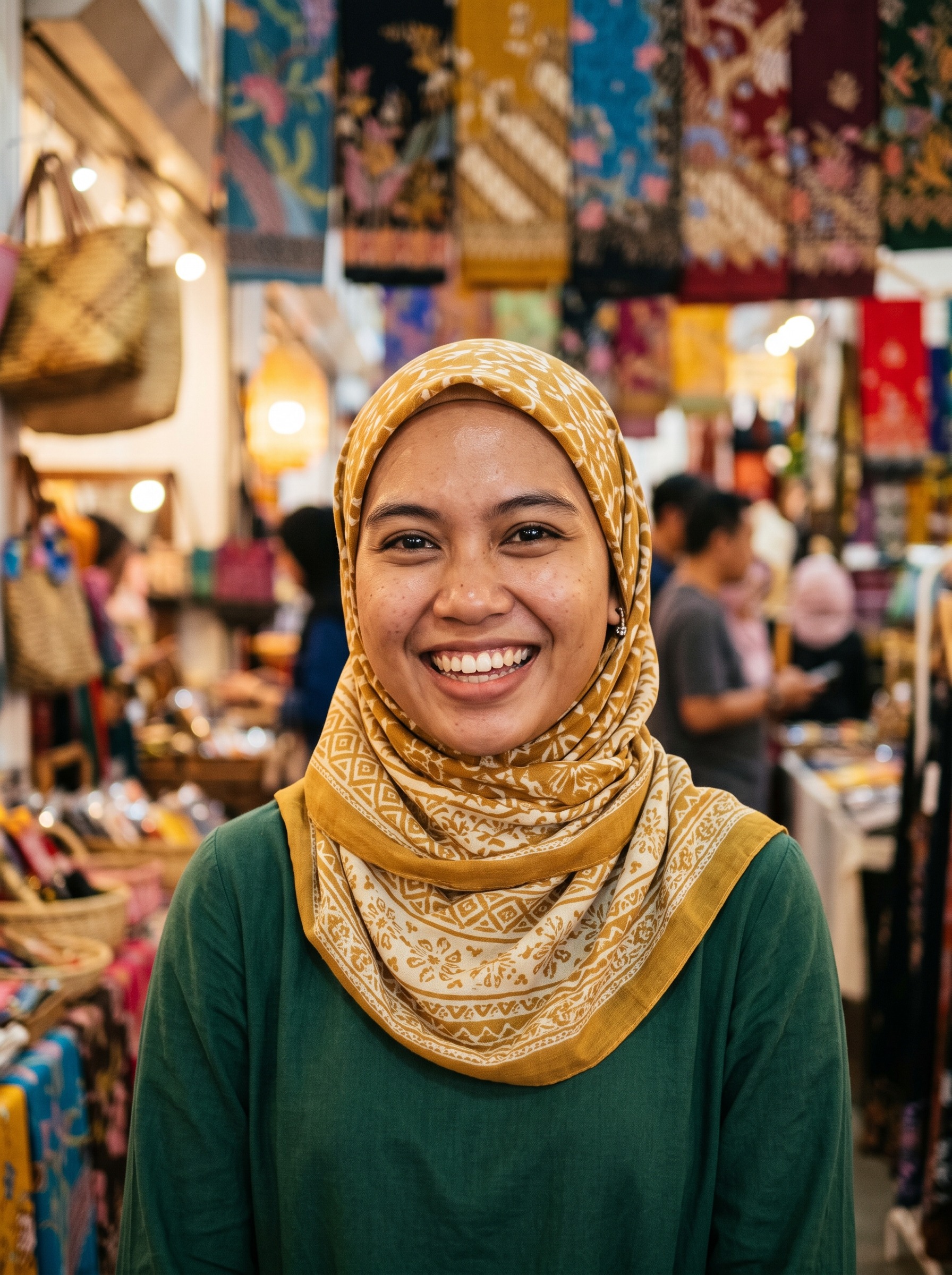
Central Market (Pasar Seni) adds another layer: an Art Deco former wet market now full of more than 100 Malaysian craft and souvenir stalls, from batik and songket to pewter, wau kites, woodcarving and spices. Just beside it, the Kasturi Walk lane gathers snacks and souvenirs, making the area an easy bridge between heritage and shopping. Then there is REXKL, the 1940s cinema reborn as a design-award-winning arts, food and bookshop hub near Jalan Sultan. It’s the kind of place that gives Chinatown its contemporary edge without breaking the street pattern around it.
{{ATTRACTIONS}}
Shopping & markets
Shopping here is a study in contrasts. The Petaling Street market is all about the browse: knock-off watches, sunglasses, phone accessories, football shirts, dried herbs and tropical fruit under the covered arcade of Jalan Petaling. It is a known pickpocket strip, so keep your bag zipped and in front of you, and treat the first price as a starting point. Start at roughly half, settle around a third to a half, and don’t get precious. The market is not the place for moral purity; it is the place for bargaining theatre and the occasional excellent fruit stall.
For anything genuine, Central Market (Pasar Seni) is the better bet. It has more than a hundred stalls of Malaysian batik, songket, pewter, wau kites, woodcarving and spices under one roof, plus the Kasturi Walk lane beside it for snacks and souvenirs. It is a few minutes away, but it changes the temperature of the whole outing: from noisy street to air-conditioned craft hall, from copy goods to things made to last.
REXKL rounds out the shopping with independent vintage sellers, a bookshop and rotating design and art pop-ups inside the old cinema. Compared with the market, it feels almost meditative — a calmer, air-conditioned counterpoint where you can linger without a hawker calling after you. If you want value, though, the fruit and street-snack stalls are where the real bargains live. Chinatown knows this. It has always known that the best deal is usually edible.
Where to stay in Chinatown & Petaling Street
Chinatown is one of the best-value bases in Kuala Lumpur. It is central, walkable, full of character and cheaper than Bukit Bintang or KLCC, which makes it especially good for travellers who would rather spend on food and drinks than on square footage. The standout design stay is Else Kuala Lumpur, set in the restored 1930s Lee Rubber Building on Jalan Petaling. Reworked by local studio Bikin, it is an Art Deco landmark turned boutique hotel with a rooftop pool, and it captures the neighbourhood’s most appealing trick: old bones, new purpose.
B Hotel at 82–84 Jalan Petaling sits right on the market and has Upper House, a rooftop bar, on top. Mingle, meanwhile, occupies a restored century-old shophouse a stone’s throw from the night market, with dorms and small private rooms for travellers who want to stay central without spending much. The trade-off is obvious and honest: shophouse rooms are compact, and if you’re above or beside the market or a late bar, you’ll hear it. Ask for a quieter, higher or courtyard-facing room if you’re sensitive to noise.
{{HOTELS}}
If you want the simplest rule, it’s this: stay on or just off Jalan Petaling, Jalan Sultan or Jalan Balai Polis, and the food, temples and bars will all sit within a few minutes’ walk. Pasar Seni transit is at the edge of the district, so the whole neighbourhood works as a base as much as a destination.
Getting around
This is a neighbourhood built for walking. The grid of Jalan Petaling, Jalan Sultan, Jalan Tun H S Lee, Lorong Panggung and Jalan Panggong is tiny — ten to fifteen minutes end to end — and the street life is dense enough that you barely need a map once you’ve got your bearings. Pasar Seni is the transit anchor, an interchange served by both the LRT Kelana Jaya line and the MRT Kajang line, about a five-minute walk from the middle of Petaling Street. The KTM Komuter also stops at nearby Kuala Lumpur station. On the southern edge, Maharajalela on the KL Monorail is about a ten-minute walk.
From Pasar Seni you’re two or three stops from KL Sentral, with the airport rail links there, and roughly 30 minutes to Batu Caves on the Komuter. KLCC and Bukit Bintang are a short hop or about a 20-minute walk away. Grab is cheap and everywhere if you’re escaping the heat or heading home late, but around here, on foot is usually faster than any car. The streets are flat, the distances are short, and the humidity is not messing about — pace yourself and hydrate.
Chinatown rewards repeat visits because it keeps changing while staying recognisably itself. Come in the morning for coffee and laksa, come back at dusk for the lanterns and the market, then stay out late enough to find the hidden doors. That is the rhythm of Old KL: a neighbourhood that feeds you twice, and never in the same way.
FAQs
Is Chinatown a good area to stay in Kuala Lumpur?
Yes — especially if you want character and value over polish. It’s central, walkable, sits on the Pasar Seni LRT/MRT interchange, and gives you hawker food, heritage and hidden bars on the doorstep. The trade-off is noise and compact shophouse rooms, so light sleepers should ask for a quiet, higher-floor room away from the market and bars.
Is Petaling Street safe for tourists?
It’s safe to visit and very popular, but the covered market is a known pickpocket hotspot, so keep your bag zipped and in front of you and don’t flash cash or phones in the crush. The “designer” watches and bags are counterfeits, so buy with that in mind and haggle. Late at night, stick to the main streets and use Grab if you’re heading into quieter lanes.
What’s the best time to visit Petaling Street?
For the market, late afternoon is best — it wakes up around 4pm and peaks after 6pm. For hawker food, go in the morning to early afternoon, since places like the Madras Lane laksa stalls run roughly 8am–2pm. For bars, Thursday to Saturday nights are liveliest, and Kwai Chai Hong photographs best at dusk when the lanterns come on.
What should I eat first in Chinatown?
Start with the classics: Kim Lian Kee for charcoal-fried Hokkien mee, Madras Lane for curry laksa, and Kim Soya Bean for tau fu fah or fresh soya milk. If you want a sit-down breakfast, Ho Kow Hainam Kopitiam is a reliable stop for kaya toast and Nanyang coffee.