Lisbon guide
Bairro Alto & Bica, Lisbon: where fado, funiculars and the first cocktail meet
A steep, old Lisbon of tiled lanes and late nights, where the day is for viewpoints, the evening for petiscos and the small hours for bar-hopping under your neighbours’ windows.
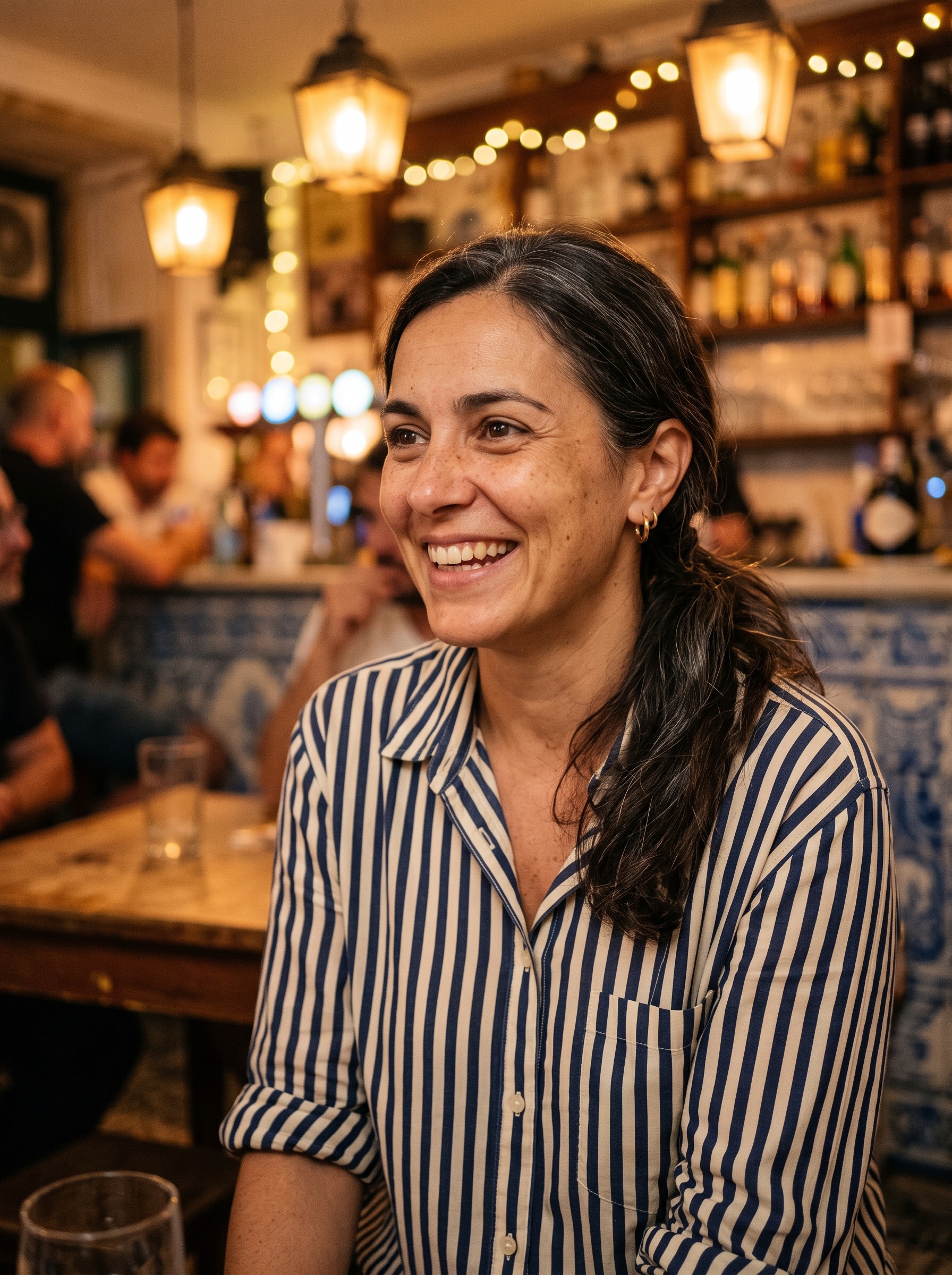

By 3pm on Rua da Rosa, the quarter is almost shy: a coffee counter here, a delivery cart there, shutters down, a woman leaning out to shake a sheet from a window. By midnight, the same lanes are a shoulder-to-shoulder procession of plastic cups, bass from doorways barely wider than a wardrobe, and the sort of laughter that only happens when nobody is pretending to be anywhere else. Bairro Alto and Bica share a steep grid and a split personality. One side is the hilltop village Lisbon keeps for itself; the other tumbles toward the river, all tiled facades and washing lines, with the yellow shape of the Bica funicular in the postcards even when it is not running. This is Lisbon after the office and before the taxi home. It is also Lisbon with the volume turned up, and the city does not apologise for either mood.
What Bairro Alto & Bica is known for
Bairro Alto was laid out in 1513 on a near-perfect grid, which is a gift to anyone who likes their cities legible and a small curse to anyone hoping to get gloriously lost. Five parallel lanes — Rua da Rosa, Rua da Atalaia, Rua da Barroca, Rua do Diário de Notícias and Rua do Norte — run the length of it, crossed by narrow travessas that seem designed to interrupt your stride just as you start feeling smug. The neighbourhood’s reputation, though, is not architectural but nocturnal. Since the 1980s it has been Lisbon’s after-dark heart, a place where bars are so small they barely qualify as rooms, and the crowd spills outside because it has no other option. That spill is the whole point. You move from door to door, stopping for a drink, a cigarette, a song, a second drink, and then somehow finding yourself still there at 2am wondering how the night became a corridor.

Bica, by contrast, is the quarter’s dramatic descent. It drops southwest toward Cais do Sodré in a cascade of tiled facades and steep cobbles, and for years the canary-yellow Ascensor da Bica has been its most photographed punctuation mark. The current caveat matters: after the catastrophic Ascensor da Glória derailment in September 2025, Lisbon suspended all historic funiculars pending safety investigation, and as of mid-2026 the Bica remains out of service with no confirmed reopening date. So yes, admire it. Photograph it. Walk the same street, because Rua da Bica de Duarte Belo is still one of the prettiest slopes in the city whether the car is moving or not. Lisbon has many views; this one comes with laundry and a little engineering theatre.
The neighbourhood’s other calling card is fado. Bairro Alto is one of the places where the music took root, and it still rewards those who prefer a tiny tasca to a polished dinner-and-show hall. It also has a quieter, more local life than the Friday-night reputation suggests. Real people live behind those azulejo fronts. They buy bread. They air bedding. They endure the noise with the stoicism of people who know the party will eventually move on. That tension — between ordinary daytime life and the street-level carnival after dark — is what gives the district its pulse.
Where to eat & drink
The sensible thing here is to eat before you drink, because Bairro Alto is not a neighbourhood that encourages heroic decisions on an empty stomach. Tapa Bucho on Rua dos Mouros is the sort of snug petiscos room that understands the assignment. Order mexilhões à Bulhão Pato — mussels in a garlicky coriander broth — and pica-pau, those bite-sized beef morsels with pickles that arrive looking modest and disappear with indecent speed. It takes no bookings, so arrive early or be prepared to wait your turn like a local with patience.

A few lanes away, Cabaças on Rua das Gáveas is the theatrical option, the place for steak on a sizzling volcanic stone that arrives at the table still doing its little performance. You finish cooking it yourself, which is either charming or an invitation to overthink dinner, depending on your mood. Again, no reservations. Again, early is wise.
For a proper occasion, 100 Maneiras on Rua do Teixeira is Ljubomir Stanisic’s Michelin-starred tasting-menu room, and it behaves like a restaurant that knows exactly how special it is without needing to shout. This is inventive, storytelling fine dining, the kind that asks you to surrender the evening and trust the sequence. Book well ahead or do not bother trying to improvise a miracle.
Then there is Essencial on Rua da Rosa, which I love precisely because it goes the other way: tiny, minimal, intimate, like dinner in a stylish friend’s flat if your stylish friend also happened to know how to plate oven-baked rice with scarlet shrimp. Bairro Alto can be all elbows and noise; Essencial gives you a reason to sit still for a while.
For drinking, Pavilhão Chinês on Rua Dom Pedro V is the neighbourhood’s beloved eccentric uncle, even though it technically sits on the edge toward Príncipe Real. You ring the bell at the red door and step into five chandelier-lit salons packed floor to ceiling with model planes, toy soldiers, antique fans and the founder’s obsessive collection, plus an encyclopaedic cocktail and tea menu. It has felt like a slightly mad museum since 1986, which is not a criticism. It is the charm.

For wine, The Old Pharmacy on Rua do Diário de Notícias pours a deep list of Portuguese bottles from a preserved 19th-century apothecary. Staff in stethoscope-printed shirts, cured meats and cheeses, old shelves, good bottles: it is the kind of place that makes you slow down in a district built for speed-dating your evening.
Going out
This is the reason most people come, and there is no point pretending otherwise. Bairro Alto after 10pm is a slow crawl through the grid, one small room to the next, drink in hand, the street itself acting as the common room. Maria Caxuxa on Rua da Barroca is set in a former bakery, with the stone arches and old wood-fired oven still in place, and it pulls a dancing crowd to ’90s tracks, caipirinhas and Portuguese wine. It is an easy, characterful anchor — the sort of bar where the room’s history is visible even while everyone is busy forgetting the hour.

Round the corner, A Capela on Rua da Atalaia occupies a former chapel turned tiny DJ bar since 1998. The space is small, the dancefloor smaller, the vinyl-spinning DJs reliably committed to the idea that a room does not need to be large to be persuasive. If you want to actually move, not just hover with a drink and a theory, this is a long-standing favourite.
Then there is Zé dos Bois — ZDB — at Rua da Barroca 59, which matters to Bairro Alto in a different register. It is a non-profit art gallery and experimental music venue that has been running since 1994, with a fearless programme of exhibitions and more than 150 experimental music events a year. The rooftop terrace bar, Bar nº 49, is a blessing on warm nights, especially when you need a breather from the street-level churn below. ZDB reminds you that Bairro Alto is not only about drinking; it is also about ideas, noise, and the kind of cultural stubbornness that keeps a neighbourhood interesting after the first wave of hype has moved on.
If you want altitude with your drink, walk down to Park on the Bica side at Calçada do Combro 58. The route is part of the ritual: you take a lift up through a working multi-storey car park to a plant-filled rooftop terrace with 180-degree views to the 25 de Abril bridge and the river. Go for sunset, before it fills. It is one of those bars that could easily coast on the view and sometimes almost does, but at the right hour it still earns its place in the evening.
Practical truth, because this neighbourhood has no interest in pretending to be a spa town: the night starts late, with bars quiet before 11pm and peaking around 1-2am. Most small places are cash-friendly or cash-only. Drinks-to-go in plastic cups are normal. And after about 3am, the unwritten rule is that the residential stretches deserve a little mercy. This is a living district, not a set.
Things to do / what to see
Daytime is for the views and one extraordinary church. The best place to begin is Miradouro de São Pedro de Alcântara, a two-tier landscaped terrace at the top of the neighbourhood that gives you the classic sweep across the Baixa valley to São Jorge Castle on the opposite hill. There are kiosk cafés, a 1952 tiled map naming the landmarks, and the sort of sunset scene that makes even the most cynical visitor go briefly soft. At night on weekends it turns lively; by day it is one of the city’s easiest places to understand in a single glance.

On the Bica flank, Miradouro de Santa Catarina — better known as Adamastor — looks straight over the Tagus, the 25 de Abril bridge and the Cristo Rei statue. The 1927 Adamastor statue keeps watch over the terrace, which is a young, buskers-and-beers crowd at golden hour. It opens roughly 7.30am to 11.30pm and is fenced and closed overnight, which is useful to know if your idea of a romantic late-night detour runs ahead of local regulations.
Do not skip Igreja de São Roque on Largo Trindade Coelho. Its plain white facade hides one of the most opulent interiors in Portugal: gilded woodwork, painted ceilings and the astonishing 18th-century Chapel of St John the Baptist, built in Rome from lapis lazuli, amethyst, agate, marble, ivory and gold, then shipped to Lisbon and reassembled. It was reputedly the most expensive chapel in Europe. The church itself is free to enter, while the adjoining museum charges a couple of euros. That contrast — plain outside, almost indecently lavish within — feels very Lisbon, and very much worth your time.
Then there is the walk itself. Trace Rua da Bica de Duarte Belo down through Bica, past the currently paused funicular, and simply let the street do the work. It is one of the city’s most photographed views for a reason: the tiled slope, the yellow rail car, the river light in the distance, the everyday laundry strung across the frame like punctuation. You do not need a ticket to enjoy it. You just need shoes that respect cobbles.
{{ATTRACTIONS}}
Shopping & markets
Bairro Alto’s retail rhythm is gloriously unhurried. Many shops do not lift their shutters until early afternoon, which is either an inconvenience or a mercy depending on whether you have already had lunch. The reward is one of Lisbon’s densest runs of independent retail, especially along Rua do Norte, Rua da Rosa, Rua da Atalaia and Rua das Salgadeiras. This is vintage-clothing territory: retro dresses, denim, band tees, Brazilian imports, record stores, small design studios, tattoo parlours and handmade-jewellery counters all elbowing for attention in rooms too small to waste on anything generic. It is browsing, not conquest. There are no chains or malls up here, and that is precisely the point.
If you want a more conventional market or department-store fix, Chiado’s boutiques and the grand Baixa streets are a five-minute downhill walk, and the covered Time Out Market at Mercado da Ribeira — three dozen stalls curated from the city’s best kitchens — sits about ten minutes down toward Cais do Sodré. But the charm of Bairro Alto is its scale. You can buy a record, a secondhand jacket or a bar of local soap, then turn a corner and be back among the bars before the receipt has cooled.
Where to stay in Bairro Alto & Bica
Staying here is a genuine trade-off between location and sleep. That is not a flaw; it is the deal. You are dead-central, walking distance to Chiado, Baixa, the river and the miradouros, and in the middle of the action, which for a nightlife-first trip is exactly the appeal. The catch is noise. The main bar lanes — Rua da Barroca, Rua do Diário de Notícias, Rua da Atalaia and Rua do Norte — are loud until 3-4am on weekends and rarely fully silent even midweek. If sleep matters, book carefully: aim for an upper floor, a room facing an interior courtyard, or the quieter fringes.
The Bica slope and the streets toward Príncipe Real at the top, around Rua Dom Pedro V, are calmer while keeping you minutes from everything, as is the western edge along Rua da Rosa. Accommodation here skews toward boutique hotels, aparthotels and design-led guesthouses carved out of tiled townhouses rather than big chains. There is a decent spread from smart hostels to a few upscale properties, so the budget feel is mid-range to high. Bring earplugs whatever you book. The area’s live hotels are listed directly below.
{{HOTELS}}
Getting around
Bairro Alto is small, steep and walkable — you can cross the whole grid in ten minutes on foot, which is how everyone gets around inside it. The nearest Metro is Baixa-Chiado, on the Green and Blue lines, with long escalators surfacing right at the southern edge by Largo do Chiado. From there it is a short climb up. Coming from downtown, the Ascensor da Glória would normally lift you to the Miradouro de São Pedro de Alcântara, and the Ascensor da Bica would link Cais do Sodré to the Bica edge, but both remain suspended in 2026 following the September 2025 Glória accident, so plan on escalators, buses or your own legs for now.
Tram 28 clatters past the top of the quarter near Largo Camões, and Cais do Sodré station — a five- to ten-minute downhill walk — puts you on the direct train to Belém, Cascais and the beaches. For the airport, allow roughly 20 to 30 minutes: taxi or ride-hail is easiest given the hills and luggage, or take the Metro from Baixa-Chiado and change to the Red line for Aeroporto. Inside this neighbourhood, though, the transport is mostly your feet. That is part of the charm and part of the punishment. Lisbon does not flatter lazy ankles here.
What Bairro Alto & Bica feels like
What lingers after a day here is not one monument or one bar, but the sense of a district that changes costume without changing character. In daylight, Bairro Alto is a village of bread runs, laundry lines and shuttered windows. At sunset, the miradouros fill. After dark, the lanes become a promenade of cups and conversation, and by the time the city is thinking about sleep, the music has already moved from bars to pavements. Bica adds the visual flourish — the slope, the tiles, the funicular paused in place like a memory — and the river air waiting at the bottom.
It is loud, occasionally chaotic, unpretentious and defiantly analogue. Not polished. Not precious. Very much alive. If you come for fado, stay for the first cocktail. If you come for the view, stay for the street noise. And if you come for both, as you probably should, Bairro Alto and Bica will make you work a little for the pleasure, which is often how the best parts of Lisbon behave.
FAQs
Is Bairro Alto a good area to stay in Lisbon?
Yes — if your trip is nightlife-led or you want to be central for a first visit. You can walk to Chiado, Baixa, the river and the best viewpoints, and you’re right in the middle of Lisbon’s going-out scene. The trade-off is noise: the main bar streets can run loud until 3-4am on weekends. If you need sleep, choose an upper floor, an interior-facing room, or the quieter Bica and Príncipe Real fringes, and pack earplugs.
Is the Bica funicular running?
Not as of 2026. After the fatal Ascensor da Glória derailment in September 2025, Lisbon suspended its historic funiculars pending a safety investigation, and the Bica has no confirmed reopening date. You can still admire and photograph it from Rua da Bica de Duarte Belo, and the walk up the same tiled street is free and scenic.
Is Bairro Alto safe at night?
Broadly yes. It’s busy, social and usually more boisterous than threatening. The main things to watch are pickpockets in the crush and the occasional petty-drug seller on the busiest lanes — a firm no is enough. The steep cobbles are a bigger hazard than crime, so wear proper shoes.
What should I eat and drink first in Bairro Alto?
Start with petiscos before you head into the bars. Tapa Bucho is a strong bet for mexilhões à Bulhão Pato and pica-pau, while Cabaças is the more theatrical steak-on-volcanic-stone option. For drinks, The Old Pharmacy is good for Portuguese wine, and Pavilhão Chinês is the neighbourhood classic for cocktails with a side of glorious eccentricity.