Luxor guide
El-Awamya, Luxor: the calm riverfront between the Corniche and the ordinary city
On Luxor’s southern East Bank, El-Awamya gives you the Nile at its gentlest: five-star gardens on Khaled Ibn El-Walid Street, everyday neighbourhood life just behind them, and a ferry across to Kings Island when you want to disappear for a while.
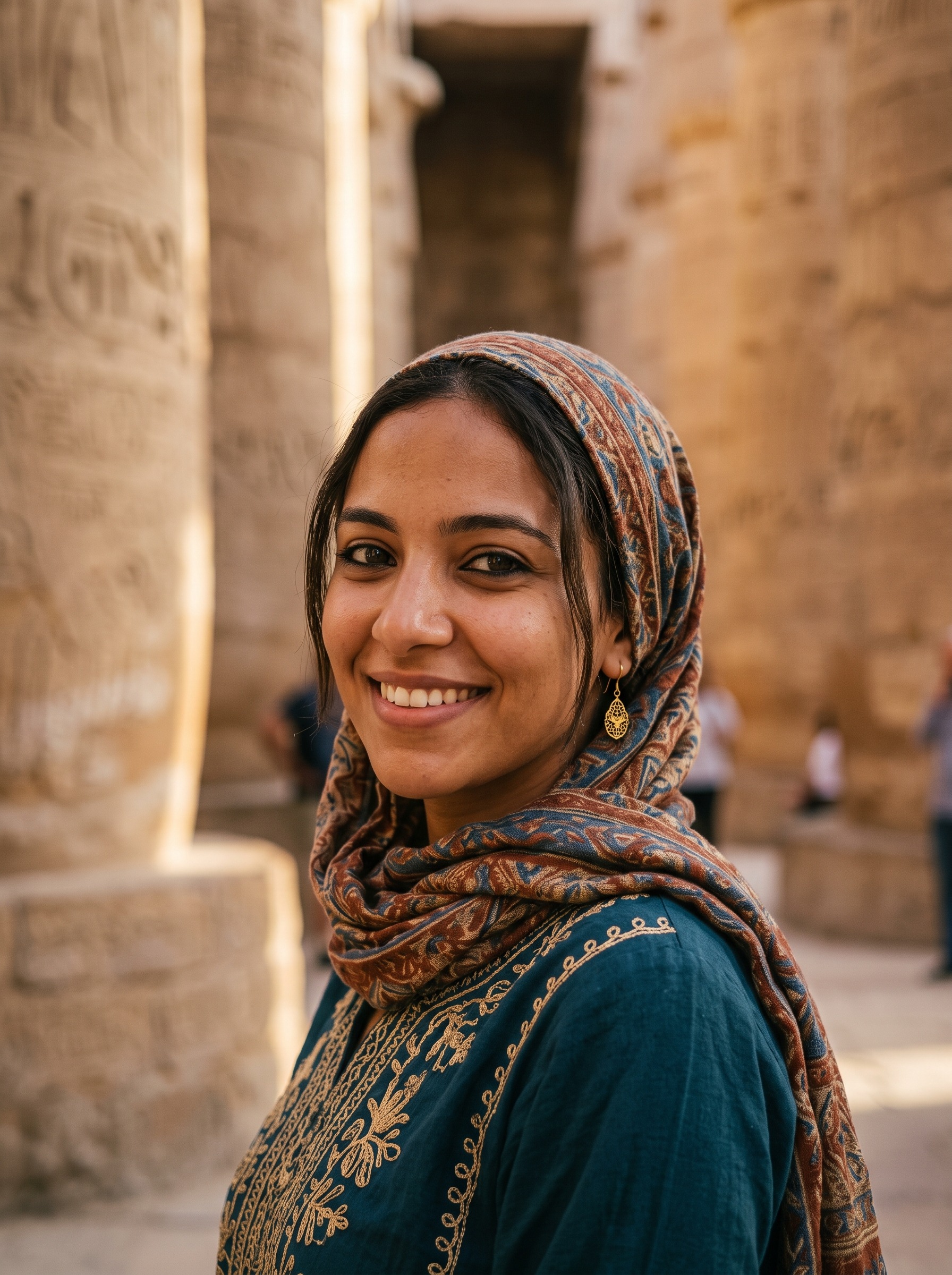

Follow the Corniche south past the Sheraton roundabout and Luxor changes register without making a fuss. El-Awamya — Gazirat al-Awamiyyah to locals — is where the city’s riverfront relaxes its shoulders: hotel gardens, palms, wide terraces and a pavement that feels made for walking in the cooler hours, with the Nile sliding past and the West Bank hills sitting blue on the far side. Step one or two blocks inland and the mood shifts again. The polished frontage gives way to a working Upper Egyptian neighbourhood, with low apartment blocks, mosque loudspeakers, microbuses nosing into the curb, and the smell of koshari and tea drifting out into the street. That double life is the point. El-Awamya is not pretending to be a postcard; it simply happens to have some of Luxor’s best river views attached to an ordinary district that knows exactly how to live.
What El-Awamya is known for
Two things define this place, and they sit almost on top of each other. The first is Khaled Ibn El-Walid Street, the grand riverfront run where Luxor’s big Nile-view hotels line up shoulder to shoulder. This is the address travellers mean when they say they want a balcony over the water without the crush of the downtown core. The Steigenberger Nile Palace, the Sonesta St. George Hotel, and the garden-wrapped Steigenberger Resort Achti all belong to this stretch, each one turning the river into a different kind of backdrop: formal, polished, leafy, a little theatrical, and very much in business with the Nile.

The second thing is everything behind that strip. The residential streets of El-Awamya are the real neighbourhood: a post office, a university presence, ordinary shops, and the small, practical rhythms of a district where people live rather than pass through. That contrast is what makes the area so compelling. You can have a hotel breakfast looking at the river, then walk ten minutes inland and buy fruit from a local stall or hear a mosque loudspeaker mark the hour over the buzz of parked microbuses. It is the same postcode, but it feels like two cities stitched together.
And then there is the oddest asset of all: Kings Island, moored just offshore in the Nile. It is private, green, and unexpectedly large — a 150-acre garden island with the Jolie Ville Hotel & Spa on it — and it gives El-Awamya a kind of quiet eccentricity. You look across the water and see not a monument but a resort island, all palms and lawns, as if Luxor had decided to keep one secret for itself.
Where to eat & drink
El-Awamya is one of the rare parts of Luxor where you can eat a plate of koshari for pocket change and, a little later, sit down to Lebanese mezze in a courtyard with live music. That range is not an accident; it comes from the district’s split personality. The local streets feed the everyday appetite, while the hotel strip handles the polished end of the evening.
El Zaeem is the neighbourhood’s anchor on the cheap end, a beloved koshari counter on the corner of Television Street and Al Manshiya. There are two doors: one for the constant take-away stream, and one leading upstairs to marble-lined tables where your bowl comes up to you. It is simple food, done properly — rice, lentils, macaroni, fried onions, and that sharp garlic-vinegar sauce that makes koshari snap awake — and it is the sort of place you feel lucky to find because it belongs to the city first and the visitor second.

Nearby, Sofra Restaurant & Café offers the sit-down version of the same local comfort, but with a more old-fashioned grace. It is in a restored 1930s house at 90 Mohamed Farid Street, on the district’s northern edge, and it serves Egyptian classics and mezze in a setting that feels like a memory of Luxor rather than a performance of it. The house itself does a lot of the work: the rooms, the age, the sense that lunch can unfold at its own pace.
When the mood tilts toward a proper tablecloth, El Tarboush at the Steigenberger Nile Palace is the standout. Lebanese cooking — falafel, kibbeh, grilled skewers, hummus, tabbouleh — comes with live music in a courtyard, and the whole thing has the sort of confidence that comes from being consistently one of Luxor’s top-ranked restaurants. It is elegant without becoming stiff, and it suits El-Awamya’s riverside self-image: a place where dinner can still feel linked to the water outside.
A short walk away, on Al Rawda al-Sharifa Street near the Sonesta St. George, Jewel of the Nile serves the district’s expat comfort-food crowd. British and Italian home cooking, a from-scratch Sunday roast, bring-your-own-wine, closed Fridays — it is less about local flavour than about reliable, familiar food in a city where you may want exactly that after a day of temples and taxis.
For drinks, the law of the land is simple: alcohol is for licensed venues only. In this district that means hotel bars and pool terraces, especially the Steigenberger Resort Achti’s poolside bar and the bars at the Steigenberger Nile Palace and Sonesta St. George. If you want a more local evening rhythm, the inland ahwas are where the neighbourhood really exhales: sweet tea, Turkish coffee, a water pipe, and people staying out well into the night.
Going out
There is no nightlife here in the club sense, and that is part of the appeal. El-Awamya does not try to be a late-night district. It prefers dinner, terraces and shisha, which is a much saner arrangement in a city where the day already arrives with enough drama. The evening scene is split between the hotel strip and the residential streets, and each has its own rhythm.
The inland ahwas are the true local stage. These traditional coffee houses are where men — and increasingly mixed groups — sit over tea, coffee and a water pipe while the night drifts on. Nothing much needs to happen. That is the charm. A game may flicker on a café television, someone may call across the room, and the coal on the shisha may be fanned back to life with a small hiss. It is an evening built on repetition, not spectacle.
For a drink with a view, the Steigenberger Resort Achti is the easy answer, with poolside and terrace bars set in a tropical garden 50 metres from the Nile. The Steigenberger Nile Palace and the Sonesta St. George also carry the district’s licensed evening life, usually with the river in sight. But the most atmospheric hour may belong to El Tarboush, where the courtyard and oud player give dinner a pulse that feels rooted in the neighbourhood rather than imported into it.

If you want a livelier late evening, the downtown Corniche and its rooftop restaurants are a short taxi ride north. Plenty of people do that. Plenty of others stay put, watching the West Bank hills go dark from a terrace and deciding that not every night in Luxor needs to become a story.
Things to do
The signature move here is the crossing to Kings Island. The Jolie Ville Hotel & Spa sits on this private 150-acre garden island in the Nile, reached by the hotel’s free ferry shuttle running 24 hours. Even non-guests can sometimes arrange a day pass to use the pools and gardens, which is the real temptation: a swim, a lunch, and the river all around you, with the temple crowds reduced to a distant idea. It is one of those Luxor experiences that feels almost unreal until you are on the ferry, watching the mainland recede.

Back on land, the simplest and best thing to do is walk. Khaled Ibn El-Walid Corniche is the calmest riverside promenade in Luxor, and it changes character beautifully across the day. In the morning, the light is clean and the pavement feels almost private. At sunset, the West Bank hills glow across the water and the river takes on that soft metallic colour that makes you slow down without meaning to. This is not the crowded, performative riverwalk of the city centre. It is gentler, greener, and more forgiving.
The inland blocks are worth your time too, precisely because they are not polished. This is where you see an ordinary Egyptian evening unfold: a market run, children playing between parked microbuses, a stroll to the mosque, a television glowing in a café. The district’s university presence and post office are reminders that this is a functioning neighbourhood first. The visitor gets to borrow that life for a while.
The river itself remains the main event. Feluccas launch from the Corniche here as elsewhere, and a late-afternoon sail as the sun drops behind the Theban hills is the classic hour on the Nile. It is hard to improve on that, and Luxor knows it.
{{ATTRACTIONS}}
Shopping & markets
El-Awamya is not a souvenir district, and thank goodness for that. You do not come here for alabaster, papyrus and the whole ritual of being gently cornered into a purchase. You come for the everyday version of shopping: neighbourhood grocers, fruit and vegetable stalls, bakeries turning out fresh baladi bread, and the small local markets that serve the residential streets behind the hotel strip.
That means practical things are easy to find. Water, snacks, fruit, basics for a picnic, something to take onto a felucca or up to a hotel roof — all of it is available at local, not tourist, prices. The shops around Television Street and the Manshiya end of the district are especially useful for this. They are not trying to stage an experience. They are simply doing business for the people who live here.
If you want the classic Luxor souk atmosphere — spices, scarves, galabeyas, haggling — you head north to Sharia al-Souk near Luxor Temple. El-Awamya is the quieter alternative, where the transactions are smaller, the mark-ups thinner, and the feeling is less about extracting value from a visitor than about keeping a neighbourhood supplied.
Where to stay in El-Awamya
El-Awamya is one of Luxor’s strongest addresses for a Nile-view resort on a calmer, greener stretch of riverfront. The Steigenberger Nile Palace and Steigenberger Resort Achti anchor the five-star end of Khaled Ibn El-Walid Street, both with big gardens, multiple pools and restaurants. The Sonesta St. George sits right on Gazirat al-Awamiyyah with its own Nile frontage, which gives it a slightly different relationship to the water: less boulevard, more direct contact.
For something genuinely set apart, the Jolie Ville Hotel & Spa occupies its own island — a resort in a garden, with a free ferry to the mainland and a shuttle into town. It suits travellers who want to switch off between sightseeing days rather than step straight into the action. Behind the riverfront, the residential streets and the budget-accommodation belt around Television Street hold simpler guesthouses and small hotels for travellers chasing value and local flavour.
The trade-off is the same whichever end you choose: more calm, more garden, more river, and slightly less immediacy to Luxor Temple and the souk. For many people, that is a bargain. For others, it is a deal-breaker. El-Awamya is honest about which side it is on.
{{HOTELS}}
Getting around
El-Awamya sits on the southern East Bank, past the Sheraton roundabout and roughly a couple of kilometres south of Luxor Temple. That makes it close enough for the Corniche walk in the cool hours, but far enough away that most people take a taxi to the temples by day. Taxis are everywhere and have no meters, so agree the fare before you get in. Short hops within town are cheap.
Luxor railway station is only about five minutes away by taxi, and under a ten-minute walk to Luxor Temple, which makes El-Awamya a practical base if you are arriving by train from Aswan or Cairo. Luxor International Airport is around 9 km east, roughly a 20-minute drive. For the West Bank monuments, cross by the local ferry from the Corniche and pick up a taxi or bike on the other side. The Jolie Ville also runs a free shuttle from Kings Island into the city centre for its guests.
One local note worth taking seriously: the Corniche touts are among the pushier in Egypt. A firm, friendly no thank you, and then keep walking, is the standard drill. Once you get the rhythm of that, the district opens up beautifully — not as a spectacle, but as a place where the Nile, the neighbourhood and the hotel strip all sit within the same easy frame.
FAQs
Is El-Awamya a good area to stay in Luxor?
Yes — if you want a Nile-view hotel on Luxor’s calmest, greener stretch of riverfront rather than in the busy downtown core. Khaled Ibn El-Walid Street lines up the big five-star resorts, including Steigenberger Nile Palace, Steigenberger Resort Achti and the Sonesta St. George, while cheaper guesthouses sit in the residential streets behind. The trade-off is that Luxor Temple and the souk are a short taxi ride north, not on your doorstep.
Where do locals eat in El-Awamya, and is it cheap?
Very cheap. El Zaeem, on the corner of Television Street and Al Manshiya, is the local koshari favourite, with take-away downstairs and tables upstairs. Nearby Sofra Restaurant & Café serves Egyptian classics in a restored 1930s house. For a more polished meal, El Tarboush and Jewel of the Nile are the district’s standout sit-down options.
How do I get to Kings Island and the Jolie Ville hotel?
Kings Island, or Gazirat al-Awamiyyah, is a private garden island in the Nile just off El-Awamya. The Jolie Ville Hotel & Spa runs a free ferry shuttle, and it operates 24 hours. Guests arrange the transfer through the hotel, and there is also a free shuttle bus into Luxor city centre.
Is El-Awamya walkable?
Yes, especially along Khaled Ibn El-Walid Corniche in the cool hours. The riverfront is pleasant and calm, while the inland streets are more residential and scruffier. It is a good area for walking, but most visitors still use taxis for the temples and longer cross-town trips.