Madrid guide
Lavapiés, Madrid: a barrio of corralas, curries and late-night cante
A walk through Madrid’s most mixed-up, most lived-in neighbourhood, where corralas, street art and bargain plates share the same few steep blocks.
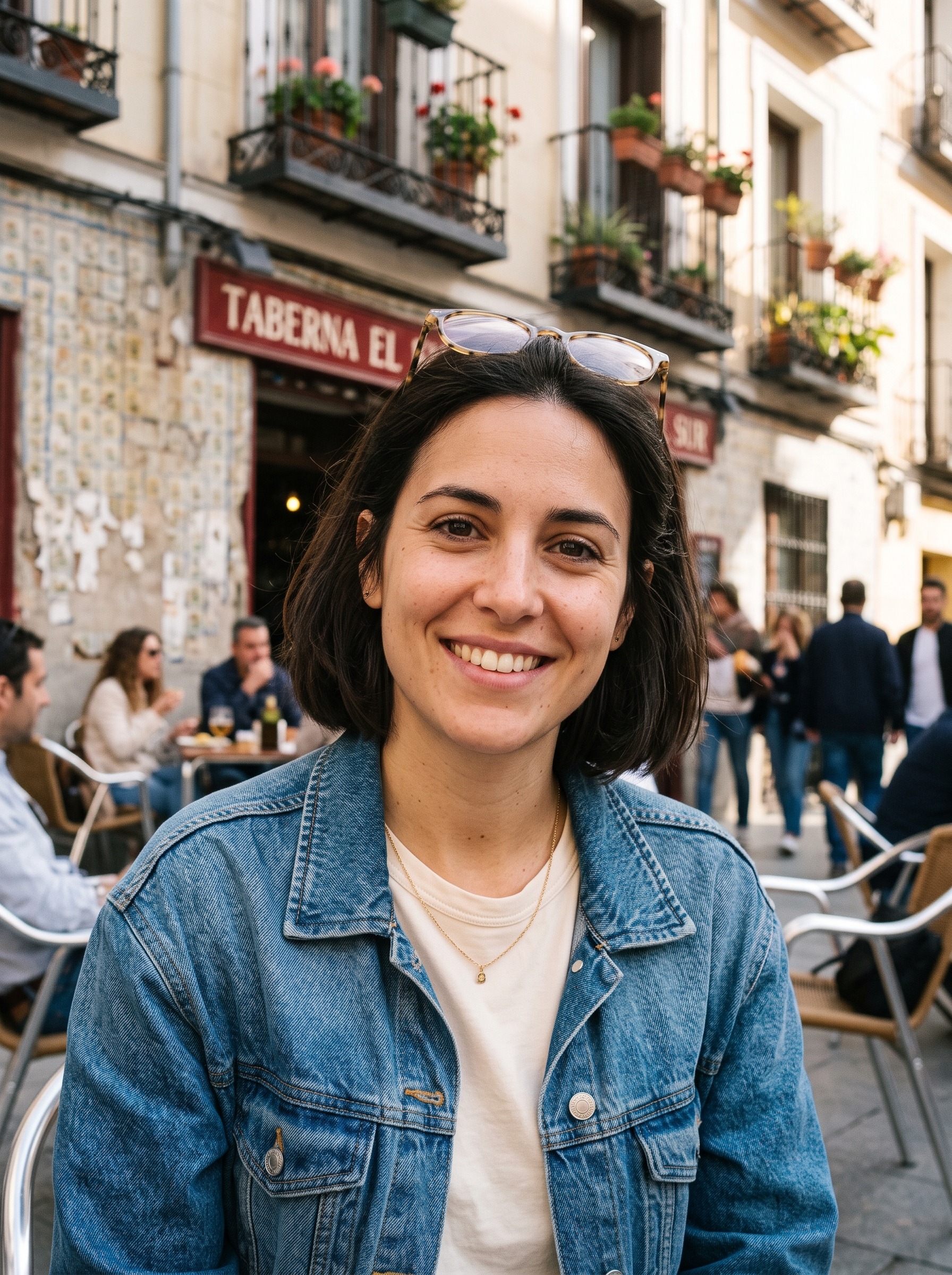 By Carmen Otero

Walk south from Tirso de Molina and the first thing Lavapiés does is tilt under your feet. The streets drop away, the shop signs begin to change language, and the air seems to move from croquetas to cumin, from frying oil to grilled fish. This is not a barrio trying to be picturesque. It is scruffy on purpose and proud of it, a place of corralas and balconies, of anti-eviction banners and espresso machines, of abuelas on benches and students crossing the plaza with headphones on. It feels lived-in because it is lived-in.
What Lavapiés is known for
Lavapiés is Madrid’s most multicultural barrio, but that phrase only starts to explain it. Around Plaza Nelson Mandela and along Calle del Mesón de Paredes, the rhythm is set by West African and South Asian shops, mosques and community centres; a few streets over, Calle de Lavapiés and Calle del Ave María carry one of the city’s densest runs of Indian and Bangladeshi restaurants. The layering is the point. First came rural Castilians, then Chinese wholesalers around Calle de los Embajadores, then a large Bangladeshi and West African community, and the barrio absorbed each wave without sanding itself smooth.
That history sits in the built fabric too. The corralas — the old tenement blocks arranged around communal courtyards — are the barrio’s signature architecture, and the best-preserved is La Corrala at the corner of Calle Mesón de Paredes and Calle Tribulete, an 1839 landmark that still hosts open-air theatre in summer.

Lavapiés has also long been a neighbourhood of culture that doesn’t wait for permission. La Casa Encendida on Ronda de Valencia is one of Madrid’s most rewarding free cultural spaces, in a neo-Mudéjar building that feels serious without being solemn. And at the barrio’s northern edge, the Museo Reina Sofía brings the weight of the national collection right up to Lavapiés proper, with Guernica hanging there like a fixed point in the city’s emotional map. Then there is La Tabacalera on Calle de Embajadores, the self-managed cultural squat inside an 18th-century tobacco factory. At the time of writing its famous street-art façades have been whitewashed and the building is closed for renovation, so check before making a special trip. The barrio’s spirit, though, remains stubbornly counter-cultural.
That stubbornness is visible in the everyday. Anti-eviction banners hang from balconies. Conversations happen in several languages at once. On warm evenings, guitars drift out of flamenco bars, and the clack of dominoes on Plaza Nelson Mandela carries farther than you’d expect. Lavapiés is not polished, and that is exactly why people who tire of Sol come here to breathe.
Where to eat & drink
Eating is the reason many people come and then keep returning. Lavapiés is one of the rare parts of Madrid where a meal can be a geography lesson and still feel cheap enough to repeat twice in a day.
Start with Bar Melo’s on Calle del Ave María, a cash-only, no-frills institution that knows exactly what it is. The signature is the zapatilla: an enormous grilled sandwich of lacón and melting Galician tetilla cheese on rustic bread, the sort of thing that arrives and changes the table’s mood. The ham croquetas are another reason to stop here, crisp outside and soft enough inside to make the room go quiet for a moment.

A few streets away, La Caleta Gaditana on Calle Santa Isabel brings Cádiz to Madrid without fuss. Order the cazón en adobo — marinated, fried dogfish served in paper — or go for a mixed pescaíto frito platter. It is the kind of fried seafood that tastes best with a cold drink and a table you do not need to leave quickly.
The barrio’s signature, though, is its global cooking. Bar Colores on Calle del Mesón de Paredes plates Senegalese and Dominican home food, including thieboudienne, the fish-and-rice dish that anchors so many conversations, and maffe, a peanut stew with the kind of depth that makes you slow down between bites. Prices here feel like a throwback, which is part of the attraction. Around Calle del Ave María and Calle de Lavapiés, the Indian and Bangladeshi restaurants are generous and spice-forward, with curries and thalis that make a strong case for staying local rather than heading elsewhere for dinner.
For a drink with a little more intent, Bendito Vinos y Vinilos tucked inside Mercado de San Fernando pours natural wines from small Spanish producers, many in the €5–10 range, with vinyl on the turntable and cheese and jamón to match. It is a small room, but it carries a lot of Lavapiés in it: market bustle outside, a slightly more deliberate pace inside. Café Barbieri on Calle del Ave María is the opposite kind of pause — marble tables, a room open since 1902, and a menu now moving between Italian and Castilian plates with cocktails for later in the evening. It is the sort of café that lets you sit with the neighbourhood rather than merely pass through it.

Going out
Lavapiés does nightlife on its own terms. It is less about the big, obvious night and more about terraces, live music and flamenco that feels local rather than packaged.
The best 2025 story is Candela on Calle del Olmo, the legendary flamenco cueva that shut in 2022 and reopened in January 2025 under new owners, including actor Unax Ugalde. By day it runs as a restaurant; by night it becomes tablao and late club, with DJs and cante in a room that matters to people who know the difference between a tourist show and the real thing. That distinction is part of Lavapiés’s character: the barrio is open to outsiders, but it has no interest in performing itself for them.

Sala Juglar on Calle de Lavapiés has been a live-music room since 1998, and its programme moves easily from rock to reggae to flamenco to DJ nights. Chinaski Lavapiés on Calle de la Fe is the craft-beer option, with around twenty rotating taps of Spanish and international brews plus cheese, charcuterie and pizza. It is a useful place to land if you want the evening to stretch rather than peak and collapse.
But the barrio’s simplest nightlife move remains the terrace. On Calle Argumosa, the café-and-tapas spine of Lavapiés, the evening slips into place with a caña and no great plan. The street can be noisy at weekends, yes, but that is part of the bargain in a neighbourhood that is busy, dense and alive after dark. The appeal is not glamour. It is company.
Things to do
The headline sight is the Museo Reina Sofía at the northern edge of the barrio, where Spain’s national museum of 20th-century art holds Guernica alongside major Dalí and Miró works. Go in the free evening window or on a free Sunday, and remember that the museum presses right up against Lavapiés proper rather than floating somewhere abstractly “nearby.” The handoff between museum and street is one of the area’s pleasures.

Closer to the barrio’s centre, La Casa Encendida on Ronda de Valencia is one of Madrid’s most rewarding free cultural spaces. It rotates contemporary-art exhibitions, films and library programming, and in summer the rooftop hosts open-air cinema and gigs. It is a place to spend time without feeling that you are spending money, which suits Lavapiés well.
Then, honestly, just walk. Lavapiés is one of the most heavily painted neighbourhoods in Madrid, and a self-guided street-art wander around Calle de Embajadores and the lanes off Plaza Nelson Mandela turns up murals at every turn. The surfaces change fast here: one wall speaks in paint, the next in laundry, the next in a hand-lettered notice about a meeting or a rent dispute. Architecture fans should make time for La Corrala on Mesón de Paredes, especially for that galleried courtyard feeling that still survives in the middle of the city. If you are in town on a Sunday, drift down to El Rastro, whose lower streets spill from neighbouring La Latina into Lavapiés from about 9am. It is busiest early, and the crowd thickens fast.
{{ATTRACTIONS}}
Shopping & markets
Shopping in Lavapiés is not a spree. It is an amble, a browse, a way of reading the barrio while you do practical things.
The Mercado de San Fernando on Calle de Embajadores is the anchor. It is a traditional covered market reinvented with independent food stalls, craft beer and natural-wine bars, and it is also home to La Casquería, the bookshop that sells second-hand books by weight. Buying literature by the pound feels exactly right here: a little improvised, a little anti-precious, and very Lavapiés.
On Sundays, El Rastro floods the streets between Lavapiés and La Latina, best around Calle Ribera de Curtidores from roughly 9am to 3pm. You will find vintage clothes, records, prints, camera gear and general bric-a-brac, and you should go early if you want the better finds. Keep an eye on your bag in the crush. The market is part treasure hunt, part human tide.
Between those anchor points, the everyday retail tells the rest of the story: South Asian grocers and spice shops, African textile and hair salons, Chinese wholesalers around Embajadores, and a growing scatter of small vintage and design outlets. In Lavapiés, shopping and sightseeing are often the same activity. You buy tomatoes, then notice a mural. You stop for a book, then end up in a wine bar. The barrio makes ordinary errands feel like a form of reading.
Where to stay in Lavapiés
Lavapiés works well as a value base if you want character more than polish. The hotel stock leans towards hostels, guesthouses and small independents rather than big-name comfort, which suits the neighbourhood’s mood. If you want the liveliest version of the barrio, look around Calle Argumosa and Plaza de Lavapiés, where terraces and tapas are on the doorstep and weekend noise comes as part of the package. If you prefer a slightly calmer edge, the northern side near the Reina Sofía, along Calle de Atocha and Calle Santa Isabel, keeps you close to both the museum district and the barrio itself, with easier access to central sights and Atocha transport.
Whatever you choose, arrive with the right expectations. Lavapiés is a dense, real inner-city neighbourhood, not a hush-and-polish base. It gives you scruffy charm, after-dark buzz and a very short walk to the centre, and it asks you to accept that the streets are busy, sometimes gritty, and not especially interested in being tidy for visitors.
{{HOTELS}}
Getting around
Lavapiés is small and steep, and walking is the way to understand it. Most of the barrio is a ten-minute stroll end to end, though it is a proper hill, so pace the climb back up towards Tirso de Molina and the Reina Sofía. That slope is part of the neighbourhood’s texture; it keeps the streets from feeling too neat.
On the Metro, Lavapiés station sits on Line 3 right on Plaza de Lavapiés, while Embajadores on the southern edge is served by Lines 3 and 5 plus Cercanías commuter trains. Tirso de Molina on Line 1 and Atocha are both a short walk north. Puerta del Sol is about a 12–15 minute walk or two Metro stops away, which is one reason Lavapiés works so well for people who want to be central without being in the middle of the obvious centre.
For the airport, the simplest route is to walk or ride to Atocha and take the Cercanías line to Nuevos Ministerios, then the Metro Line 8 to Barajas; door to door, it is roughly 45–55 minutes. A taxi from the centre is around €30 flat rate. In other words: easy enough, but not the sort of neighbourhood where you need to keep checking a map every two minutes. The streets pull you along if you let them.
Lavapiés rewards that kind of attention. One plaza, one corrala, one plate of something you did not expect, then another. It is not tidy, and it is not trying to be. That is its argument, and its charm.
FAQs
Is Lavapiés a good area to stay in Madrid?
Yes, if you want character and value over polish. It’s central, strong for cheap global food and independent bars, and close to Sol and the big museums. The trade-off is that it’s a busy, gritty inner-city barrio with more hostels and small guesthouses than smart hotels, and the liveliest streets can be noisy at weekends.
Is Lavapiés safe?
For the most part, yes. It’s one of Madrid’s most walked, most lived-in neighbourhoods. Use normal city common sense around crowds, especially at Plaza de Lavapiés, Plaza Nelson Mandela and El Rastro on Sundays, and be aware that some streets feel edgier late at night.
What food is Lavapiés known for?
It’s Madrid’s most international eating district. The signatures are South Asian curries and thalis, West African dishes like thieboudienne and maffe, classic Madrid bars such as Bar Melo’s for the zapatilla, Cádiz-style fried seafood at La Caleta Gaditana, and natural wine at Bendito inside Mercado de San Fernando.
What is the best way to explore Lavapiés?
On foot. The barrio is small but steep, with corralas, street art, markets and plazas packed close together. A slow walk between Plaza de Lavapiés, Mesón de Paredes, Embajadores and the Reina Sofía gives you the clearest sense of how it works.