Madrid guide
Malasaña, Madrid: the barrio that never stopped talking back
A walk through Madrid’s most restless neighbourhood, where the movida still hums under vintage rails, vermouth taps and late-night terraces.
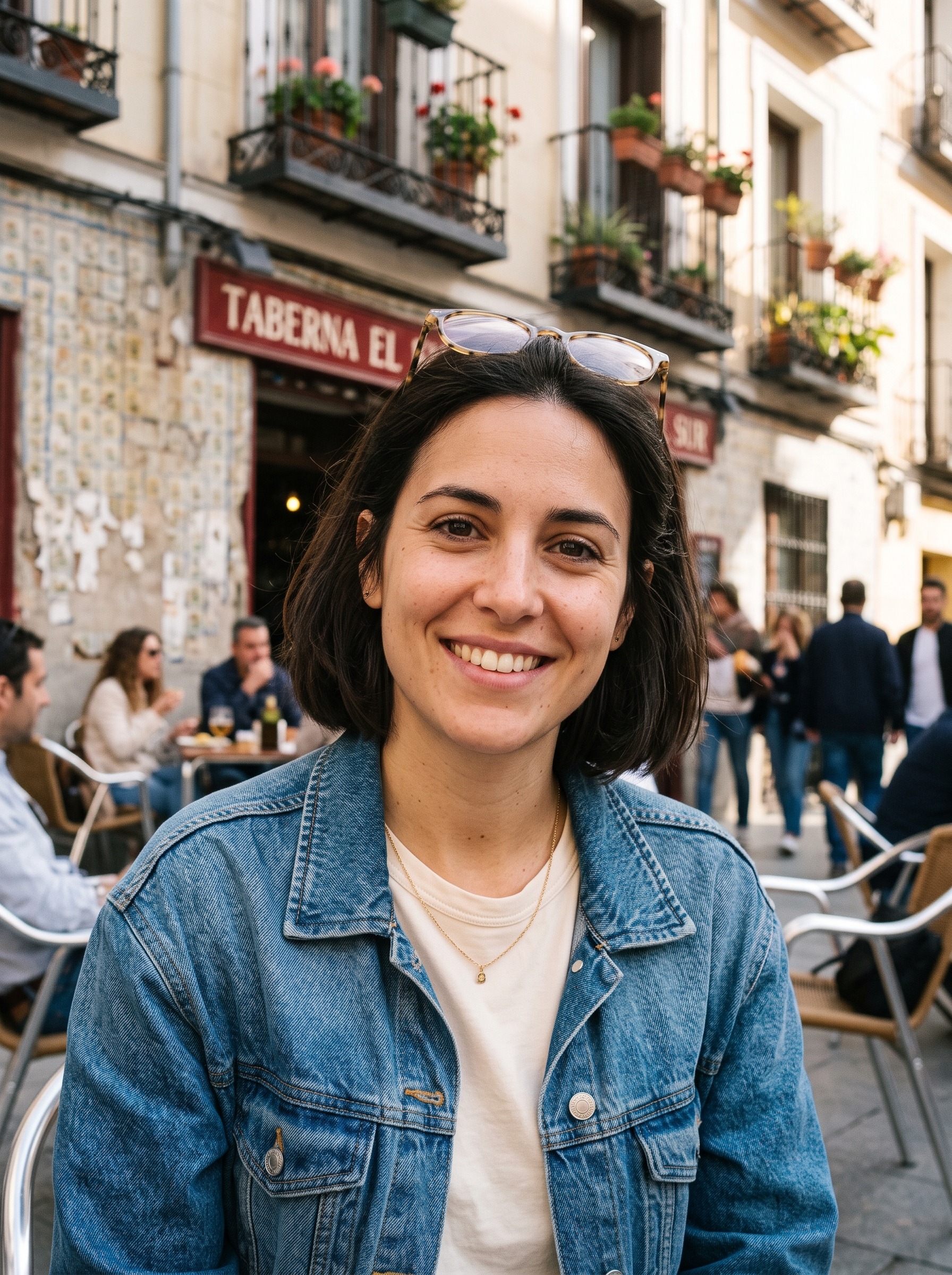 By Carmen Otero

Manuela Malasaña was a teenage seamstress shot by Napoleon’s troops on 2 May 1808, and the barrio that took her name has been arguing with the mainstream ever since. In Malasaña, history is not sealed behind glass; it leaks out of bar doors, from graffitied shutters, from the tables that spill onto the pedestrian lanes off Plaza del Dos de Mayo when the first cañas arrive and the night is still deciding what it wants to be. The place wears two decades at once. By day, there are flat whites, laptops and vintage rails. By night, the old movida bones show through, and the sound rises to the balconies.
What Malasaña is known for
Two stories anchor this barrio, and both are still visible if you walk slowly enough. The first is the 1808 uprising against Napoleon’s occupation, remembered in Plaza del Dos de Mayo, where the central monument honours the artillery captains Luis Daoíz and Pedro Velarde. The second is la movida madrileña, the cultural explosion that followed Franco’s death in 1975 and turned these streets into a crucible for post-dictatorship pop, film and fashion. Malasaña never quite converted that era into heritage décor. A few of the bars from those years are still trading, still crowded, still carrying the same slightly battered confidence. That matters. It means the barrio feels less like a polished district with a story to tell than a scene that simply refused to end.

Stand on the edge of the plaza for a minute and the neighbourhood’s rhythm becomes legible. The crowd is young, creative, often carrying a laptop bag by day and a beer glass by night. The streets are dense and walkable, scruffy in a deliberate way, and a little kitsch without apology. Street art is effectively part of the urban furniture: shutters, side walls and dead ends are treated as a rotating gallery, with murals changing every few months. Calle del Espíritu Santo and Calle Velarde are the obvious arteries for vintage and secondhand fashion, but they also tell you something broader about the barrio’s instincts. Malasaña likes things with a past, provided they still have a pulse.
Where to eat & drink
The old guard still sets the tone. Bodega de la Ardosa, on Calle Colón 13, has been pouring vermouth and beer since 1892 from a bar packed floor to ceiling with dusty bottles, and it remains one of the most satisfying places in Madrid to start an evening without fuss. Order the house tortilla de patatas, the one with the deliberately runny centre, and let it arrive with salmorejo and croquetas. You will probably be standing shoulder to shoulder. That is part of the point. Casa Camacho, on Calle San Andrés 4, is a few streets away and barely looks as if it has adjusted its fittings since the 1920s. This is where the yayo lives — vermouth, gin and soda mixed into something cheap and dangerously smooth — alongside patatas bravas and marinated anchovies.

If Malasaña’s older bars are about continuity, the newer wave is about invention without losing the neighbourhood’s appetite for informality. Pez Tortilla on Calle del Pez 36 does exactly what the name suggests, but better than that blunt formula implies: inventive tortillas and croquetas, plus more than 30 craft beers, all running on a napkin-sketch premise from three childhood friends. NAP Malasaña, on Calle San Bernardo 51 near the Noviciado metro exit, turns out AVPN-certified Neapolitan pizza from a wood oven, and does so with the sort of calm that makes a pizza feel like an anchor rather than an event. For brunch that leans playful rather than precious, Ojalá on Calle San Andrés 1 is the one to remember: eggs Benedict, pancakes and cocktails upstairs, and a basement floored with real sand where you eat on cushions. It is the sort of place that could have been unbearable anywhere else; here it reads as a neighbourhood joke that has survived because it works.

When decision fatigue sets in, the three-floor Mercado de San Ildefonso on Calle de Fuencarral solves the problem by refusing to choose for you. Around twenty stalls cover Iberian grill, croquetas, Peruvian, Korean and burgers, with terraces on top for the inevitable pause between rounds. It is busier, shinier and more obviously contemporary than the older taverns, but it still belongs to the same Malasaña habit of mixing registers: an abuela’s tapas bar two doors from a natural-wine list, a cheap beer beside a well-extracted coffee. You are never more than a few minutes from either.
Going out
Malasaña is one of the reasons Madrid keeps earning its late-night reputation, and the practical appeal is simple: you can build an entire night without summoning a taxi. It usually begins outdoors. People gather on Plaza del Dos de Mayo and around its surrounding terraces for a first caña before anyone commits to a room, and from Thursday to Saturday the pedestrian lanes off the square are wall to wall. The noise is part of the architecture here. It drifts up, hangs around, and turns the balconies into spectators’ boxes.
The movida survivors are the pilgrimage stops. La Vía Láctea, on Calle Velarde 18, has been open since 1979 in a former coal office. It still runs indie and pop-rock over two floors, with a pool table and vintage posters, and it was a live venue during the movida. It remains one of the last standing bars from that era, which gives it a certain gravity even when the room is simply full of people having a loud, ordinary evening. Nearby, El Penta is the other 1980s holdout: unpolished, iconic, and proud of it.

For a different kind of nightcap, Macera Taller Bar on Calle San Mateo 21 feels less like a bar than a workshop that happens to serve drinks. Its gins, rums and whiskies are macerated in-house with fruit, herbs and spices in big glass jars behind the bar, and most drinks sit around €7. That price matters less than the mood: it is a place where the craft is visible, the process is part of the appeal, and the evening can slide from one glass to the next without ever becoming ceremonial. The barrio does not really get going before 11pm. Pace the cañas accordingly.
Things to do / what to see
Malasaña rewards wandering more than ticking off sights. Start, as the barrio itself does, at Plaza del Dos de Mayo and the monument to Daoíz and Velarde, then let the side streets pull you away. The best thing to do here is not to hurry. The murals along Espíritu Santo, San Vicente Ferrer and Velarde change often enough that you are always arriving slightly late to the current version of the street. That transience is part of the appeal. Nothing is fixed for long, which makes the neighbourhood feel lived in rather than curated.
The most useful indoor stop is the Museo de Historia de Madrid on Calle de Fuencarral 78. It is free, quick and worth the detour for Pedro de Ribera’s ornate Baroque doorway alone, though the scale model of 1830s Madrid gives the visit more substance than a pretty entrance would suggest. The museum opens Tuesday to Sunday from 10:00 to 20:00 and closes on Mondays. Come here when the streets are hot or when your feet need a pause; the building offers a different register of the city, from the Habsburgs onward, and reminds you how much of Madrid’s present still sits on older plans.

The coffee circuit is its own form of sightseeing. Toma Café on Calle de la Palma 49 was Madrid’s specialty-coffee pioneer when it opened in 2012, and it still roasts and brews for a devoted crowd under high ceilings and hanging plants. HanSo Café on Corredera Baja de San Pablo 51 brings a Seoul-café aesthetic and some of the city’s best matcha. These are not just stops for caffeine; they are the daytime face of Malasaña’s current identity, where remote workers, students and the permanently curious share tables in a barrio that does not really separate work from lingering.
If you want a final stop that feels distinctly of this neighbourhood’s habits, end at Tipos Infames on Calle San Joaquín 3. It is an independent bookshop that doubles as a wine bar and gallery, which is exactly the sort of hybrid Malasaña seems to invent whenever one category is not enough. Browsing Spanish fiction with a glass of Ribera in hand is not a gimmick here; it is simply another version of the barrio’s habit of making culture social, and social life slightly literary.
{{ATTRACTIONS}}
Shopping
If you come to Malasaña with an empty suitcase and a little patience, the barrio will do the rest. The epicentre of its vintage and secondhand scene is Calle del Espíritu Santo, with Calle Velarde close behind. The lanes around them are where the neighbourhood’s magpie instinct feels most concentrated: racks of old denim, leather jackets, furs, record sleeves, tattoo studios, small design stores and the occasional concept shop that looks as if it has been there forever, even if it has not. Come on a weekday afternoon if you actually want to browse. Saturdays, the vintage strips get properly busy.
Templo de Susu at Espíritu Santo 1 has been the reference point since 1998. Its racks lean hard into 1960s and 70s rock-and-roll pieces, leather jackets and furs, most of it under €50 and rarely dull. That price range tells you something important about Malasaña: style here is not supposed to feel aloof. It is meant to be worn, argued over and mixed with the rest of your life. Elsewhere, Calle de Fuencarral runs the more mainstream end of the spectrum, with youth-fashion and streetwear chains, sneaker shops and the food-hall energy of Mercado de San Ildefonso. The balance between those two poles — the secondhand and the commercial, the odd and the practical — is what keeps the barrio from becoming a museum of its own cool.
Where to stay in Malasaña
Malasaña suits travellers who want to live inside the action rather than commute to it, but the exact street matters more here than in many Madrid neighbourhoods. The blocks around Plaza del Dos de Mayo are the loudest, brilliant if your evening usually ends after the bars begin to thin, punishing if you need sleep before 3am on a weekend. If you want the same walkability with a little more breathing room, look toward the quieter northern edge near Calle Carranza or the streets toward San Bernardo. You will still be five minutes from everything, just a notch removed from the terrace roar.
Prices sit firmly mid-range, and the stock is mostly boutique hotels, aparthotels and design-led hostels rather than big international flags. That feels right for the barrio. You are paying for location and character, not marble lobbies. If you can, ask for a room facing an interior courtyard; Malasaña’s nightlife is part of its appeal, but it is not equally kind to every sleeper.
{{HOTELS}}
Getting around
Malasaña is compact enough to make transport almost irrelevant. You can cross it end to end in about fifteen minutes, and much of the nightlife core is car-free. Four metro stations ring the barrio: Tribunal on the eastern edge by Fuencarral, Bilbao to the north, Noviciado to the west near San Bernardo, and San Bernardo at the southwestern corner. From Tribunal it is a single stop or about a ten-minute walk to Gran Vía, Sol and the main museum mile, which is why the neighbourhood feels so easy to fold into a wider Madrid stay.
For the airport, the cleanest route is Line 8 from Nuevos Ministerios, which you can reach via Line 10 from Tribunal, to Barajas; allow roughly 30 to 40 minutes door to gate. A taxi runs a fixed city fare of about €35 and takes around 25 minutes off-peak. Within the barrio, though, you will not need wheels. Leave the taxi for the ride home.
FAQs
Is Malasaña a good area to stay in Madrid?
Yes, if you want to be in the middle of one of Madrid’s most walkable and characterful barrios, with Gran Vía, Sol and the museum district about ten minutes on foot. It skews younger and livelier than Salamanca or Retiro, and the accommodation mix is mostly mid-range boutique hotels, aparthotels and design hostels. Just choose your street with the noise in mind.
Is Malasaña safe at night?
It is one of Madrid’s busiest nightlife areas and is generally safe, with plenty of people on the streets until very late. The main thing to watch is pickpocketing in packed bars and around the plaza terraces — keep your phone and wallet zipped away. The bigger issue for many visitors is simply the weekend noise.
How do I get from Malasaña to the airport?
Take the metro from Tribunal to Nuevos Ministerios, change to Line 8 and ride to Madrid-Barajas — about 30 to 40 minutes end to end. A taxi is quicker at roughly 25 minutes off-peak and runs on a fixed Madrid airport fare of about €35.
What is Malasaña best for?
Late nights, specialty coffee, vintage shopping and an under-40 creative crowd. It is a barrio for walking, lingering and moving from one small room to the next without much planning.