Madrid guide
Barrio de Salamanca, Madrid: the city’s polished grid of money, museums and market lunches
A walk through Madrid’s most composed district, where the Golden Mile meets a working market, Michelin counters and the quiet geometry of the 19th-century bourgeois city.
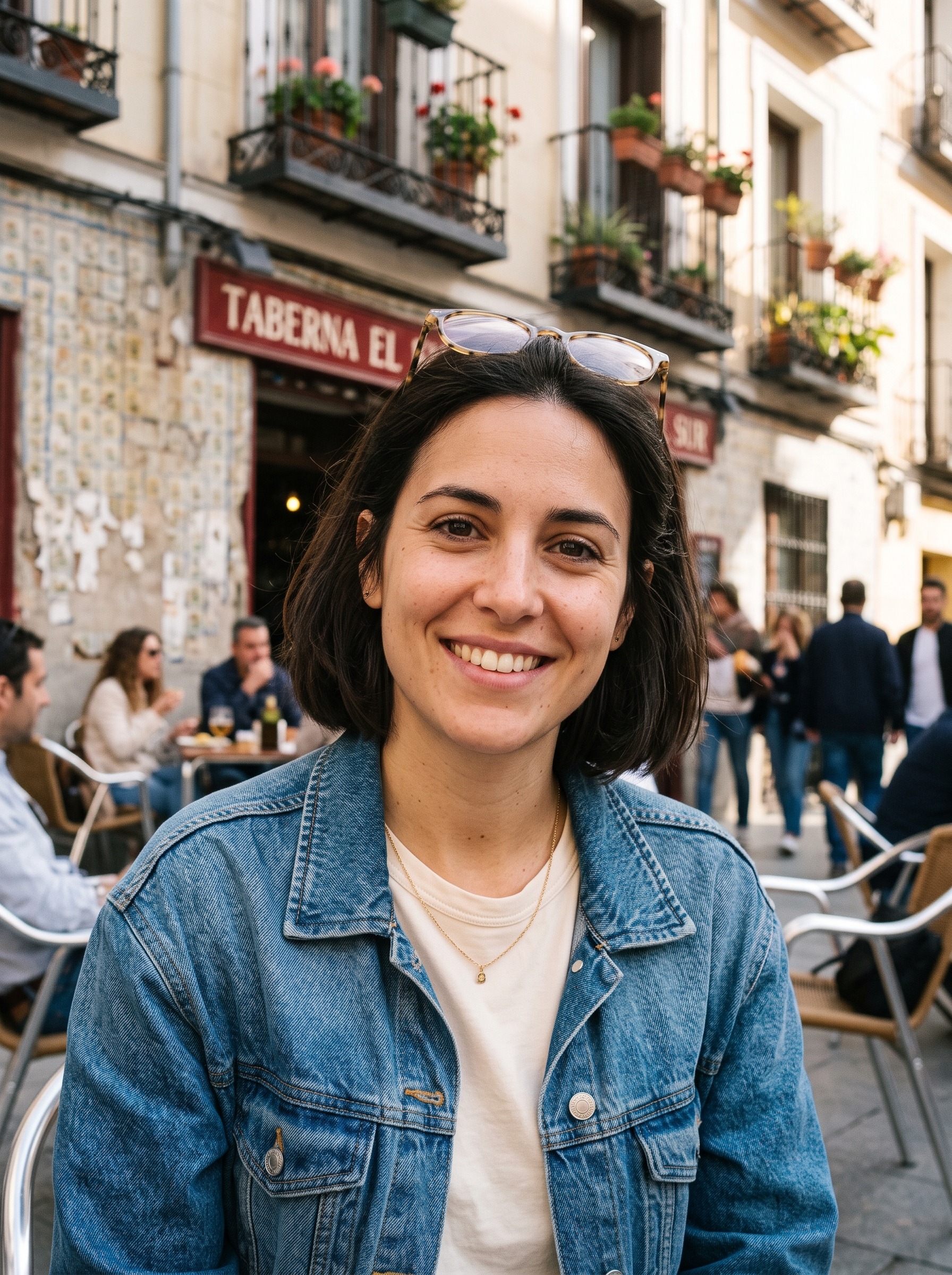 By Carmen Otero

Barrio de Salamanca begins with straight streets and expensive calm. On Serrano, the pavements are broad enough for two people to window-shop without brushing shoulders, and the facades rise in a steady, belle-époque rhythm that makes the whole district feel measured rather than dramatic. This is Madrid laid out for the bourgeoisie in the 1860s by José de Salamanca y Mayol, and the order still shows: no medieval knot, no sudden square that opens like a secret, just long sightlines, porticoed apartment blocks and the sort of address people mention with a small pause.
What Salamanca is known for
Salamanca is Madrid’s shorthand for the good life, but it is a very specific version of it. The barrio was planned as a regular grid for the city’s aristocracy and the newly rich, and it has kept that inherited composure. The crowd skews old money, international, and neatly turned out. You see it in the after-office aperitivo on Jorge Juan, in the stiff cardboard bags from the Golden Mile, in the dogs trotting along beside their owners as if they, too, have a lunch reservation.
The Golden Mile — the Milla de Oro — runs along Calle Serrano and Calle Ortega y Gasset, and it is the densest concentration of luxury brands in the country. Dior, Chanel, Loewe and Tiffany line up there with the patience of a queue outside a private club. The effect is less flashy than it sounds; Salamanca is not a neighbourhood that shouts. It smooths its edges. Even the commerce is polished into a kind of urban etiquette.
Food, though, is where the district loosens its tie. Salamanca holds one of the city’s tightest clusters of Michelin-starred restaurants, from Ramón Freixa Atelier to Smoked Room and StreetXO, but it also has a genuine neighbourhood core in the Mercado de la Paz, where locals still buy fish, cheese and jamón as if the district had not spent the morning polishing its image. That tension — luxury and routine, prestige and habit — is what gives Salamanca its character.

Where to eat & drink
The dining in Salamanca runs from serious tasting menus to a market stool with a perfect tortilla, and the distance between those poles is part of the pleasure. At Ramón Freixa Atelier, the room itself is part of the theatre: a dramatic 600-square-metre space where the two-Michelin-star kitchen serves dinner only, Wednesday to Saturday, and books out well ahead. It is the sort of place that reminds you that Madrid can still do grandeur without raising its voice.
Smoked Room is smaller, darker and more intimate — Dani García’s two-star fire-and-smoke omakase counter, with barely a dozen diners at a time. The premise is disciplined and elemental, all open flame and Japanese technique, but the setting keeps it firmly in Salamanca’s register: precise, expensive, controlled.
Then there is StreetXO, high above El Corte Inglés on Serrano, where Dabiz Muñoz turns Asian street food into a one-star riot. It is improbable in the best way, a place that feels like it should be hidden in a back alley and instead sits on the top floor of a department store, looking out over one of Madrid’s most polished avenues.
The social centre of gravity, though, is Calle Jorge Juan. It is Madrid’s poshest restaurant street, and in the evening it fills with the kind of crowd that treats dinner as both a meal and a small public appearance. El Paraguas is the classic power-lunch address, all refined Asturian cooking and a patio built for watching and being watched. Ten con Ten is its cosmopolitan neighbour in spirit, buzzing under high ceilings with the easy confidence of a place that knows it will be full. Cadaqués does wood-fired rices and pristine shellfish, while Lobito de Mar channels a Málaga beach bar with fried fish, sardines and seafood rice. And then there is Amazónico, a jungle-themed Latin-Asian spectacle that feels like the most theatrical room in the district before you even go downstairs.
At the Mercado de la Paz on Calle de Ayala, the mood changes entirely. Inside, Casa Dani serves the runny tortilla de patata that has won national championships and is routinely called the best in the country. Go at lunch and expect a scrum. Across the street, Jurucha has been slinging more than sixty pinchos since 1962, still family-run, still busy, still the sort of place where the pajarito — a tuna-salad roll — is spoken of with the familiarity of a house specialty that has outlived trends by decades.

Going out
Nobody comes to Salamanca to rave, and that is precisely the point. The night here is polished and grown-up: wine bars, cocktail lounges, hotel terraces and long dinners that slide into a second bottle. The spine of it all is Jorge Juan and its immediate neighbours — Serrano, Goya, Ortega y Gasset and Juan Bravo — where the after-office crowd gathers early, smartly dressed and in no hurry, over Ribera and Albariño.
The most theatrical room after dark is Jungle Jazz Club by Amazónico, a sultry basement on Jorge Juan with live music every night of the week and tropical cocktails that carry the evening further than you meant them to. It runs late, to around 4am, which is almost enough to make Salamanca feel mischievous.
For those who want a dancefloor rather than a long table, the district has a handful of sleek clubs with door policy and a clearly stated opinion of themselves. Gabana and Graf Madrid are the names that come up, both drawing a well-heeled, well-groomed crowd. They are exclusive in the way Salamanca likes to be exclusive: not loud about it, just certain.
If you want the full late-night madness of Madrid, Chueca and Malasaña are only ten minutes west by taxi or metro. That is one of the district’s quiet advantages: you can step out for noise and come back to sleep on a street where the pavements still feel wide at 2am.

Things to do / what to see
Salamanca’s headline cultural stop is a museum many first-timers miss. The Museo Lázaro Galdiano fills the Parque Florido mansion, the former home of the publisher and collector José Lázaro Galdiano, with some 4,800 pieces across four floors. Goya, El Greco, Zurbarán and Hieronymus Bosch are all here, alongside gold-work, ivories, arms and clocks. It is open Tuesday to Sunday, with mornings and late-afternoon sessions midweek, and it rarely feels crowded. That matters. The museum has the calm of a private collection still remembering how to be a home.
On the district’s western edge, by Plaza de Colón, the National Archaeological Museum tells the story of Iberia from prehistory onward and holds the celebrated Lady of Elche. It is one of those places that quietly overdelivers: essential, serious, often unexpectedly peaceful.
The Fundación Juan March on Calle Castelló adds free contemporary-art exhibitions and a first-rate chamber-music programme, while the Fundación MAPFRE Sala Recoletos on Paseo de Recoletos keeps a steady programme of painting and photography shows. Between them, they give Salamanca a culture life that is more substantial than the shopping streets might suggest.
But the finest thing to do here may be the least curated one: walk. The district’s ordered grid of grand facades makes it almost impossible to get lost, and the pleasure is in the rhythm of the blocks, the clean geometry of the streets, the way a coffee on a Jorge Juan terrace can feel like enough of an outing. To the south, the Retiro Park runs along the barrio’s edge by the Puerta de Alcalá, and that green line softens the whole district.
A practical note: the beloved Museo Sorolla just west in Chamberí is closed for a major renovation until 2026, so leave it off this trip.

{{ATTRACTIONS}}
Shopping
This is the reason many people come. The Golden Mile is Spain’s most exclusive shopping run, and it is spread across two parallel streets rather than one grand boulevard, which gives it a peculiar double focus. Calle Serrano is the grand spine, mixing international houses like Loewe, Gucci, Prada, Armani and Carolina Herrera with a huge Zara flagship and El Corte Inglés at number 47. One block east, Calle Ortega y Gasset becomes the true high-luxury strip, where Dior, Chanel, Valentino, Balenciaga, Dolce & Gabbana, Jimmy Choo and Tiffany & Co. cluster along a couple of glossy blocks.
Even if you have no intention of buying anything, the window theatre is half the fun. Salamanca understands display. It knows how to make a handbag look like a small event.
The connective tissue is worth a wander too. Calle Claudio Coello and the pedestrian Callejón de Jorge Juan are lined with smaller designer boutiques, concept stores and galleries, while ABC Serrano — a converted former newspaper building bridging Serrano and the Paseo de la Castellana — gathers shops, food and rotating attractions under one roof. For something more everyday and local, the Mercado de la Paz on Calle de Ayala is the neighbourhood’s food market, where you can pick up jamón, cheese and olives between tapas stops.

Where to stay in Salamanca
Salamanca is one of the most expensive places to sleep in Madrid, and the hotels know exactly who they are for. This is a district of luxury five-stars, polished boutiques and serviced apartments in grand old blocks, chosen by travellers who want calm, safety and space more than nightlife noise. The reward is a base with the Golden Mile and the Retiro on the doorstep, and the historic centre only a short metro hop away.
If location matters most, think in streets. The stretch around Serrano, Velázquez and Claudio Coello puts you in the middle of the shopping and the smart restaurants, walkable to Plaza de Colón and the Retiro, and likely to be the quietest at night. Around Goya and Príncipe de Vergara, the barrio turns a little more residential and everyday, with better-value rooms and the metro right there. Either way, the streets are wide, well-lit and residential, and the premium is part of the contract.
{{HOTELS}}
Getting around
Salamanca is flat, gridded and made for walking. The ordered blocks make it almost impossible to get lost, and the distances are short enough that the barrio often feels smaller than it is. Serrano to Jorge Juan is a five-minute stroll. The Golden Mile to the Mercado de la Paz is maybe ten.
The Metro covers it well. Serrano and Velázquez sit on Line 4 in the heart of the shopping district; Goya is a busy interchange on Lines 2 and 4; Núñez de Balboa links Lines 5 and 9; and Príncipe de Vergara and Retiro cover the southern edge. In all, some seventeen stations serve the wider district, so a platform is rarely far away.
The historic centre — Puerta del Sol, Gran Vía — is about ten minutes by metro or a pleasant 20 to 25 minute walk west through the edge of the Retiro. For the airport, Adolfo Suárez Madrid-Barajas is roughly 20 to 30 minutes by taxi, or you can take Line 4 to a Line 8 interchange for the direct airport metro. Taxis and ride-hail are plentiful and, after dark, the natural choice.
Salamanca is very safe, affluent and residential. Standard big-city care is enough, day or night, which is one reason it suits couples, families and repeat visitors so well. It is not the district for improvisation or late chaos. It is the district for coming back to.
FAQs
Is Salamanca a good area to stay in Madrid?
Yes — if you want an elegant, calm and very safe base and don’t mind paying for it. You get the Golden Mile, excellent restaurants and the Retiro close by, with the historic centre only about ten minutes away by metro.
Is Barrio de Salamanca safe?
Very. It’s one of Madrid’s wealthiest and most residential districts, with wide, well-lit streets and far less late-night pressure than the tourist centre. Ordinary big-city common sense is enough.
What is Salamanca’s Golden Mile?
The Milla de Oro is Madrid’s luxury shopping run, concentrated on Calle Serrano and Calle Ortega y Gasset. Serrano mixes big international brands with Zara and El Corte Inglés; Ortega y Gasset holds the top-tier houses like Dior, Chanel, Tiffany and Balenciaga.
What is Salamanca best for?
Luxury shopping, fine dining, refined and safe stays, and an easy base near the Retiro. It’s polished rather than wild, which is exactly why many visitors choose it.