Quebec guide
Montcalm, Quebec City: terraces, museums and a very walkable upper town
A leafy upper-town district where the Plains of Abraham, the MNBAQ and Grande Allée’s nightlife sit within an easy stroll of each other.
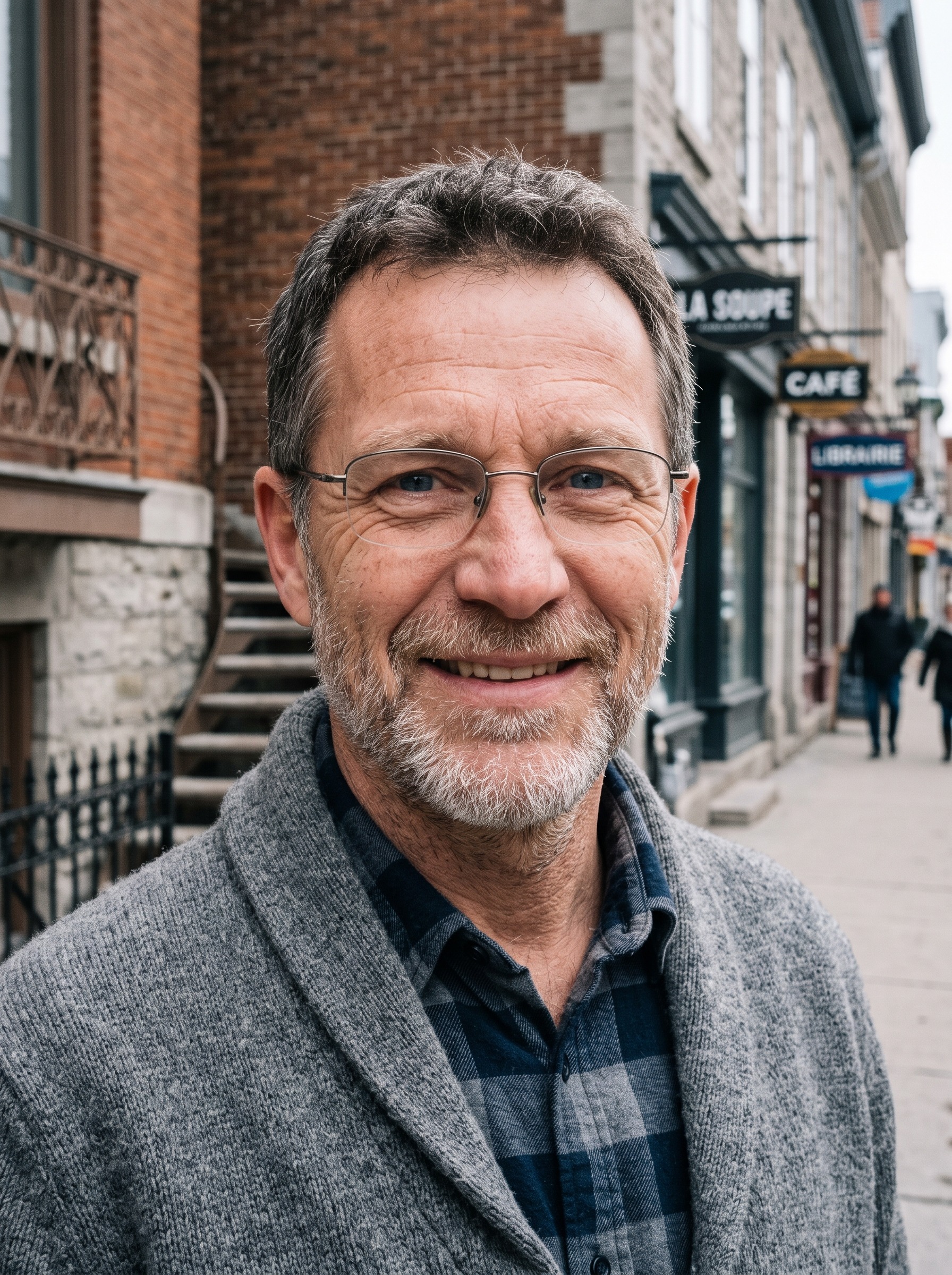

Step outside Porte Saint-Louis and the old-city cobbles loosen their grip: the street opens, the air seems to move a little more freely, and Grande Allée begins its long, handsome run westward, all stone mansions, terraces and the odd late-night glow. A block south, the Plains of Abraham spread out like a municipal daydream. Montcalm is where Quebec City stops performing for the camera and gets on with being lived in — by museum-goers, dog-walkers, lunch crowds, cocktail drinkers, and the people who know exactly which terrace catches the best light at five o’clock.
What Montcalm is known for
Montcalm’s reputation comes in two parts, and they do not always behave like cousins. One half is green and cultured: the Plains of Abraham and the Musée national des beaux-arts du Québec (MNBAQ), a pairing so neat it almost feels designed by a planner with a taste for good sense. The other half is social and slightly theatrical: Grande Allée, where former mansions have been turned into terraces, bars and clubs, and where Quebec City goes when it wants to be seen going out.
The Plains are the neighbourhood’s lung. Officially Battlefields Park, this 98-hectare cliff-top stretch carries the weight of 1759 in its soil, but it’s also just where the city comes to breathe. People run here, picnic here, walk dogs here, and stand at the edge looking over the St. Lawrence like they’ve been granted a private balcony. The Jardin Jeanne-d’Arc, with its sunken flowerbeds, softens the military history with a bit of formality and colour. It’s one of those places that reminds you Quebec City can be grand without being stiff.

Right beside it sits the MNBAQ, which deserves more than a quick nod because it is not merely “the museum by the park.” It is the region’s flagship art museum, spread across four linked pavilions, and the glassy Pierre Lassonde Pavilion — opened in 2016 and designed by OMA — gives the whole ensemble a contemporary pulse. The museum’s scale matters: historical Quebec art in the Gérard-Morisset building, modern and contemporary work in the Baillairgé and Lassonde pavilions, and a Grand Hall where the sculpture should not be skipped. This is the kind of museum that makes a neighbourhood feel serious without turning it solemn.

Then there is Grande Allée, which is Montcalm’s extrovert streak. It runs from the old-town gates out past the Hôtel du Parlement, and its line of former mansions has long reigned over Quebec City nightlife. In daylight it can look almost sedate, all elegant facades and terrace umbrellas; after dark it gets a little more confident, the way a boulevard does when it knows it has the city’s attention. If Montcalm has a social centre of gravity, Grande Allée is it.
For the whole neighbourhood in one sweep, the Observatoire de la Capitale is the move. At 221 metres, on the 31st floor of the Édifice Marie-Guyart, it is the highest view in the city, and from up there Montcalm reads as it should: the park, the museum, the boulevard, the old walls, the river, the city doing its layered little trick.

Where to eat & drink
The best eating in Montcalm is not on the showier stretch of Grande Allée but on Avenue Cartier, where the mood is local, walkable and just a touch self-assured. Bistro B is the name to know if you like your neighbourhood restaurants to feel like they know what they are doing. François Blais’s market-driven room was renovated in spring 2025 and picked up a Michelin Bib Gourmand the same season, which is a tidy summary of its appeal: serious cooking without the stiffness. The counter faces the open kitchen, so you get the theatre of the thing, and the dishes mentioned by the kitchen — white fish in brown butter, red-wine-braised beef — sound exactly like the sort of food that makes a cold city feel generous.

A few doors along, Café Krieghoff has been holding down its corner since 1977, which in restaurant years is practically a constitutional amendment. Named for the painter Cornelius Krieghoff, it has the reassuring habits of a true institution: a year-round terrace, breakfasts that locals actually turn up for, and homemade desserts. You don’t come here to be dazzled; you come because the room has learned how to be useful.
For Italian, Montcalm offers two distinct moods. La Scala is refined and old-school, near the Grand Théâtre, with seafood risotto as the obvious order. Morena is brighter and more casual, a colourful Italian deli and restaurant where espresso and cannoli do a lot of the talking. The contrast says something about Cartier itself: this is not a single-note dining street, but a place that lets you drift between a proper lunch and an early-evening sweet tooth without changing neighbourhoods.
Coffee gets the same careful treatment. Café Olive is a satellite of Denmark’s La Cabra roastery, and that alone tells you the tone: light roasts, cardamom buns, and an attention to detail that feels Scandinavian without becoming a costume. Bügel, a step off Avenue Cartier, does proper wood-fired bagels, and the house-cured gravlax on sesame bagels is the sort of thing that can turn a casual stop into a small plan.

If you want to graze rather than sit, Halles Cartier is the food hall to remember, with cheese, charcuterie and produce stalls under one roof. It’s the obvious place to assemble a Plains-of-Abraham picnic without making a production of it. And if you want something a little more island-minded, Petits Creux is a Corsican bistro leaning on private island imports for a Mediterranean menu — a pleasingly specific sentence in a city that knows how to eat with conviction.
Going out
Grande Allée is where Montcalm turns up the volume. It is the loud end of the neighbourhood, and Quebec City’s most concentrated stretch of terraces and after-dark bars. The street’s old mansion bones give it a bit of drama before you’ve even ordered a drink, which is useful because the night here likes a little stage setting.
The anchor is Le Dagobert — “Le Dag” to locals — a three-floor club in a converted mansion that has kept generations dancing. Downstairs it leans into rock and punk; above, the DJs take over; and there’s a mezzanine looking over the floor, which is exactly the kind of architectural detail that makes a club feel like a city institution rather than just a room with a sound system. It is one of those places that tells you, in no uncertain terms, that Quebec City knows how to stay out late.
Its old rival Maurice is less a bar than a small nightlife complex tucked into another château-style house. Inside are the Charlotte Ultra Lounge for cocktails, the VooDoo Grill terrace, and Société Cigare, a spirits-and-cigar salon. That is a lot of mood under one roof, but Grande Allée can take it. The street is built for people who enjoy choosing their evening in chapters.
For a different sort of night, L’Atelier is widely rated the city’s best cocktail bar, and it brings an oyster-and-tartare menu along for the ride. L’Inox is the long-running brewpub, beloved in the way only a place pouring its own beers can be. And if you want the old-Quebec version of a night out, Les Voûtes Grande Allée is a stone-vaulted boîte à chansons, where the sing-along Québécois tradition still has a home.
This is all lively rather than seedy, but there is a practical footnote worth respecting: the terraces and clubs run late through the summer, so if you book on Grande Allée itself, you are choosing atmosphere with your sleep. Fair trade, perhaps, but a trade all the same.
Things to do
Start with the MNBAQ and give it the time it deserves. The museum’s four linked pavilions let you move from historical Québec art to modern and contemporary work without feeling like you’re being shunted through an annex. The OMA-designed Pierre Lassonde Pavilion brings the contemporary edge, and the sculpture in the Grand Hall is worth pausing for before you head back out into the park. This is one of those museums that rewards a proper visit rather than a polite one.
From there, you are already on the Plains of Abraham, which makes the transition from gallery to grass almost absurdly easy. Walk to the cliff edge for the river panorama, wander down to the Jardin Jeanne-d’Arc and its sunken flowerbeds, or just claim a patch of grass and let the city happen around you. If you prefer your history in more explicit form, the Plains of Abraham Museum tells the story of the 1759 battle, and the ramparts and Parliament are a short stroll east toward the walls.
The Observatoire de la Capitale is your big-picture move, and it is a good one. At 221 metres, it gives you a 360-degree sweep that includes Old Quebec, the Lower Town, Île d’Orléans and the Laurentians, with tablets pointing out what you’re seeing. It is the kind of view that makes the city’s geography legible in a single glance.
Back on Avenue Cartier, the neighbourhood’s cultural life stays at street level. Cinéma Cartier, the last cinema in downtown Quebec City, anchors the avenue’s movie-going habit, while the Périscope Theatre keeps the stage lights on. Add the galleries and second-hand bookshops, and you understand why Cartier has earned its “art district” nickname without needing a municipal slogan to remind you.
{{ATTRACTIONS}}
Shopping & markets
Avenue Cartier is not a souvenir parade. It is a proper neighbourhood high street, which is to say it has the useful clutter of real life: independent fashion boutiques, jewellers, florists and second-hand bookshops, all strung along a street that locals actually use. The local business association counts more than 200 establishments, and the “art district” branding is not empty marketing so much as a shorthand for the way the avenue folds culture into ordinary errands. Even the lampshades do some civic work, reproducing paintings from the art museum down the hill.
If you like to shop with your stomach, Halles Cartier is the place to start. It is the covered food hall where cheese, charcuterie, a fish counter and prepared foods sit under one roof, which makes it ideal for assembling a picnic before heading to the Plains. There is something pleasingly unceremonious about shopping here: no grand declarations, just a neighbourhood doing its shopping better than most.
A coffee at Café Olive or a bagel from Bügel turns the whole thing into a gentle loop rather than a chore. That is Montcalm’s gift in miniature: it lets you drift between errands, lunch and a museum without ever feeling that you’ve left the neighbourhood’s orbit.
Where to stay in Montcalm
Montcalm splits neatly for lodging, and the split is useful. Avenue Cartier and the quieter residential streets around it are the sweet spot for most travellers: leafy, walkable, close to the museum and park, and calmer at night. Small options like the seven-room Petit Hôtel-Café Krieghoff above the cafe make sense here, as do boutique stays such as C3 Hôtel Art de Vivre. This is the part of the district that feels lived-in rather than staged.
{{HOTELS}}
If you want to be in the thick of the action, Grande Allée itself puts you on top of the terraces and clubs, which is ideal if nightlife is the point and a liability if you value sleep. Larger hotels here include the landmark Hôtel Le Concorde, with its 28th-floor rotating restaurant. Prices skew mid-range to upper, which is no great surprise in a neighbourhood that pairs the art museum with the city’s nightlife strip.
The nice thing about staying here is that you are still only a 15-minute walk from the walls of the old town. That proximity is the whole point: you get the room to breathe, the park to wander, and the option to slip back into the fortifications when you feel like being a tourist again.
Getting around
Montcalm is built for walking. From Grande Allée it is roughly a 15-minute walk to Porte Saint-Louis and the old-town walls, and about half an hour on foot down to the Lower Town if you do not mind hills. That makes the neighbourhood one of the easiest places in Quebec City to use as a base without needing to think too hard about transport.
For public transit, the RTC network runs through the district, and the Métrobus 11 connects Lower Town, Upper Town and out through Montcalm. A single fare is around CAD 4, though a reloadable OPUS card or day pass will save you trouble if you plan to move around more than once. The city’s àVélo e-bike share has expanded to 200-plus stations, and racks are easy to find along Grande Allée and Cartier, which is handy for quick hops when your feet have had enough of the slope.
Jean Lesage International Airport (YQB) is about a 20-25 minute drive west, straightforward by taxi or rideshare, since there is no direct rail link. In practical terms, Montcalm is not hard to reach and not hard to leave. Which is another way of saying it behaves like a neighbourhood, not a destination park.
Montcalm is a rare Quebec City district that gives you the city in layers: art museum, park, boulevard, terrace, theatre, bookshop, club. It is refined, yes, but not sealed off from ordinary life. Spend a day here and you begin to see why people stay: because the neighbourhood keeps offering you one more reason not to go far.
FAQs
Is Montcalm a good area to stay in Quebec City?
Yes, especially if you want the old town within walking distance without paying old-town prices or sleeping among the crowds. Montcalm gives you the art museum, the Plains of Abraham and the city’s best terrace-and-nightlife strip, and it’s about a 15-minute walk to the walls. Base yourself around Avenue Cartier for a quieter, more local feel, or Grande Allée if you want to be in the thick of the going-out scene.
What is there to do in Montcalm besides eating and drinking?
Plenty. The Musée national des beaux-arts du Québec (MNBAQ) is a genuinely good art museum with an OMA-designed contemporary pavilion, and it sits right on the Plains of Abraham, a huge cliff-top park with St. Lawrence River views that’s ideal for a walk, run or picnic. Add the 360-degree city view from the Observatoire de la Capitale, the historic Parliament building, and the galleries and independent shops along Avenue Cartier’s ‘art district’.
Is Montcalm walkable to Old Quebec?
Very. Grande Allée runs straight to Porte Saint-Louis and the fortifications, about a 15-minute stroll, so you can wander into the old town for the evening and walk home. Reaching the Lower Town and Petit-Champlain takes longer — closer to half an hour on foot, with some hills — so many people take the Métrobus 11 or an e-bike for that leg.
Is Montcalm noisy at night?
Mostly only if you stay on Grande Allée itself. That’s the neighbourhood’s nightlife strip, with clubs and terraces that run late in summer. Avenue Cartier and the residential streets nearby are much calmer and are usually the better choice if you want sleep with your city break.