Salzburg guide
Nonntal, Salzburg: the quiet side below the fortress
A calm, lived-in Salzburg quarter of convent bells, student lunches and leafy streets, where the old town feels a little more like a town again.
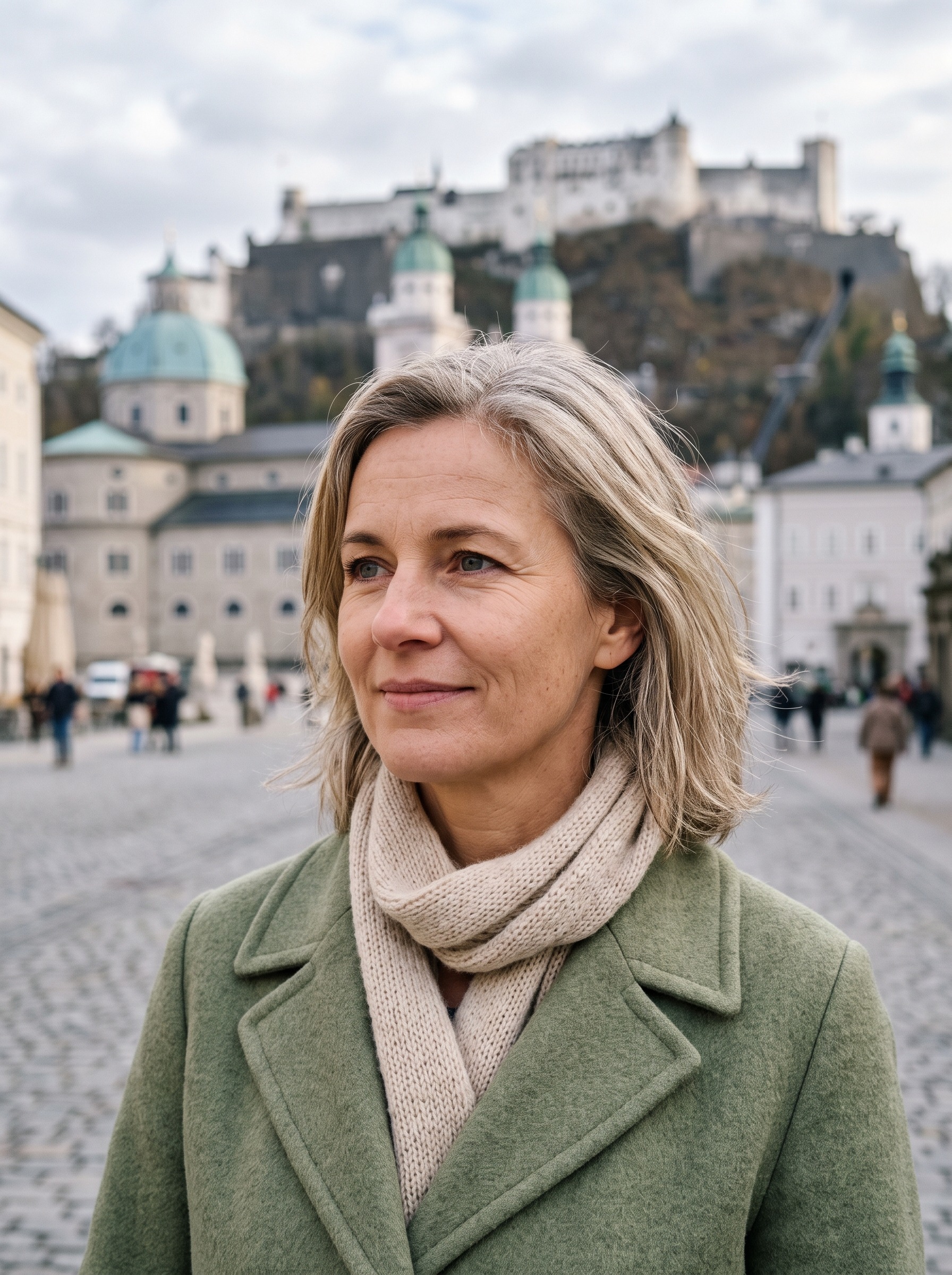

Ten minutes on foot from Getreidegasse, the city loosens its tie. The shop windows thin out, the stream of day-trippers fades, and Nonntal begins to feel like a place where people live on purpose rather than pass through. Here, below the fortress on the southern flank of the Festungsberg, Salzburg turns ordinary in the best possible way: a working convent, a university campus, a main street with bakeries and lunch counters, and the steady domestic rhythm of a district that has no interest in performing for anyone.
What Nonntal is known for
Nonntal is defined by two landmarks that sit almost within the same line of sight, and together they explain the quarter better than any brochure ever could. The first is Nonnberg Abbey, the oldest continuously operating women's convent in the German-speaking world, founded by Salzburg's Saint Rupert sometime between 711 and 715. The second is the fact that this is where Maria Kutschera was a novice before she was sent to the von Trapp family, which means the convent courtyard associated with the film's Maria number and escape scene is not a staged attraction but a real, freely accessible place in a working religious community.
The abbey's red onion dome rises above the roofs like a signal. It is unique in Salzburg, and from Nonntaler Hauptstraße or from the lanes climbing uphill, it gives the district its vertical anchor. The church itself, consecrated in 1009, is Romanesque at heart, and the whole complex feels older than the city around it in the particular way only a continuously used place can. At dawn, the nuns' chant carries across the quarter. By day, students spill out of the campus below. By evening, the hill settles back into silence.

That sense of lived-in continuity is what makes Nonntal matter. Inner Nonntal sits inside Salzburg's UNESCO old town, so the mediaeval houses and building rules are the same as across the river, but the atmosphere is different: leafy, low-key, and unshowy. The district's daily engine is not a monument but Nonntaler Hauptstraße, a busy commercial street where people buy bread, drink coffee, catch a bus, and eat lunch between shifts. The clientele is local and practical — students from the Unipark, staff from the courthouse and broadcaster nearby, families running errands — and that gives the quarter a pleasing lack of fuss.
The other thing Nonntal is known for is its cultural and academic life. The Unipark Nonntal campus, a striking pillar-raised building opened in 2012, brought several thousand humanities students into the district, and the effect is visible every weekday in the line at the lunch counter and the hum of cafés. Nearby, ARGEkultur has been part of Salzburg's alternative music, cabaret and theatre scene since 1981. In a city that can sometimes feel frozen in its own image, Nonntal is one of the places where things still happen in real time.
Where to eat & drink
Nonntal punches above its weight when it comes to food, and the best of it is strung along Nonntaler Hauptstraße, where the mood is practical rather than precious. Start at 220GRAD Nonntal, at number 9A, where beans are roasted in-house and the room feels industrial and gallery-like, with a big terrace that catches the light. It is open Monday to Saturday, roughly 9am to 5pm, and it has the easy confidence of a neighbourhood coffee place that knows people will return. Come for breakfast, or for a late-morning flat white after a walk up to the abbey.

A few doors away, the lunch queue at Uncle Van tells you everything about the street's daily rhythm. This tiny Vietnamese-Asian kitchen at Nonntaler Hauptstraße 8 turns out pho, lemongrass wok noodles and curries at student prices, and it does so quickly, which matters here. Lunch in Nonntal is often a matter of timing rather than ceremony, and Uncle Van is the sort of place that rewards arriving just before the rush.
For something plant-based, The Green Garden at number 16 keeps a small changing menu and draws a weekend brunch crowd. It is an all-vegan spot, but it never feels doctrinaire; bowls, falafel and a good burger fit neatly into the district's everyday appetite. You come here because the food is straightforward and the room is busy in a way that feels local, not staged.
There is also a comforting reliability to Ristorante Pizzeria da Giacomo at number 47, a family-run Italian that has been run by the Russo family for years. It opens daily from 11:30 and keeps faith with the basics: wood-fired pizzas, fresh fish, and the kind of familiar service that makes a neighbourhood restaurant feel like part of the street furniture. In a quarter with students, office workers and long-term residents, that kind of place matters more than it might elsewhere.
At the top end, and quite unlike the rest of the street, Restaurant Brunnauer at Fürstenallee 5 brings a more formal note. Chef Richard Brunnauer's refined, regionally driven kitchen sits inside the historic Ceconi-Villa and holds three Gault&Millau toques, with 16/20 and a place in the Michelin Guide. It is the district's special-occasion table, elegant without noise, and the villa's garden side gives fortress views that remind you how close the old city still is.

Going out
Nonntal is not a neighbourhood that stays up late for the sake of it. That is part of its appeal. Even the evenings feel measured, with the sense that people here are more likely to have one good drink than a long, unruly night. The centre of gravity is ARGEbeisl, the bar-and-bistro side of the ARGEkultur cultural centre on the Unipark Nonntal campus. It is a cosmopolitan student-and-artist hangout with day specials, international small plates and a terrace that turns into something close to a faux-beach in summer, complete with deckchairs and palms. Open roughly Monday to Saturday until 11pm, it is the place to sit after a performance, or before one, and let the evening unfold without hurry.
The ARGEkultur programme itself gives the quarter its livelier pulse. Since 1981 it has been one of the city's alternative cultural fixtures, and in a district otherwise known for calm, it provides the nearest thing to a scene. A reading, a cabaret night, a concert — the point is not volume but texture. You can have a drink, see a show, and be back on a quiet street before the city centre's late bars have really started.
Nearby, the Schauspielhaus Salzburg at Erzabt-Klotz-Straße 22 offers another civilised evening option. As Austria's largest independent theatre, it runs a busy programme of drama through the year, and its presence strengthens the sense that Nonntal is not merely residential but intellectually alive. This is a district where culture is part of the routine rather than an event.

Things to do / what to see
Begin at Nonnberg Abbey, because the quarter is built around it. From Nonntal you climb up by a narrow lane, or from the Old Town side via the Nonnbergstiege staircase off Kaigasse, and the walk takes about 10 to 15 minutes. The church and small cemetery are free to enter, open daily from 6:45am until dusk, and in summer until around 6pm. Inside, a coin-operated light lets you look closely at the frescoes and the late-Gothic winged altar attributed to the Veit Stoss workshop. If you arrive early enough, you may hear Gregorian chant at 6:45am. The courtyard just east of the wrought-iron gate is freely accessible, and for Sound of Music pilgrims it remains the real thing: the place where the convent scenes were shot, without the coach-tour crush that hangs over Mirabell across the river.
From there, follow the footpaths that climb the last stretch to Hohensalzburg fortress from the south. It is a quieter approach than the funicular, and one of the pleasures of staying in Nonntal is that the hilltop fortress stops being a distant postcard and becomes part of your daily walk. The route gives you the city in layers: abbey below, fortress above, and the ordinary streets in between.
At the southern edge of the district, the Botanical Garden of the University of Salzburg on Hellbrunner Allee offers a different sort of pause. It is free and open on weekdays, with about a hectare of herb beds, alpine and moor plantings, ponds and an orchid glasshouse. It sits on the edge of the open Freisaal landscape around the old Schloss Freisaal moated house, and it makes an easy, uncrowded add-on to a longer walk. There is nothing theatrical about it, which is exactly the point.
{{ATTRACTIONS}}

Shopping
This is not a shopping quarter, and it is better for that. Nonntaler Hauptstraße is a working local high street, not a parade of boutiques. You will find bakeries that open early, some by 7am even on Sundays, a supermarket or two, pharmacies, and the everyday shops that make a residential district function. If you are self-catering, or simply want bread and coffee before the crowds gather across the river, this is a sensible place to stock up.
For serious retail, you head elsewhere: the fashion houses of the Andräviertel, the designer names and traditional Trachten shops of Getreidegasse. Nonntal is where you live cheaply and eat well between sights, not where you browse for the afternoon.
Where to stay in Nonntal
Nonntal works best as a base if you are staying more than a night, travelling as a couple, or returning to Salzburg and want the quieter, local version of the city. The Old Town is a flat 10 to 15 minute walk away, which means you can have the sights without sleeping in their shadow. The sweet spot is around Nonntaler Hauptstraße and the streets climbing toward the abbey: close enough for easy mornings, calm enough for a proper night’s sleep.
It suits mid-range and value travellers especially well. You are more likely to find practical, well-run hotels and apartment stays than grand historic addresses, and prices tend to feel a notch gentler than the priciest Altstadt lanes for comparable comfort. The main street can be busy during the day, so light sleepers should ask for a room off the Hauptstraße if they want total quiet.
{{HOTELS}}
Getting around
Nonntal is built for walking. The Old Town, cathedral and Getreidegasse are a level 10 to 15 minute stroll north, and Hohensalzburg fortress is close enough to feel almost beside you. If you are not walking, trolleybus lines 5 and 25 run the length of the district along Nonntaler Hauptstraße, both stopping at Justizgebäude and connecting the main train station, the city centre and points south. Line 25 is the one to remember for day trips, since it continues to Hellbrunn and on to the Untersbergbahn cable-car station at St. Leonhard.
The Erzabt-Klotz-Straße stop serves the theatre and campus end of the quarter. Salzburg Hauptbahnhof is about 10 minutes away by bus or 25 on foot, and Salzburg Airport is roughly a 15 to 20 minute drive, or a bus-plus-connection ride to the west. If you are sightseeing hard, the Salzburg Card covers city buses and the fortress funicular, which makes moving between Nonntal, the Old Town and the mountains straightforward.
Nonntal is one of those Salzburg neighbourhoods that reveals itself only once you stop trying to make it into a sight. Its value lies in the ordinary things it keeps doing well: the early coffee, the cheap lunch, the abbey bells, the walk uphill at dusk, the sense that the city has a working centre of gravity beyond the monuments. Spend a few days here and Salzburg begins to feel less like a stage set and more like a place with habits.
FAQs
Is Nonntal a good area to stay in Salzburg?
Yes, if you prefer quiet and a local rhythm over being right in the tourist crush. It is about a 10 to 15 minute walk to the Old Town, usually feels a little better value than the priciest Altstadt streets, and suits couples, longer stays and repeat visitors especially well.
Is Nonntal safe?
Very. It is a settled residential quarter of about 4,000 people, with a convent, a university campus and courthouse offices nearby. It is one of central Salzburg's calmer areas after dark; just use the ordinary care you would anywhere in a city.
How do I get to Nonnberg Abbey from Nonntal, and is it free?
Walk up the narrow lane from Nonntal, or use the Nonnbergstiege stairs off Kaigasse from the Old Town side. It takes about 10 to 15 minutes. The church and cemetery are free to visit and open daily from 6:45am until dusk, and the Sound of Music courtyard is freely accessible.
What is Nonntal best for?
Quiet local stays, everyday cafés, cheap and good lunches, the real Nonnberg Abbey, and easy walks below the fortress. It is not a nightlife district or a shopping area.