Santiago guide
Patronato, Santiago: where Korean grills meet Palestinian sweets
A walk through Santiago’s Patronato, where garment stalls, Korean canteens and Arab pastry counters share the same cramped grid and the city’s best cheap eating feels gloriously unpolished.
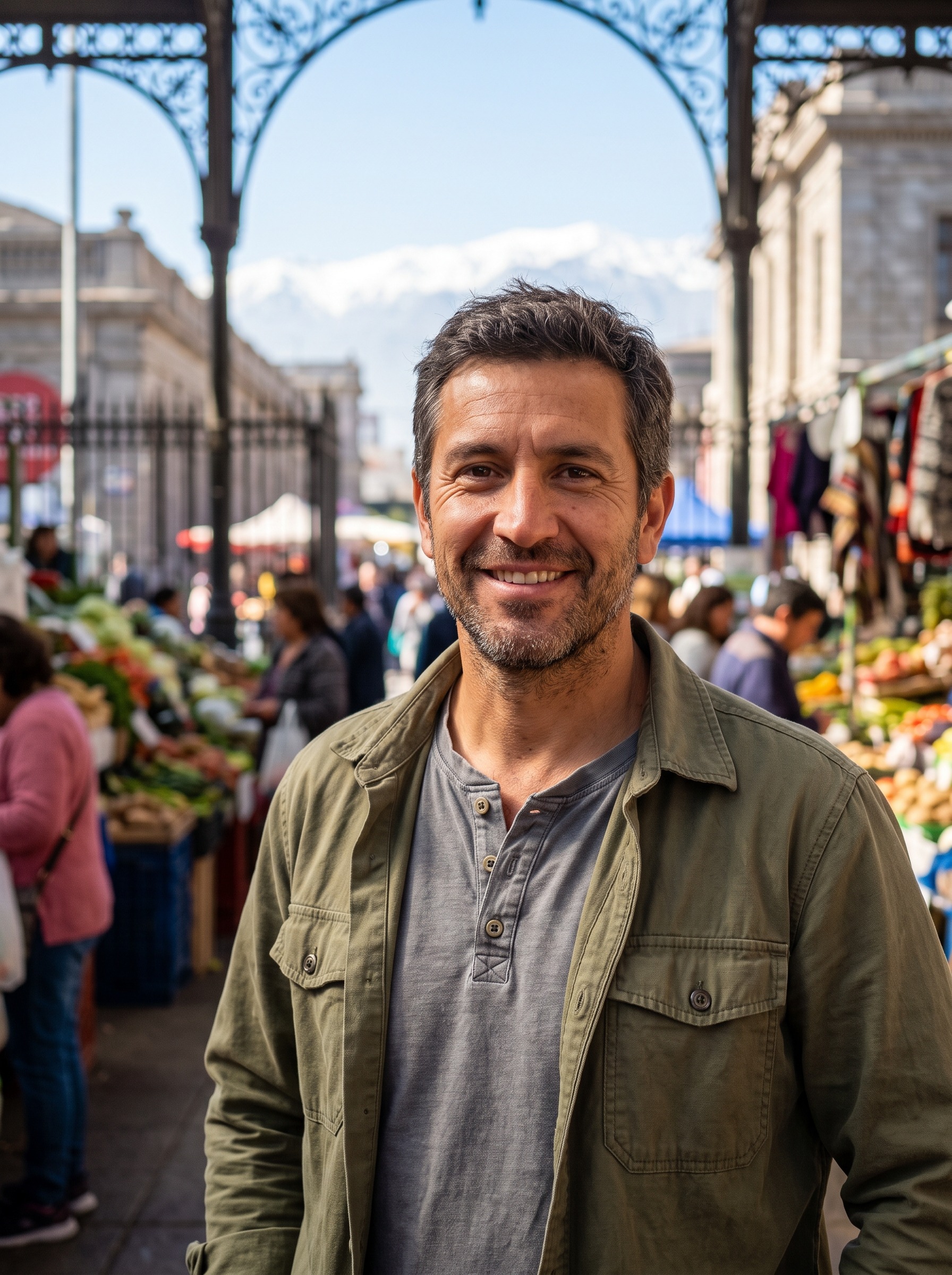

Cross the Mapocho and the polish falls off the city in a block. Patronato doesn’t ease you in; it arrives with mannequins on the pavement, shawarma smoke in the throat, and a Korean lunch counter wedged between fabric rolls and bargain trainers. By midday the district is in full voice. Shopkeepers call across narrow storefronts, delivery porters muscle bale-loads through the crowd, and the signs on the doors argue in three alphabets. It is scruffy, hard-edged, and gloriously un-touristy — the sort of place that reminds you Santiago still has working neighbourhoods that aren’t auditioning for a postcard.
What Patronato is known for
Patronato’s reputation rests on two things that happen to sit side by side and make the district feel more alive than tidy. The first is clothing: a garment quarter of wholesalers and small shops where fast fashion is piled high and sold cheap, and where Saturdays turn Calle Patronato into a narrow canyon of racks, shoes, tights, handbags and party dresses. The second is food, and not the polite, ribbon-cutting kind. This is one of Santiago’s most concentrated immigrant eating grids, shaped first by Palestinians, Syrians and Lebanese who arrived from the early 1900s and built textile factories, cloth shops and bakeries here, then by a later Korean wave that layered lunch counters, fried-chicken shops and grills on top. The result is a neighbourhood where you can move from shawarma to kimchi in a few metres and not feel you’ve changed cities, only lanes.

The main artery, Calle Patronato, is the district at its most compressed: a working street where the bargains are real and the pavements are often not. Prices live in the low thousands of pesos, sometimes lower, and the stock swings from ballgowns to harem pants to knock-off trainers without much concern for taxonomy. Cut off into Antonia López de Bello, Río de Janeiro and Eusebio Lillo and the district changes register again. Around Antonia López de Bello and Río de Janeiro, Santiago’s Little Korea hums through lunch with steam, fryers and the smell of sesame oil. Around Eusebio Lillo, Arab diners and pastry counters keep the older immigrant memory warm with hummus, kibbeh and baklava. It is a place to come hungry and curious, not polished and preened. Patronato has no interest in that.
Where to eat & drink
The smartest way to eat here is to follow the overlap, because that is where Patronato reveals itself most honestly. On the Korean side, Sukine at Antonia López de Bello 244 is the sentimental favourite, one of the oldest Korean rooms in the barrio and still one of the most generous. It is the sort of place where the kimchi arrives with conviction and the dumpling soups do not apologise for being comforting, cheap and deeply satisfying. The mains often sit in the single-digit thousands of pesos, which is exactly the sort of number that makes a market district feel like a public service rather than a trend.

A few doors along the same street, Mr. Han’s Chicken takes a different tack: Korean fried chicken with a dozen glazes, from sweet-and-sour to a fiercer spicy version. It is the kind of place that makes you forget you were supposed to buy socks. Around the corner, Bunsik 1989 at Río de Janeiro 367 leans into street food — cheap tteokbokki, kimbap and ramen, with veggie versions of most plates. It feels brisk, practical and exactly right for this part of town, where lunch should be quick enough to leave room for another stop.
ManNa, at Río de Janeiro 330, has been here more than two decades, which in Patronato counts as a kind of family record. It is the old guard for homestyle Korean stews and topoki, the sort of room that earns loyalty by being steady when everything around it is in motion. If you want the grill-at-the-table ritual, Hansoban on Río de Janeiro is the go-to: marinated short rib, or galbi, and pork over coals, the kind of meal that slows the street down for an hour. Oiso at Eusebio Lillo 311 rounds out the Korean side with spicy squid stir-fry, sundubu tofu stew and a spread of banchan. It is the kind of menu that rewards returning more than once, because Patronato’s food is not really about ticking boxes; it’s about finding the room that fits your appetite on the day.
On the Middle Eastern side, Shawerma Ahlen at Eusebio Lillo 391 is the reliable Palestinian counter for falafel, kebab croquettes and shawarma. It is one of those places that does not need to announce itself with drama; the queue and the smell do the work. El Rinconcito Árabe at Eusebio Lillo 506 is one of the original Arab diners in the neighbourhood, still turning out stuffed vine leaves, kibbeh and hummus. That older lineage matters here. Patronato’s Arab food is not an import grafted onto a blank grid; it is part of the district’s historical spine.
Finish at Al Mustafa on Río de Janeiro 405, where the counter runs to baklava, borma and sesame cookies, and the cardamom coffee gives the whole block a softer edge. It is the right final stop because it lets you leave Patronato on a sweet note rather than a full one, which is useful when the day still has shopping, wandering or a detour to the market next door.

Things to do
Patronato is not a monument trail. It is a walking-and-eating district, which is much better anyway, because the neighbourhood’s real attraction is the way it works. Start with Calle Patronato itself. Walk slowly enough to notice the density: racks crowding the kerb, shopkeepers leaning into doorways, fabric and party dresses hanging three deep, the whole street operating at a tempo that has little patience for lingering but plenty for browsing. Then spill into Antonia López de Bello and Río de Janeiro, where the Korean grocers, lunch counters and grills give the area its second pulse. If you want the full texture of the district, do not rush. Patronato rewards a short loop repeated several times more than one grand sweep.

The neighbourhood’s own quiet landmark is Parroquia de Santa Filomena, a historic church on the street of the same name. It is a useful reminder that Patronato is not only commerce and lunch; it has older civic bones too. A short walk north brings you to Cerro Blanco, a small hill in Recoleta long held sacred by the valley’s first peoples, with indigenous ceremonies, workshops and a summit viewpoint. It is one of those urban hills that changes the scale of the city for a moment, giving you a sense of how close Patronato sits to Santiago’s deeper geography.
From there, the city opens further at Cementerio General, founded in 1821 by Bernardo O’Higgins and now an open-air museum of funerary art and Chilean history spread across 86 hectares. The afternoon guided tours are the right way in if you want the stories as well as the stone. And because Patronato borders the river, Cerro San Cristóbal and the bars of Bellavista are only a few minutes away on foot. That proximity is part of the neighbourhood’s charm: you can go from market crush to hillside air to a drink by the river without changing the city’s rhythm too violently.
{{ATTRACTIONS}}
Shopping & markets
This is the reason many santiaguinos come at all. Calle Patronato and its side streets form Santiago’s cheap-fashion wholesale district, block after block of small shops and stalls selling clothing, shoes, handbags, tights, fabric and party dresses at bargain prices. It is fast fashion in the literal sense: quantity over quality, turnover over romance, and a steady trickle of shoppers trying to find the one thing they need without buying five things they don’t. The trick is simple enough. Browse a few shops before you buy, bring cash and small notes, and accept that on Saturdays the place becomes shoulder-to-shoulder. There is no point pretending otherwise. Patronato is not a place for serene consumption; it is a place for treasure hunting with elbows.
Just across Avenida Recoleta sits the food-market cluster that makes a day here work so well. La Vega Central is the city’s huge, chaotic wholesale produce market, a sprawl of fruit, vegetables, meat and Chilean pantry goods that feels as local as a municipal budget meeting and much more cheerful. Its smaller siblings, La Vega Chica and the covered Mercado Tirso de Molina, are where you go when you want to sit down cheaply and eat like a person who knows the city. Upstairs stalls plate Chilean cazuela, Peruvian, Colombian and Venezuelan classics for roughly 3,000 to 5,000 pesos, which is the kind of pricing that makes a second lunch seem not indulgent but sensible.

Between the clothing quarter and the produce market, Patronato gives you a full morning without demanding much money in return. That is its practical genius. You can buy a shirt, eat a stew, drink coffee, browse fabric, and still have enough left over for dessert at Al Mustafa. Santiago has more elegant neighbourhoods, certainly. It has more polished ones too. But very few places where the city’s immigrant histories, retail habits and appetite for a bargain are so tightly braided together.
Where to stay in Patronato
Be honest with yourself: Patronato is a commercial and market district, not a place to sleep. It has almost no hotels, it is noisy and busy by day, and by night it turns quiet and half-shuttered, which is exactly what a working district does when the work is done. The smart play is to base yourself elsewhere and come in for the day. Bellavista, immediately south across the river, is the closest lively option, with restaurants, bars and mid-range boutique stays, and it puts Patronato, Cerro San Cristóbal and the nightlife within a short stroll. Providencia, a little farther east, is the calmer, leafier, more comfortable base, with easy metro links and a strong run of hotels. From either, Patronato is a 10-to-20-minute walk or a couple of metro stops.
{{HOTELS}}
If you want the neighbourhood experience, do it in daylight. Sleep elsewhere, arrive hungry, and leave before the district starts shutting its shutters.
Getting around
Patronato is small, flat and made for walking. Once you are in the grid, transport becomes irrelevant, which is fortunate because the pavements are busy enough to keep you honest. The district has its own metro stop, Patronato, on Line 2, with exits onto Avenida Recoleta, and Cerro Blanco on the same line sits just to the north for the hill and the cemetery. From the historic centre and Plaza de Armas it is one or two stops on Line 2, or about a 15-to-20-minute walk across the Mapocho via Bellavista. Line 2 connects to Line 5 at Santa Ana and Line 1 at Los Héroes, so the rest of Santiago is easy enough to reach. You will want a rechargeable Bip! card, sold at station machines and kiosks.
Ride-hail apps work well and are cheap for hops to Providencia or Lastarria after the metro thins out. For the airport, Arturo Merino Benítez is roughly 30 to 45 minutes by taxi or rideshare depending on traffic. Keep your bag zipped and in front of you in the crowds, especially on Calle Patronato, in the market crush and on packed trains. That is not paranoia; that is just sensible city behaviour in a district that runs on movement and density. And because much of Patronato winds down by early evening, the best version of the neighbourhood is the daytime one: loud, full, a little unruly, and exactly as it should be.
FAQs
Is Patronato worth visiting in Santiago?
Yes, if you like food and markets. It is one of Santiago’s most concentrated multicultural eating quarters, with excellent-value Korean canteens around Antonia López de Bello and Río de Janeiro, Palestinian shawarma and pastry counters around Eusebio Lillo, plus the bargain clothing district and La Vega next door. Go mid-morning to lunch, ideally on a weekday or Saturday.
Should I stay in Patronato?
No. Patronato is a commercial and market district with almost no hotels, and it goes quiet and half-shuttered at night. Stay in Bellavista for the closest lively base, or Providencia for a calmer, more comfortable one, and walk or take one or two metro stops in by day.
Is Patronato safe?
It is generally fine by day, but it is crowded and busy, so use normal city care. Keep bags zipped and in front of you against pickpockets on Calle Patronato, in La Vega and on packed metro trains, and avoid lingering with valuables out in the evening when the district empties.
What is Patronato best for?
Cheap multicultural eating, bargain clothing shopping and a lively daytime market atmosphere. It is not a polished sightseeing quarter; it is a working neighbourhood where the food, the crowd and the retail chaos are the point.