Toronto guide
The Distillery District, Toronto: cobblestones, cocktails and Victorian brick
Toronto’s car-free heritage quarter turns a former whisky empire into a walkable pocket of galleries, patios, theatre and winter lights.
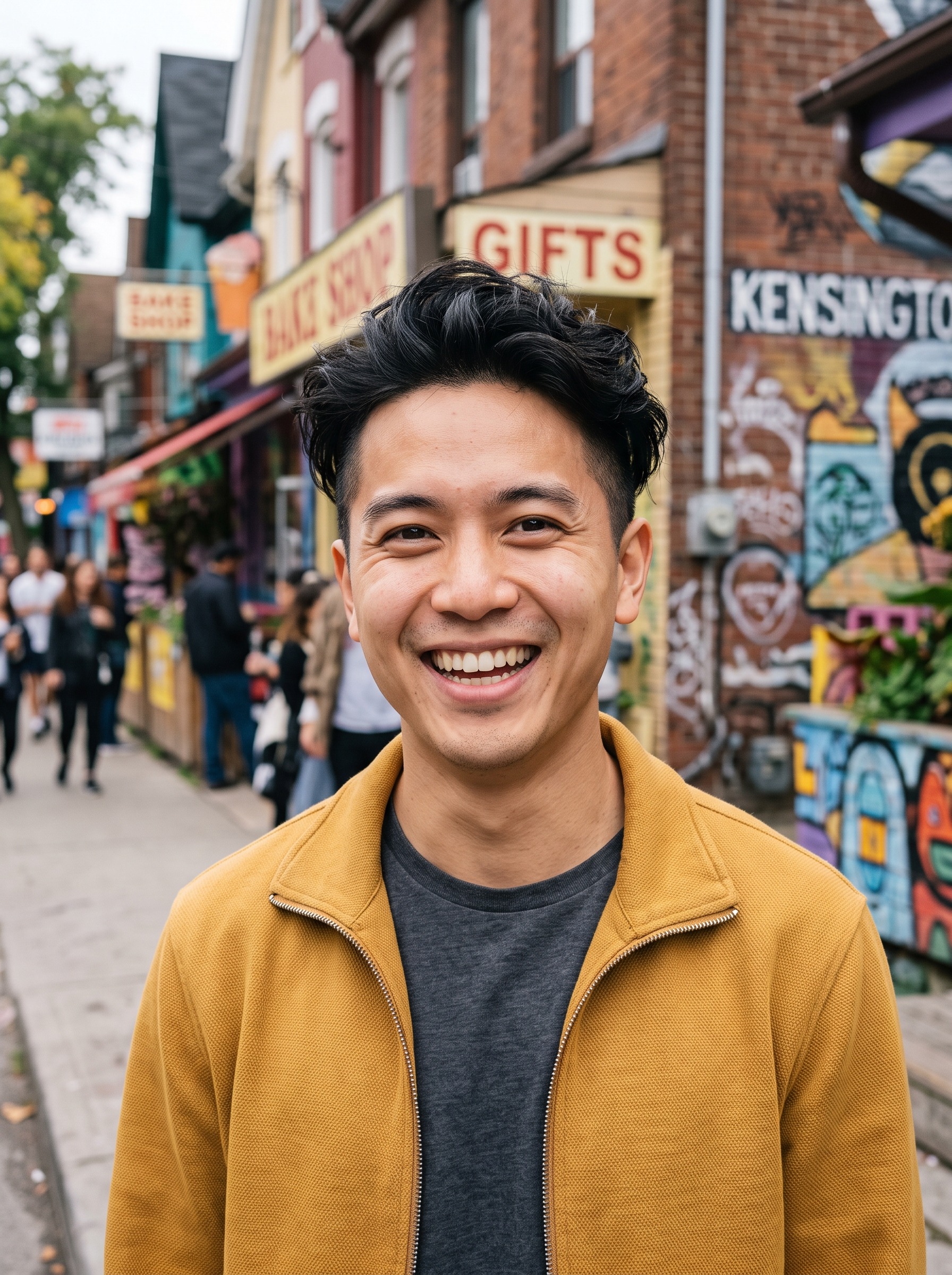 By Danny Tran

The first thing you notice is how quietly the brick holds the light. On Trinity Street, the old warehouse walls go warm before sunset, and the cobblestones seem to catch every footstep. A few minutes later you realize that this whole corner of Toronto has been arranged to make walking feel like the main event: no streetcars, no delivery vans, no impatient traffic noise cutting through the mood. Just ten walkable blocks of Victorian industry turned into a place for coffee, galleries, dinner, and the kind of slow wandering that makes a city feel newly legible.
What the Distillery District is known for
The Distillery District is Toronto’s most complete little time capsule, and it earns that reputation without trying too hard. The bones are the point. Between the 1830s and 1890s, Gooderham & Worts grew from a single windmill on the edge of Toronto Bay into the largest distillery in the British Empire, and at its peak it was turning out more than two million gallons of whisky a year. That history is still written into the place in the old brick, the narrow lanes, the tank houses, and the rack houses that line Trinity Street, Tank House Lane and Gristmill Lane. When the distillery closed in 1990, the buildings sat empty and spent years as film sets before Cityscape bought the site in 2001 and reopened it in 2003 as a car-free arts-and-culture quarter.

That restoration gave Toronto something rare: a neighbourhood you can read in layers. It is part open-air museum, part gallery district, part restaurant row, and it still feels human-scaled enough that you can cross it in about ten minutes and then decide to do the whole thing again more slowly. The crowd changes with the hour. By day it’s couples with flat whites, visitors angling for the right shot of the brick, and gallery-goers drifting between openings. By evening the patios fill, the fairy lights come on, and the district starts to feel like a set that has remembered how to be a real place.
The most photographed corner is probably the LOVE sculpture on Gristmill Lane, one of Matthew Rosenblatt’s light-up LOVE / PEACE installations. Couples have left thousands of engraved padlocks on the lower fence, which is exactly the sort of detail that makes this district feel equal parts romantic and self-aware.

Come in December and the whole quarter shifts again. The Distillery Winter Village takes over the lanes and turns the district into Toronto’s signature festive scene, with lights, a towering tree, and enough seasonal bustle to make even the cobblestones feel theatrical. It is beautiful, yes, but it is also crowded in the way good holiday markets are crowded: with purpose, with camera flashes, with people who know they are standing in the city’s prettiest winter room.
Where to eat & drink
The Distillery District is small, but it eats like it has something to prove. For a neighbourhood this compact, the range is unusually generous, and the best meals here tend to be tied to rooms that understand the setting. At Madrina Bar y Tapas on 2 Trinity Street, chef Ramon Simarro leans into Barcelona classics and modern small plates in a Michelin Guide-listed Catalan tapas room that feels polished without becoming stiff. The jamón-carving station is the kind of detail that makes you slow down and order another glass, and the Spanish-heavy wine list and serious gin-and-tonics make it a place to settle in rather than rush through.

If you want the district at full volume, El Catrin Destileria is the obvious move. On Tank House Lane, it has the sort of patio that makes people stop in the street: 5,000 square feet of canary-yellow tables gathered around a fire pit, with a floor-to-ceiling black-light mural by Mexican street artist Oscar Flores anchoring the room. The menu is tapas-style Mexican, but the headline is the bar, where Canada’s largest tequila-and-mezcal list stretches to more than 120 labels. It’s the kind of place where dinner can easily become the evening.
Cluny Bistro & Boulangerie, at 35 Tank House Lane, brings a different energy — more polished, more Parisian, and perhaps the room I’d choose when the weather turns and you want to feel tucked away. The mosaic tile, vintage finds, in-house bakery counter and wine list of roughly 200 bottles give it that easy confidence some restaurants never quite manage. A few doors away, Pure Spirits Oyster House & Grill at 17 Tank House Lane is the seafood anchor, flying in oysters daily and making a point of $2-oyster Tuesdays. That alone is enough reason to keep it in your back pocket.
For something more casual, Boku Japanese Eats + Drinks handles sushi and Japanese small plates without fuss, while Eataly adds a food-hall counterpoint at one end of the district. And if your version of lunch is more coffee and sugar than full meal, the district obliges. Balzac’s Coffee Roasters sits inside the restored 1895 pump house at 1 Trinity Street, a two-storey Parisian-style café that feels like it has always been there. SOMA Chocolatemaker on Tank House Lane is where you go for bean-to-bar chocolate and Mayan hot chocolate, which is exactly the sort of cold-weather detour this neighbourhood does well.
Going out
Nightlife here is not about volume; it’s about glow. There are no big clubs, no late-night sprawl, no sense that the district is trying to out-shout downtown. The car-free lanes keep everything relatively calm, even at peak patio hour, and the drinking culture is tied closely to the places making things on site.
At Spirit of York Distillery on Trinity Street, the pitch is straightforward and appealing: gin, vodka and whisky made on site, then poured in a proper cocktail bar with tasting flights, Negronis, Old Fashioneds and bookable “Make Your Own Gin” sessions. It is one of those places that makes you feel better about ordering a second round because the whole point is craft and process, not just the finish line.

Mill Street Brew Pub does a similar thing for beer. It pours from the on-site Mill Street Brewery into a big beer hall and adds brewery tours for anyone who wants to see where the pints come from. The room suits the district’s mood perfectly: lively, but not chaotic; social, but not noisy for the sake of it.
Outside those dedicated drinking spots, the patios do a lot of the work. El Catrin’s fire-pit terrace has the kind of after-dark pull that keeps people out well past dinner, and Madrina’s Spanish bar does the same in a quieter register. Cluny is a good nightcap room, Pure Spirits is a reliable seafood-and-glass-of-wine stop, and in December the whole district becomes its own after-dark attraction. During the Winter Village, the lanes are strung with lights and the mulled-wine and spiked-cider stalls do brisk business, though the Friday-to-Sunday evening slots after 4pm are ticketed and the crowds can get serious.
Things to do and what to see
Treat the district as an open-air gallery before you treat it as a destination for anything else. That’s how it makes the most sense. There are more than 20 galleries and design studios tucked into the old industrial grid, and the public art is not an add-on; it’s part of the place’s daily rhythm. Corkin Gallery at 7 Tank House Lane is the heavyweight, with contemporary and historical work across painting, sculpture and photography. Established in 1979, it gives the district a proper art-world anchor rather than just a decorative one. Arta Gallery, open since 2003, rotates exhibitions by Canadian and international artists and doubles as an event space, which keeps the scene from feeling frozen in place.

Then there’s the practical pleasure of just following the lanes and seeing what catches your eye. The architecture is the attraction, but it never feels sterile. You can stand in one spot and take in the brick, the windows, the old industrial proportions, and the small human interruptions — a couple pausing for a photo, a gallery door opening, someone carrying a coffee from Balzac’s. That’s the real trick here: the district manages to be both curated and lived-in.
For performance, the Young Centre for the Performing Arts at 50 Tank House Lane is built into two 19th-century tank houses and serves as home to the Soulpepper Theatre Company and George Brown College’s theatre school. It gives the district a cultural spine beyond the galleries and restaurants, with a full season of plays and concerts that makes the neighbourhood feel active after the shops close.
History buffs should also remember that this is a National Historic Site of Canada, and that the long years after 1990 — when the buildings sat vacant — are part of why the district survived as a coherent whole. Those empty years also made it a natural backdrop for films like Chicago and X-Men, which explains why the place can feel cinematic even when nothing is happening at all.
{{ATTRACTIONS}}
Shopping
The shopping here works because the developers made a decision that still shapes the mood: no chain stores. That means the retail is mostly independent, and it shows in the mix. You’re not here for a mall run; you’re here to browse design studios, jewellers, artisan chocolate counters, homeware and boutiques tucked into the old warehouse ground floors along Trinity Street and Tank House Lane. It’s the sort of district where a quick errand becomes a half-hour detour because the windows keep offering one more thing you didn’t know you wanted.
The best shopping rhythm is unhurried. Most of the retail cabins open around 10am, which suits the neighbourhood’s pace just fine. Start with SOMA Chocolatemaker for single-origin bars, drift toward the Spirit of York shop for gift-worthy bottles, and let the galleries and design pieces fill the gaps between. In late autumn and December, the Distillery Winter Village adds wooden vendor cabins that bring makers, seasonal food and gifts into the lanes alongside the permanent shops, which makes the whole district feel even more like a market built into a heritage set.
Where to stay in the Distillery District
There are no hotels inside the pedestrian district itself, which is both part of the charm and the main thing to know before you plan a stay around it. The practical move is to base just outside and walk in. Immediately west, Corktown and the boutique end of the St. Lawrence / Old Town area put you within a five-to-ten-minute stroll of the gates, and they keep you close to St. Lawrence Market too. If you want more hotel choice and easier transit, the Financial District and downtown core are about a 30-to-40-minute walk or a short streetcar ride away, and lean toward business and luxury properties.
For couples, Old Town or Corktown make the most sense because they keep the cobblestones on your doorstep without forcing you into a transit routine. If you want nightlife, bigger-hotel amenities or a cleaner shot to Union Station, downtown is the better base and the Distillery becomes an evening out rather than a neighbourhood you sleep in.
{{HOTELS}}
Getting around
The easy answer is: on foot. The district is entirely pedestrian, and once you arrive you stay on foot the whole time. That is not a limitation here; it’s the whole point. You can cross the district end to end in about ten minutes, though you’ll probably take longer because the lanes keep asking you to stop.
Getting here is simplest by streetcar. Take the 504 King to Parliament Street, then walk a couple of blocks south past Mill Street to the main gates. From Union Station, you can also pick up the 504 King eastbound or the 121 bus toward Cherry Street. If you prefer walking, it’s a pleasant 2km route from the downtown core, roughly 30 to 40 minutes, and the nicest version runs east from St. Lawrence Market along The Esplanade, one block south of Front Street.
There’s no subway stop at the door, so streetcar or walking usually beats the subway for most visitors. In December, when the Winter Village is running and parking fills fast, transit is the sensible choice. The district is safe, well-trafficked and family-friendly by day and evening, though the usual big-city awareness applies on the quieter surrounding streets after dark. For a place this atmospheric, the best advice is simple: arrive with time to spare, and let the brick do the rest.
FAQs
Is the Distillery District worth visiting?
Yes. It’s one of central Toronto’s most atmospheric pockets: a car-free grid of restored Victorian distillery buildings with strong restaurants, craft spirits, galleries and public art. Give it 3 to 4 hours for coffee, a wander and lunch, or plan a full evening if you’re adding dinner or a show at Soulpepper. In December, the Winter Village makes it especially worth the trip.
Are there hotels in the Distillery District?
No hotels sit inside the pedestrian district itself. The best plan is to stay in nearby Old Town, St. Lawrence or Corktown, all a short walk away, or base downtown and reach the district by foot or the 504 King streetcar.
How much does the Distillery Winter Village cost?
The Distillery Winter Village is free to enter most of the time. Timed tickets start around $15 plus tax and fees for the busiest evening slots, usually Friday to Sunday after 4pm, so it’s smart to book ahead if you’re going on a weekend night. Children 9 and under are free.
How do I get to the Distillery District without a car?
Take the 504 King streetcar to Parliament Street and walk south, or come on foot from downtown via The Esplanade past St. Lawrence Market. From Union Station, you can also take the 504 eastbound or the 121 bus toward Cherry Street.