Valletta guide
St. Elmo & Lower Valletta, Valletta: where Malta’s sieges still echo
At Valletta’s sea-battered tip, Fort St Elmo, quiet residential lanes and harbour-side gardens make the city feel both monumental and lived-in.
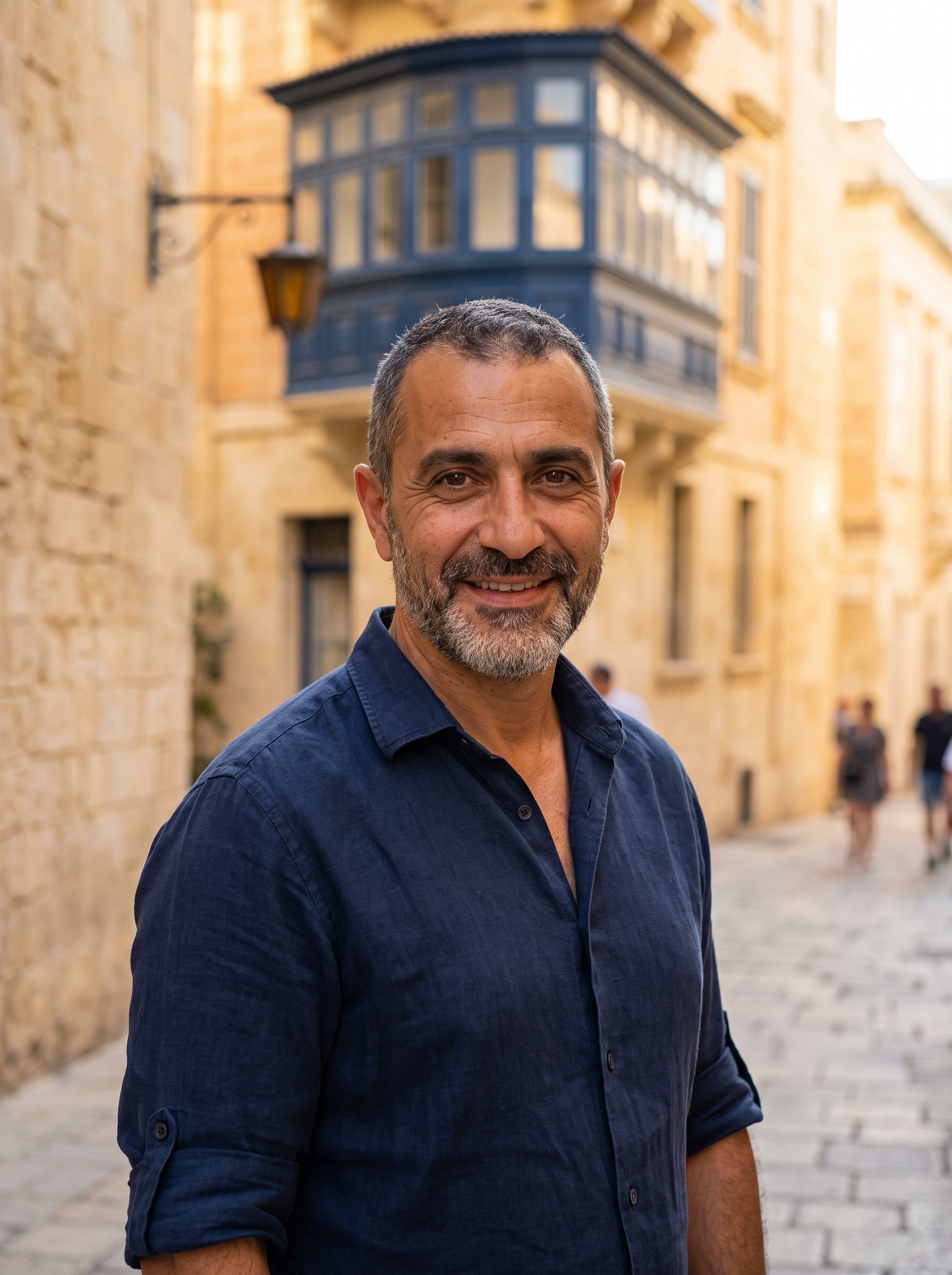

Walk to the far end of Republic Street, past the point where the shops thin out and the crowds fall away, and the ground tips down toward the sea. This is the blunt, sea-battered tip of the peninsula where 1,500 knights and soldiers held Fort St Elmo against 40,000 Ottomans for a month in 1565, and where Malta absorbed some of the heaviest bombing of the Second World War. It is the most storied square kilometre in the country, and, oddly, one of its quietest.
What St. Elmo & Lower Valletta is known for
One building dominates everything here: Fort St Elmo, the star-shaped fortress guarding the mouth of the Grand and Marsamxett harbours. Its name is the whole story of Malta in miniature. In 1565 it took the full weight of Suleiman the Magnificent’s assault; the garrison held for a month against overwhelming odds, and that delay bought the rest of the island time to survive the Great Siege. Nearly four centuries later, on 11 June 1940, the fort was the site of the first aerial bombardment of the war on Malta. You feel both histories at once as you approach: the geometry of the bastions, the wind coming in hard off the water, and the sense that this corner of Valletta has spent a very long time being useful in the least romantic way possible.

Inside the walls, the National War Museum works through seven galleries and 7,000 years, but the crowd-pullers are all twentieth-century: Faith, the battered fuselage of Gloster Sea Gladiator N5520 — the one survivor of the biplanes wrapped in the “Faith, Hope and Charity” legend of 1940 — Roosevelt’s jeep Husky, and the George Cross itself, awarded to the entire Maltese population for bravery. It is a museum that does not ask you to admire war so much as to understand what it cost here, on this rock, with the sea always visible through the stone.
Just up the coast, the Lower Barrakka Gardens and the Siege Bell War Memorial turn the same history into a place to sit and look. The bell, an 11-tonne monster inaugurated by Queen Elizabeth II in 1992, tolls daily at noon for the roughly 7,000 who died in the WWII siege. There are few better places in Valletta to stop talking for a minute and let the city do the work.

What makes this end of town different is the double register. Out at the point, everything is monumental and exposed — the harbour wind, the fortifications, the memorials, the wide sky. Climb back up into the grid and the mood changes to hushed and domestic: steep residential lanes like St Ursula, St Nicholas and St Christopher streets, laundry strung between honey-coloured townhouses, enclosed timber balconies leaning over the pavement, a cat asleep on a doorstep. Locals still live here, so evenings are calm; the loudest thing you’ll hear is a moped labouring up the incline or the clatter from the bowls club near the Lower Barrakka Gardens. This is not a neighbourhood that performs for you. It simply carries on.
Where to eat & drink
This is not restaurant row — the lower town is residential, so you eat either on the way down or after the climb back up. That is part of the charm, and a good filter for the sort of place you want to find. You do not drift into St. Elmo & Lower Valletta by accident for a buffet and a neon sign. You come here because the city has some dignity left.
The best local move on the descent to the fort is Ġugar Hangout & Bar, a scruffy, brilliant little spot on the steps toward St Elmo, kitted out in upcycled furniture with books and board games on the shelves. It draws Valletta’s creative crowd for smoothies, generous vegan and veggie plates, and a glass of Stretta craft beer — named, aptly, after Strait Street — or a national Cisk lager. It is the sort of place that can host a book signing, a small gig or a chess match without changing its face, which is exactly right for this part of town.

For a proper sit-down dinner, walk a few blocks to Il-Ħorża at 6 St Christopher Street — eight tables, a menu that changes with whatever’s good that night, and confident Maltese-Mediterranean cooking. Rabbit and fresh fish are the sort of thing you’re likely to see, but the point is the room itself: tiny, serious, and worth booking because it opens from 18:30 and does not pretend to have infinite capacity. In a city where too many terraces coast on the baroque backdrop, Il-Ħorża gets on with the cooking.
A little further inland, Legligin on Triq Santa Lucia is a cellar wine bar built around a blind tasting menu, five courses at lunch and seven at dinner for around €45, with roughly 95% local produce and a heavily Maltese wine list. It earned a Michelin Guide mention and has the feel of a place locals are pleased to keep to themselves until they can’t. The room is all cool stone and low light, which is precisely what you want after a day in the harbour glare.

If you want the classic Maltese ftira baked in a centuries-old oven, Ta’ Nenu (Nenu the Artisan Baker) at 143 St Dominic Street is the address, though it sits higher up the grid. That uphill detour is worth it for the char on the bread alone. Some places talk about heritage; Ta’ Nenu serves it warm.
Things to do
Fort St Elmo is the anchor and deserves the time — allow at least half a day for the fort and the National War Museum together, and note that general admission usually starts at midday. That matters because this is not the sort of place to rush through before lunch and tick off with a selfie. The fort has weight. It asks for a proper visit, not a drive-by.
On selected Sundays through the cooler months, Heritage Malta stages In Guardia, a costumed 16th-century military re-enactment in the fort’s parade ground, the Piazza d’Armi. Tickets are around €10, or roughly €17 combined with the museum. It is theatrical, yes, but not in a foolish way; the setting has enough authority to keep the pageantry honest.
Heritage Malta also runs after-dark specials such as the Dark Tales of Fort St Elmo night tour, which walks through the fort’s grimmer episodes — the Great Siege, the 1749 slaves’ revolt, the WWII bombing, even the 1985 EgyptAir hijack — and is recommended for ages 16 and up. That list alone tells you this place is not a museum of tidy chapters. It is a ledger of pressure.
Around the point, string together the free Lower Barrakka Gardens, built around a neo-classical temple to Sir Alexander Ball and giving one of the best free harbour panoramas in the city, and the Siege Bell on its terrace above the breakwater. Then cross into The Malta Experience, which condenses 7,000 years of the islands’ story into a 45-minute audio-visual show inside the historic Sacra Infermeria at the Mediterranean Conference Centre. It is efficiently done and useful when you want the bigger arc before returning to the stone under your feet.

{{ATTRACTIONS}}
Harbour walks & a swim
The lower town is where you get closest to the water. From opposite the main entrance of the Mediterranean Conference Centre, a stone stairwell drops down beneath the bastions to St Elmo Bay, a rocky, ledge-and-ladder swimming spot on the Marsamxett side that locals use far more than tourists — no sand, just clear water below the walls and, offshore, the wreck of the WWII destroyer HMS Maori, one of Malta’s better-known shore dives. It is not a beach day in the conventional sense. It is better than that: a cold plunge under a fortress wall, with history floating somewhere below you.
Bring water shoes. Bring a sense of humour about the lack of facilities. Bring, if you like, the knowledge that the sea here has seen more than its share of trouble and still keeps shining.
Circling the very point takes you past the modern St Elmo (Breakwater) Bridge, a slim steel-and-stone footbridge rebuilt in 2011–12 on the line of a 1906 breakwater that was destroyed in a daring 1941 Italian E-boat raid. That is a very Maltese sentence, really: a bridge rebuilt where a breakwater was destroyed in a raid during a war about which the island has no shortage of opinions.
A loop of the fortifications here — bastion wall, Siege Bell terrace, Lower Barrakka Gardens, and back up through the residential lanes — is the definitive lower-Valletta walk, best in the soft light of early morning or the hour before sunset when the limestone glows and the day-trippers have gone. At those hours the city becomes itself again: not a postcard, but a working place with a long memory.
Shopping
Retail runs the other way — up toward City Gate — so the lower town has little in the way of shops, and that is part of its appeal. What you find instead are the occasional tiny grocer, a bakery and the odd artisan studio tucked into the ground floor of a townhouse, plus Ġugar, which doubles as a low-key venue for book signings, small gigs and chess matches as much as a place to buy a coffee. That is the shopping culture here: not consumption as entertainment, but a neighbourhood doing small, useful things in small, useful spaces.
For actual shopping — Maltese lace and filigree, delicatessens, boutiques — walk up Republic and Merchants streets, no more than five to ten minutes uphill. If you want to take a bit of the neighbourhood home, the museum shop at Fort St Elmo and the Heritage Malta outlets are the reliable stops for history-minded souvenirs and books on the sieges. You will not find much tat down here, which is a mercy.
Where to stay in St. Elmo & Lower Valletta
Staying down here buys you quiet and character in exchange for a daily climb. The residential lanes around St Ursula, St Nicholas and St Christopher streets hide a handful of small, design-led boutique stays and self-catering townhouses. The rhythm is very Valletta: wake to light on limestone, descend for coffee, then climb back up later with groceries and a mild resentment of stairs.
Ursulino Valletta, on a cobbled stretch of St Ursula Street facing the former monastery, is the standout — a restored townhouse turned boutique B&B with a rooftop terrace looking over the skyline to Fort St Elmo and the Grand Harbour, and a free prosecco-and-antipasti aperitivo up there each evening. Palazzo Sant Ursula is a converted 16th-century palace on the same street with original features and a roof garden, while Tritoni Ursula Suites puts you within a minute or two of the fort and the rocky bay. Expect stairs, expect limited parking, and if you’re a light sleeper you’ll actually sleep well — this is the calmest corner of the capital.
The area’s live hotels are listed directly below.
{{HOTELS}}
Getting around
Valletta is small enough to cross on foot in about ten minutes, and the lower town is a straightforward downhill walk from Republic Street — the catch is the climb back up, all steps and inclines. The streets here were not designed for luggage rollers and impatience. They were designed for defence, shade and the occasional mule, which is a different brief.
If your legs give out, City Electric Cabs run little electric buggies around the city, roughly 7:00–19:00 Monday to Saturday and shorter on Sundays, that you can hail or phone for. The circular Route 133 bus loops the city walls half-hourly. The main Valletta bus terminus and taxi ranks sit just outside City Gate in Floriana, a 10–15 minute uphill walk. For onward hops, the Three Cities ferry and Grand Harbour cruises leave from the waterfront below the Upper Barrakka Gardens, with the Barrakka Lift there to spare you the climb, and the Sliema ferry crosses Marsamxett Harbour in about 10 minutes. Malta International Airport is roughly a 20–30 minute drive.
In practical terms, that means you can spend a whole day here without needing a car, a taxi app or much else beyond good shoes and a bottle of water. Which suits the place. St. Elmo & Lower Valletta is not trying to be easy. It is trying to be true.
FAQs
Is St. Elmo & Lower Valletta a good area to stay in Valletta?
Yes, if you value quiet and atmosphere over convenience. The residential lanes around St Ursula Street have some of Valletta’s most peaceful boutique stays, with rooftop harbour views, and you’re only a few minutes from Republic Street. The trade-off is the daily climb back up and very little happening on the doorstep after dark.
How long do you need at Fort St Elmo and the National War Museum?
Allow at least half a day to do the fort and the National War Museum justice. General admission usually starts at midday. If you can, time your visit for one of the selected Sundays when Heritage Malta stages In Guardia in the Piazza d’Armi parade ground.
Can you swim near Fort St Elmo?
Yes. St Elmo Bay is reached by a stone stairwell opposite the Mediterranean Conference Centre and is a rocky swimming spot right below the bastions on the Marsamxett side. It has clear water, ladders rather than sand, and is popular with local swimmers and snorkellers; HMS Maori lies offshore as a well-known shore dive.
What is the best way to get around this part of Valletta?
Mostly on foot. The area is a downhill walk from Republic Street, but the return climb is steep. If needed, City Electric Cabs, Route 133, the Valletta bus terminus in Floriana, and the ferries below the Upper Barrakka Gardens all help reduce the effort.