Valletta guide
St. Paul's Quarter, Valletta: Strait Street After Dark and the City Behind It
A street once nicknamed The Gut now carries Valletta’s best dinners, cellar bars and late-night hum, with churches, markets and side lanes still doing the older city’s quiet work.
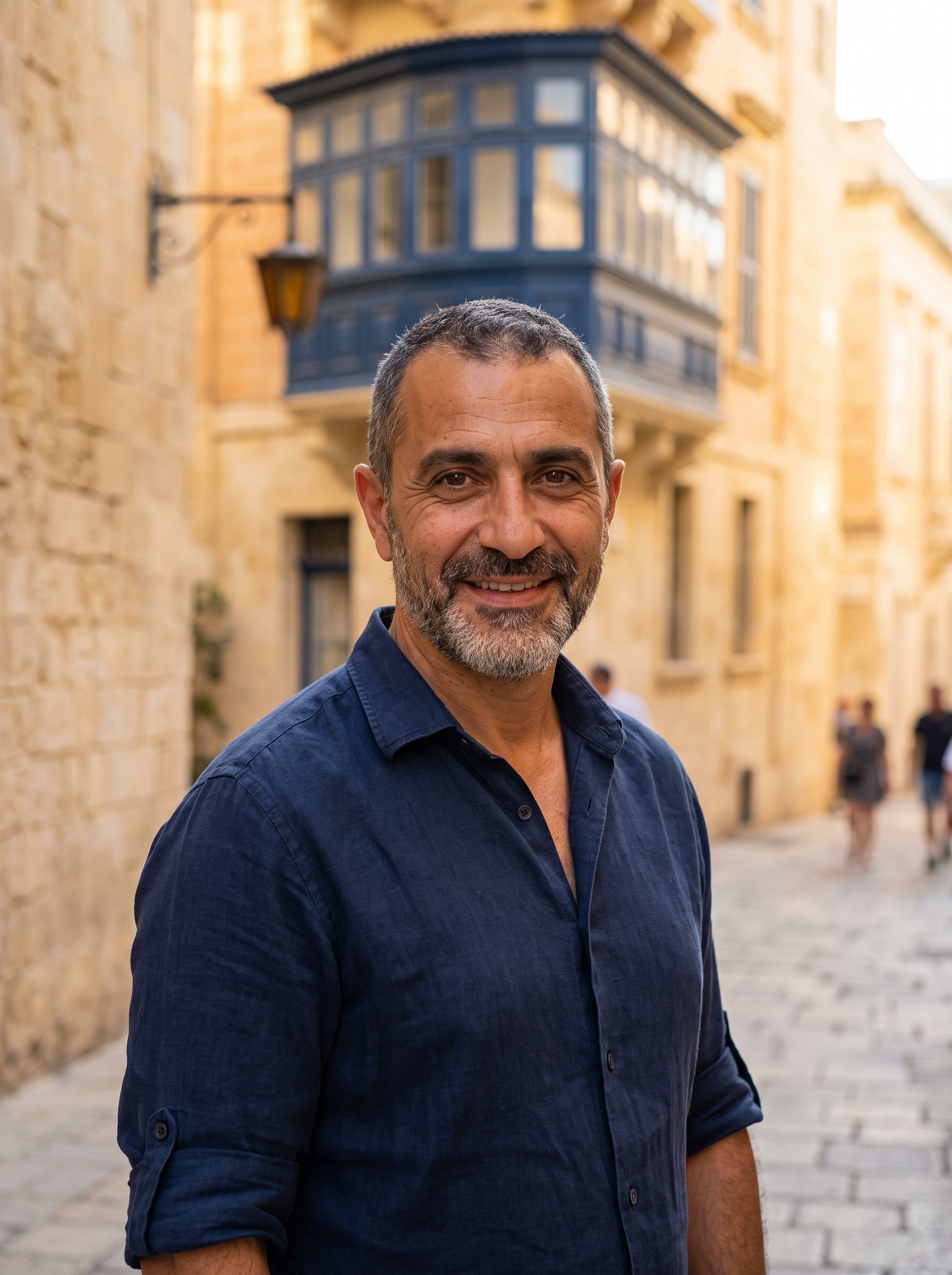

Strait Street is only four metres wide, but it has always behaved like a much larger character: crooked, noisy, opinionated, impossible to ignore. By day it can look almost sleepy, the shutters down and the honey-stone facades shouldering past each other in a lane barely a car’s width across; by evening, the same stretch turns low-lit and social, with stools nudged onto the steps and the sound of jazz slipping out of doorways. This is St. Paul’s Quarter in Valletta, the city’s scruffier-chic underside, where the old garrison street called The Gut has become the place people come to eat, drink and drift without needing a taxi between stops. It is compact enough to cross in a few minutes, but it has the lived-in density of somewhere that knows exactly what it is.
What St. Paul's Quarter is known for
The quarter takes its name from the Church of St Paul’s Shipwreck on St Paul Street, and that is as good a place as any to start, because Valletta likes its history with a bit of theatre and this church has the right props. Designed by Girolamo Cassar and finished in 1582, it is one of the city’s oldest churches. Inside, the relics are the sort that make you lower your voice: the reputed right wrist-bone of St Paul, set in a gilded bronze forearm, and part of the marble column on which the apostle is said to have been beheaded in Rome, a gift from Pope Pius VII in 1818. The February feast still fills these lanes, which is a neat reminder that this quarter is not just a nightlife strip that happened to inherit a church; it is a neighbourhood whose public life has been ceremonial for centuries.

But the street that gives the quarter its modern pulse is Strait Street. For half a century, from the 1920s until British withdrawal, this was the garrison’s nightlife lane — music halls, bars and guest houses serving American and British sailors, who called it The Gut. Then it was locked up in the 1970s and left to decay, which is the sort of urban pause that can either kill a street or give it time to become interesting again. Strait Street chose the latter. Over the last decade or so it has been resurrected into Valletta’s after-dark heart, and the old bones are still there if you know where to look: vintage signage, 1920s-styled interiors, narrow steps, and the slightly louche confidence of a street that remembers being famous.

The comparison people make — Soho, Kreuzberg — is not entirely daft, if you strip away the scale. Valletta is too small for swagger in the continental sense, but this quarter has the same density of intent: bars, cellars, bistros, doorways, side lanes, more doorways. It peaks Thursday to Saturday, hums until late, then winds down by the early hours. It is genteel rather than raucous. If you want club bass and dawn, cross the water to Paceville. Here the point is the next glass and the next room.
Where to eat & drink
The quarter punches absurdly far above its size at dinner time. Aki, in a slick basement beside the Embassy building at 175 Strait Street, is the place that tells you Valletta is no provincial afterthought. It is Michelin-recommended contemporary Japanese, and the room does something rare: every table faces the open kitchen, so the meal has the rhythm of a small performance without becoming a circus. The salmon tiradito, scallop roll and Saikyo miso black cod are the dishes singled out by inspectors, and the local prawn tacos give the menu a Maltese wink without trying too hard. That is the trick here — the quarter is full of places with ambition, but the best ones know when to leave the ego at the door.

For Maltese cooking, Palazzo Preca at 54 Strait Street is the more old-world pleasure: a restored 16th-century palazzo run by the Preca sisters, with fresh fish, homemade pasta and flambé desserts finished at the table. It has the sort of setting that can make a restaurant coast if it wants to, but Palazzo Preca does not coast. It trades on the part of Valletta that still believes a proper meal should arrive with a bit of ceremony and a fish that looks like it was swimming this morning.
A couple of steps and a couple of moods away, Ortygia Food Experience at number 8 Strait Street is the small, family-run Sicilian room that earns loyalty the old-fashioned way: with cannoli and seafood pasta, and prices that leave you feeling you have not been mugged by the setting. Around €20 a head is the number here, which in this quarter feels almost rebellious. It is the sort of place you go when you want to eat well and not overthink it.
Then there is Legligin on Santa Lucia Street, just off the strip, which is the cult cellar for people who like their dinner to unfold like a secret. There is no à la carte. Instead, a daily-changing Maltese small-plates tasting menu — five courses at lunch, seven at dinner — comes paired with local wines, around €50 a head, and the whole thing takes about two hours. In a city that can sometimes dress up its heritage for the camera, Legligin does the opposite: candlelit stone cellar, no fuss, no menu theatre, just the quiet confidence of a room that knows Maltese cooking can stand in the ring without extra polish.

For drinkers, Strait Street is the bar-hop, and it is civilised in the best possible way. Yard 32, at number 32, is Malta’s original gin bar, with 200-plus gins and 40-odd tonics behind the counter, tapas on the go and stools out on the steps. A gin flight is the obvious opening move, if only to settle the question of how long you plan to stay. The place has the cheerful logic of a bar that knows its brief and does not need to shout about it.
A little further down the lane, Trabuxu Wine Bar pours from a 400-year-old vaulted cellar and is reckoned to be Valletta’s first-ever wine bar. It is the one you go to when the evening needs a cooler, slower register: Maltese and European bottles, cheese and charcuterie boards, cosy in winter and spilling out onto the stepped street in summer. That cellar matters. In August, a vaulted room is not a decorative flourish; it is a mercy.

If the night wants a little more invention, Alchemy at 92-94 Strait Street has the most inventive cocktail list on the lane, with signature drinks that take a day or two to prepare and are served Thursday to Sunday. It is the sort of bar that rewards people who like a menu with a bit of mystery and a bartender who has thought ahead.
StrEat Whisky & Bistro leans into a 1920s look and keeps more than 200 whiskies on hand, alongside gourmet plates. It is not trying to be edgy; it is trying to be well turned out, which is often the better bargain. Nearby, Ta’ Lonza at 67 Old Theatre Street is the local’s local — craft beer and wine, BrewDog on draught, generous platters and a landlord who runs the room warmly. And for a late-night whisper rather than a shout, The Little RED DOOR does serious cocktails and a build-your-own board from 80-odd cheeses and cold cuts. That is the quarter in a sentence: a lane that moves from gin to wine to whisky to a speakeasy nightcap without ever becoming clubby.
Things to do / what to see
The signature thing to do here is almost insultingly simple: walk the length of Strait Street, all 665 metres of it, and do it twice. Once in daylight, when the faded grandeur shows through and the street feels like a working neighbourhood with a memory problem; once after dark, when the bars wake up and the lane becomes a narrow canyon of light, music and people deciding where to sit. Read the vintage signage, duck into a doorway, keep going. The quarter rewards the unhurried walker because it is built from small disturbances — a balcony, a cellar step, a side lane, a shutter half-open, a cat on a doorstep.
That walk pairs naturally with the Church of St Paul’s Shipwreck, which is quieter than St John’s Co-Cathedral a few blocks away and all the better for it. There is a kind of relief in entering a church that has not been made to perform for crowds. You get the relic, the Baroque interior, the weight of the place, and then you step back into the lane and the modern city resumes.
Another useful stop is Is-Suq tal-Belt, the restored Victorian covered market between St Paul Street and Merchant Street, reopened in 2018 as a food hall. It has a dozen stalls, a couple of bars and a rooftop, which makes it useful at almost any hour: a quick pastizz, a proper sit-down, a pause between church and cellar bar. Valletta can sometimes feel like a city of steep decisions, but the market is a practical answer to hunger.
{{ATTRACTIONS}}
Beyond the named stops, the pleasure of the quarter is aimless wandering. The side lanes hide independent boutiques, vintage shops, small galleries and the enclosed timber balconies that are one of Valletta’s quiet signatures. The grid is compact enough to explore in an afternoon and still feel like you have not exhausted it, which is the best kind of neighbourhood for a visitor: enough structure to orient yourself, enough looseness to get pleasantly lost.
Shopping & markets
This is not the quarter for a grand shopping expedition. The big-name stores are over on pedestrianised Republic Street, a block or two away, and they can keep their polished windows. St. Paul’s Quarter is for the slower browse, the kind that happens because you saw a door open and thought you might as well look. The side lanes off Strait Street reward that impulse with independent boutiques, a scatter of vintage and design shops, and small galleries tucked into former bar spaces between residential doorways.
Is-Suq tal-Belt does double duty here too. Under its restored iron-and-timber roof, the market is as much a place to graze as to gather provisions, with local produce, cheeses and Maltese snacks on hand. It is one of the few places in the quarter where you can behave like a local and a tourist at the same time without changing streets.
One practical note, because Valletta likes to be charming and mildly inconvenient in equal measure: most shops shut by around 19:00, and Sunday is very quiet. If you want a proper browse, do it on a weekday afternoon before the bars take over the streets.
Where to stay in St. Paul's Quarter
This is a strong base for anyone who plans to spend the evening eating and drinking rather than commuting back from it. The accommodation here runs to boutique hotels and design-led guesthouses carved into restored townhouses and palazzi, generally small and characterful rather than big-brand. That suits the quarter. It is not a place for anonymous towers; it is a place for stairs, thick walls and a room with a view of a lane that has seen a few things.
The trade-off is noise. A room facing Strait Street directly will hear the bars until late from Thursday to Saturday, so light sleepers should ask for a room set back on a quieter side lane like St Paul Street or one of the cross streets. Prices sit in the mid-range for Valletta, a notch below the grand palazzo hotels on Republic Street. Expect limited or no parking, and pack for uneven ground because the streets here are steep, stepped and not especially sentimental about your ankles.
{{HOTELS}}
Getting around
The whole quarter is walkable end to end in ten minutes, which is to say it is walkable in the Valletta sense: short distances, but with steps, slopes and the occasional need to look where you put your feet. The city itself is a pedestrian peninsula, so inside Valletta you will not need transport, only decent shoes and a small amount of patience.
The main entry point is City Gate at the top of Republic Street, about a five-minute walk away. That is where the island’s bus network converges at the Valletta terminus in neighbouring Floriana, with direct routes to Sliema, St Julian’s, Mdina, the Three Cities and the airport. For nightlife beyond Strait Street, the Sliema–Valletta ferry is the fast, scenic hop across Marsamxett Harbour, roughly €2.50 one-way, and from there you can taxi the short stretch on to Paceville if you insist on clubbing. Malta International Airport is about a 20–30 minute drive or a direct bus ride away.
Cars are more hindrance than help here. Parking is scarce, the lanes are barely a car wide, and the quarter is built for walking anyway. That is part of the charm, and part of the exercise.
FAQs
Is St. Paul's Quarter a good area to stay in Valletta?
Yes, if food and atmosphere matter most. You’re steps from the city’s best restaurants and bars, in small boutique stays inside restored townhouses. Just avoid a room directly on Strait Street if you’re a light sleeper, because it stays lively Thursday to Saturday.
What is Strait Street known for?
It was the British garrison’s red-light and music-hall district for decades, nicknamed The Gut, before being shut in the 1970s. Today it’s Valletta’s main after-dark strip for gin bars, wine cellars, cocktail spots and bistros, still lined with vintage 1920s signage.
Is St. Paul's Quarter good for nightlife?
Yes, for bar-hopping. Strait Street is Valletta’s liveliest lane, but it’s wine-bar and cocktail civilised, with jazz, swing and blues rather than club bass, and it usually winds down by the early hours. For big club nights, head across to Paceville.
What should I do first in St. Paul's Quarter?
Walk Strait Street once in daylight and again after dark. Add the Church of St Paul’s Shipwreck and a stop at Is-Suq tal-Belt, then let the side lanes and cellar bars fill in the rest.