Barcelona neighbourhood guide
Gothic Quarter (Barri Gòtic), Barcelona: where Roman ghosts and late-night bars share the same lane
Barcelona’s oldest quarter is a tight knot of Roman columns, Civil War scars, candlelit bars and tourist crush — and it still feels best when you slow down enough to hear the bells.

Four Roman columns from the 1st century BC still stand in a courtyard off Carrer del Paradís, and they do something rare in Barcelona: they stop you mid-step. Not because they’re dramatic — they’re not, not at first glance — but because the lanes around them keep folding time in on itself. One minute you’re by a candle shop that’s been selling wax since 1761, the next you’re under a bridge that only pretends to be medieval, and a few turns later you’re in front of a synagogue older than most of Europe’s cathedrals. The Barri Gòtic is Barcelona’s oldest quarter, yes, but it’s also one of its most edited. The trick is to enjoy the edit and still notice the seams.
What the Barri Gòtic is known for
The Gothic Quarter is a square kilometre of tight stone lanes between La Rambla and Via Laietana, pinned by the cathedral to the north and the port to the south. It’s the city’s old stage set and its real archive at once. You walk Carrer del Bisbe, Carrer de la Palla and the alleys of El Call with your shoulders nearly brushing the walls, then a hidden square opens with a fountain, a couple of café tables and the sudden sense that you’ve wandered into someone’s memory. The soundtrack changes block by block: cathedral bells, a busker’s Spanish guitar echoing off Plaça Sant Felip Neri, the scrape of chairs on Plaça Reial, then the low churn of tourist feet on the main arteries.
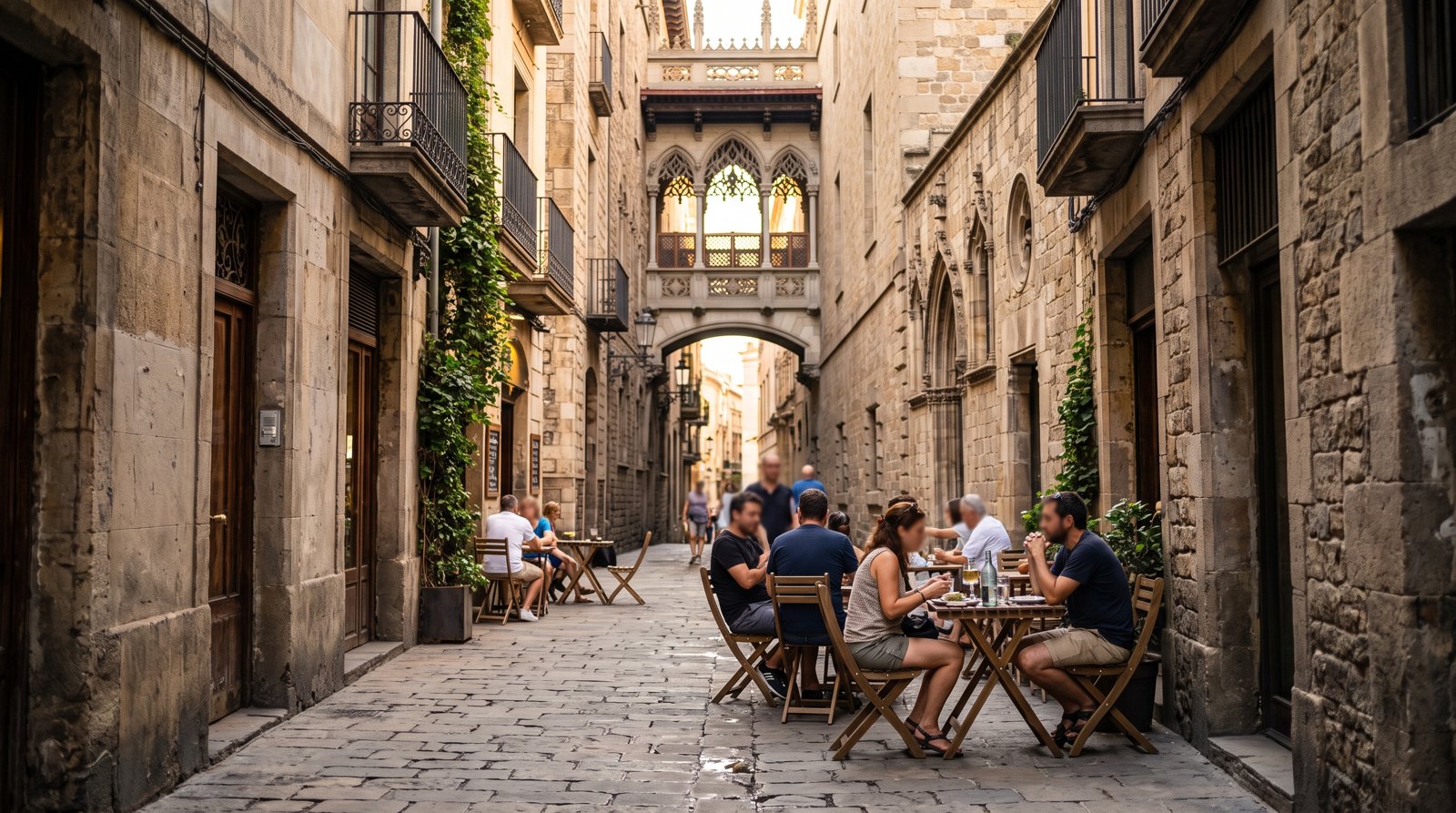
That crowd is the honest catch here. Carrer de Ferran, the cathedral steps and Plaça Reial are dense with visitors from mid-morning to late, and Barcelona’s pickpocket reputation is not some lazy urban myth. It’s real enough to make you keep a hand on your bag and a side-eye on the flow. But step one street off the main drag and the quarter goes quiet fast: laundry strung between balconies, an old bodega with barrels behind the bar, a neighbour walking a dog as if the world hasn’t come calling. That shift — from crush to hush in twenty seconds — is the neighbourhood’s best party trick.
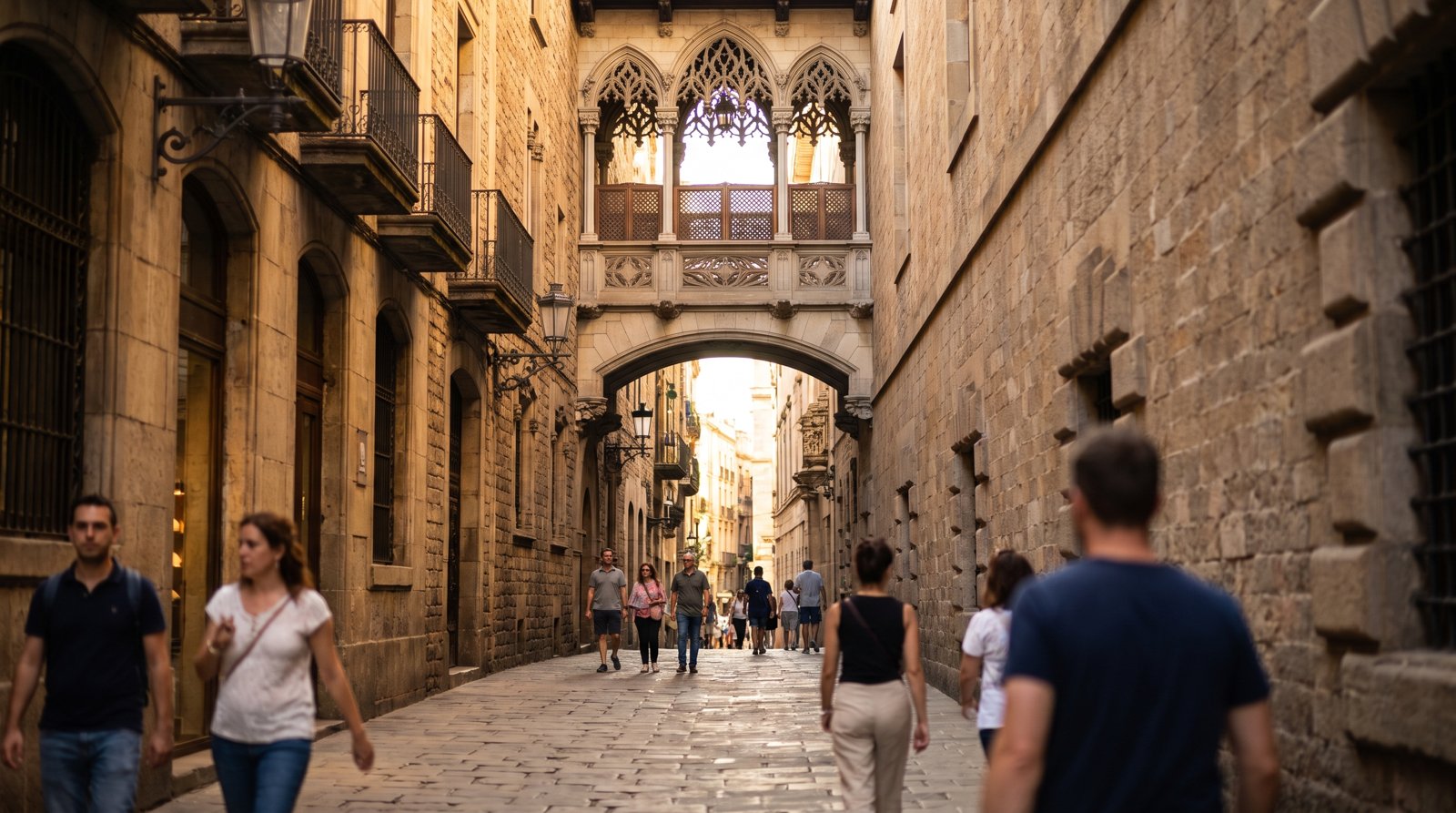
And then there’s the historical sleight of hand, which I find charming in a slightly cheeky Catalan way. A good deal of what reads as medieval was rebuilt in the 1920s to sell the city a romantic Gothic past. The Pont del Bisbe, the bridge everyone photographs, dates to 1928. The cathedral’s main façade was finished in 1913 to old, never-built plans. It’s not a fraud; it’s a performance. Barcelona has always understood costume.
Where to eat & drink
The Gòtic does not shout about food. It murmurs from behind marble counters and candle stubs, from wine poured straight from the barrel and plates that haven’t changed because they never needed to. Start with Bar la Plata on Carrer de la Mercè, a tiny 1945 bodega that serves just four things: fried little fish, an anchovy plate, butifarra sausage and a tomato-and-onion salad. That’s the whole argument, and it’s a good one. Wine comes from the barrel. Ferran Adrià called it “a magical place,” which is one of the few times a grand chef and a marble counter can both be right.
Around the corner, Bodega La Palma on Carrer de la Palma de Sant Just feels like an old general store that learned how to pour vermouth and never looked back. The high ceilings give it a little air, and the bravas and squid croquettes are the sort of thing you order with a glass and then another because the room makes you linger. If you want the Gòtic in its most useful form — old bones, no fuss, a bit of salt — this is it.
For a more polished sit-down, Sensi Tapas on Carrer Ample does creative modern-Mediterranean plates in a candlelit room. It’s the kind of place where croquetas, octopus and squid-ink rice are treated with enough care to justify the candlelight. Nearby, La Vinateria del Call on Carrer de Sant Domènec del Call, going since 1982, is the opposite of performative. Stone walls, a thoughtful wine list that doesn’t punish you for being curious, and platters of cheese, cured meats and tigres. In a quarter that often trades on its address, this one earns its keep.
Then there’s La Alcoba Azul on Carrer de Salomó Ben Adret, all candles and jazz, open till 1am, no bookings. It’s the sort of bar that makes a slow drink feel like a plan rather than a delay. If you arrive with nowhere to be, even better. For a morning-after rescue, Milk on Carrer d’en Gignàs has been pouring Barcelona’s best-known brunch since 2005, walk-in only, which means the weekend queue is part of the ritual. Caelum on Carrer de la Palla is sweeter and stranger: pastries, egg-yolk sweets and Trappist beers made by cloistered nuns, all served in a cellar built over medieval Jewish baths. That’s a sentence that sounds invented until you taste the cake.
And if you want a room with some history in the walls, Els Quatre Gats on Carrer Montsió is the modernista café from 1897 where a teenage Picasso held his first show and designed the menu. It’s not just a name to tick off; it’s one of those places where the city’s artistic self-regard became a table setting.
Going out
The Gòtic leans intimate. It is not a district of giant clubs and neon sprawl, thank God. It prefers cellars, rooms with low ceilings, and bars where the evening can stretch without becoming a spectacle. Everything seems to orbit Plaça Reial, that arcaded, palm-lined square just off La Rambla. By day it’s handsome. By night it becomes a small machine for music, drink and mild trouble.
Under the square hides Jamboree, a low-ceilinged jazz cellar running since 1960, with nightly live sets that slide into jam sessions and, later, a DJ club. It’s one of those basements that feels as if the city has tucked its best habits underground. A couple of lanes east, Harlem Jazz Club on Carrer de la Comtessa de Sobradiel is one of Barcelona’s oldest live-music rooms, a narrow dark space where jazz, funk, soul, blues and Latin fill most nights of the week. In a quarter often overrun by people who came for a selfie and stayed for another beer, Harlem still feels like a room with a pulse.
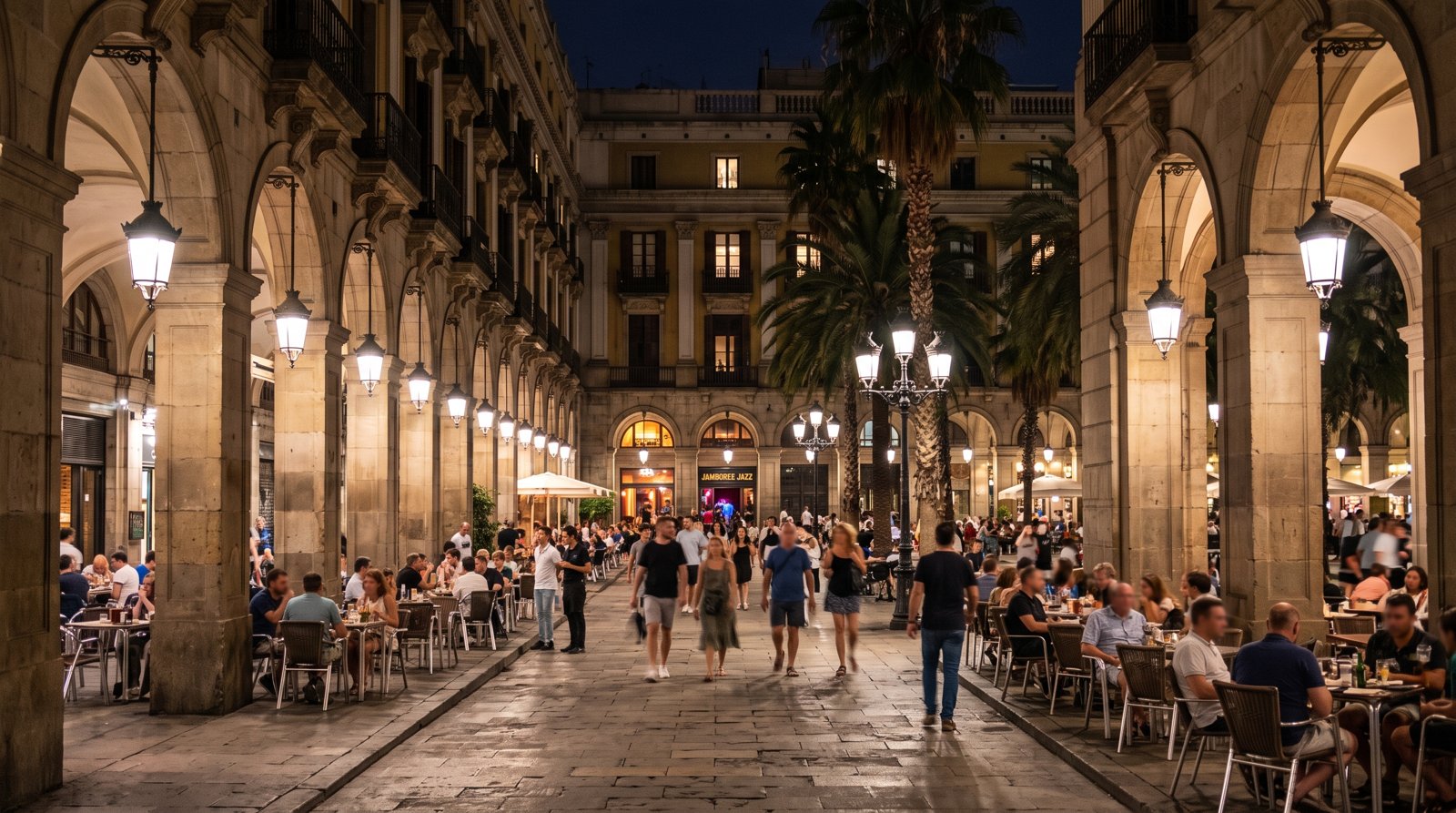
On Plaça Reial’s southern side, Ocaña occupies grand rooms from 1856. By day it’s a terrace café; by night it turns into a cocktail bar, and downstairs in the Apotheke there’s a club with live acts and drag hostesses, named for José Pérez Ocaña, the flamboyant post-Franco artist. It’s theatrical, yes, but Barcelona has always had a taste for the theatre when it’s done with a wink. For a quieter night, go back to La Alcoba Azul and let the candles do their work.
A word of caution, because the quarter deserves honesty: Plaça Reial is lovely but rowdy and pickpocket-heavy after dark. Keep your phone and bag close. Enjoy the music, not the distraction.
Things to do / what to see
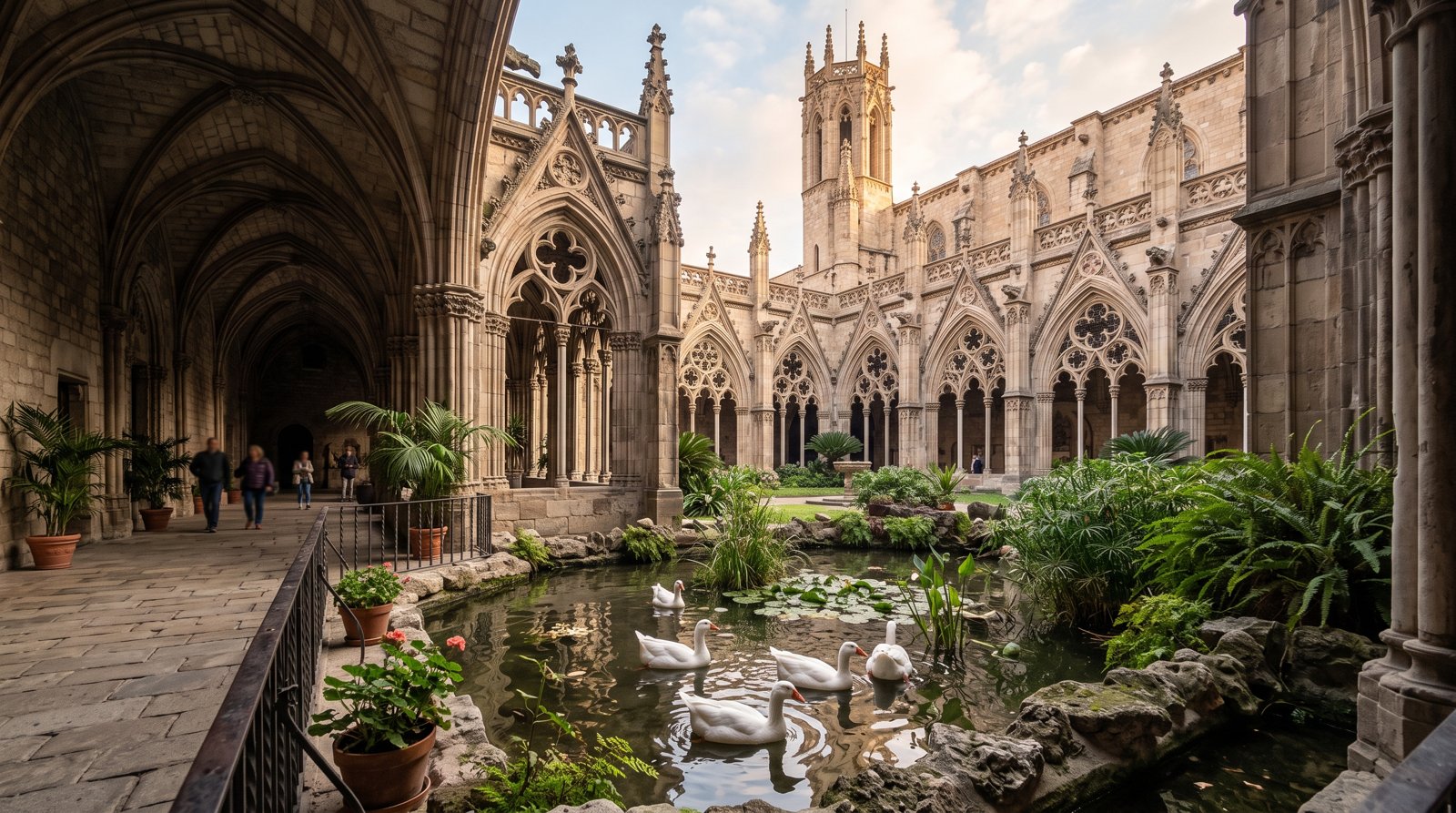
The best thing to do here is the least glamorous: walk with no plan and let the lanes lead. Start at the Cathedral of Barcelona, free to enter the main nave outside guided hours, and pay to climb to the roof and visit the cloister with its resident geese. The body of the cathedral is genuinely Gothic, and that matters. Then stand back and look at the façade, finished in 1913, and let the contradiction sit there beside you. Barcelona likes a layered truth.
From Plaça Nova, duck under the Pont del Bisbe on Carrer del Bisbe and look up for the carved skull-and-dagger keystone. It’s the quarter’s most photographed “ancient” sight, and it’s not ancient at all — 1928, Joan Rubió i Bellver, a good imitation with excellent posture. Then keep going to Plaça de Sant Felip Neri, whose fountain and shrapnel-scarred church wall make it the quarter’s most moving corner. The scars are from a 1938 fascist bombing that killed 42 people, most of them children sheltering there. Tourists lower their voices there without being told. The square does the instruction for them.
Go underground at MUHBA on Plaça del Rei and walk over Roman Barcino. The glass catwalks float above streets, wine cellars, a fish-salting works and a laundry, part of the largest excavated stretch of Roman city in Europe. It’s the kind of museum visit that makes the city feel less like a destination and more like a series of buried floors. Then surface and make the short walk to the Temple of Augustus columns at Carrer del Paradís 10, where four 1st-century-BC Roman columns stand in a courtyard, free and easy to miss. Don’t rush them. They’re not trying to impress you.
Trace El Call, the medieval Jewish quarter, past the tiny Sinagoga Major and the Hebrew stone on Carrer de Marlet, and remember that this was one of Europe’s best-preserved Jewish quarters until the expulsion of 1492. The lanes are narrow, but the history is wide and unresolved. For a different sort of collection, the Frederic Marès Museum in a wing of the old royal palace is a delightfully odd hoard of religious sculpture and everyday 19th-century objects, with a beautiful courtyard café. It’s eccentric in the best old-school Barcelona way: a place where the city’s taste for accumulation becomes a mood.
Then drift to Santa Maria del Pi on Plaça del Pi, a Gothic church with one of the world’s largest rose windows. The square around it fills with artisan food and art markets on many weekends, and the atmosphere is pleasantly unhurried if you arrive before the crowd thickens. Free walking tours of the quarter leave regularly from Plaça de Sant Jaume, which is useful if you want the bones of the place before you start wandering its skin.
Don’t miss in Gothic Quarter (Barri Gòtic)
Cathedral of Barcelona
The quarter's Gothic anchor; climb to the rooftop and see the cloister with its geese
MUHBA (Plaça del Rei)
Walk glass catwalks over the largest excavated stretch of Roman Barcino in Europe
Temple of Augustus columns
Four 1st-century-BC Roman columns hidden in a courtyard at Carrer del Paradís 10 (free)
Plaça de Sant Felip Neri
Quiet square whose church wall still bears 1938 Civil War shrapnel scars
Frederic Marès Museum
Sculpture and eccentric collector's museum in the old royal palace, with a lovely courtyard café
Santa Maria del Pi
Gothic church on Plaça del Pi with one of the world's largest rose windows
Shopping
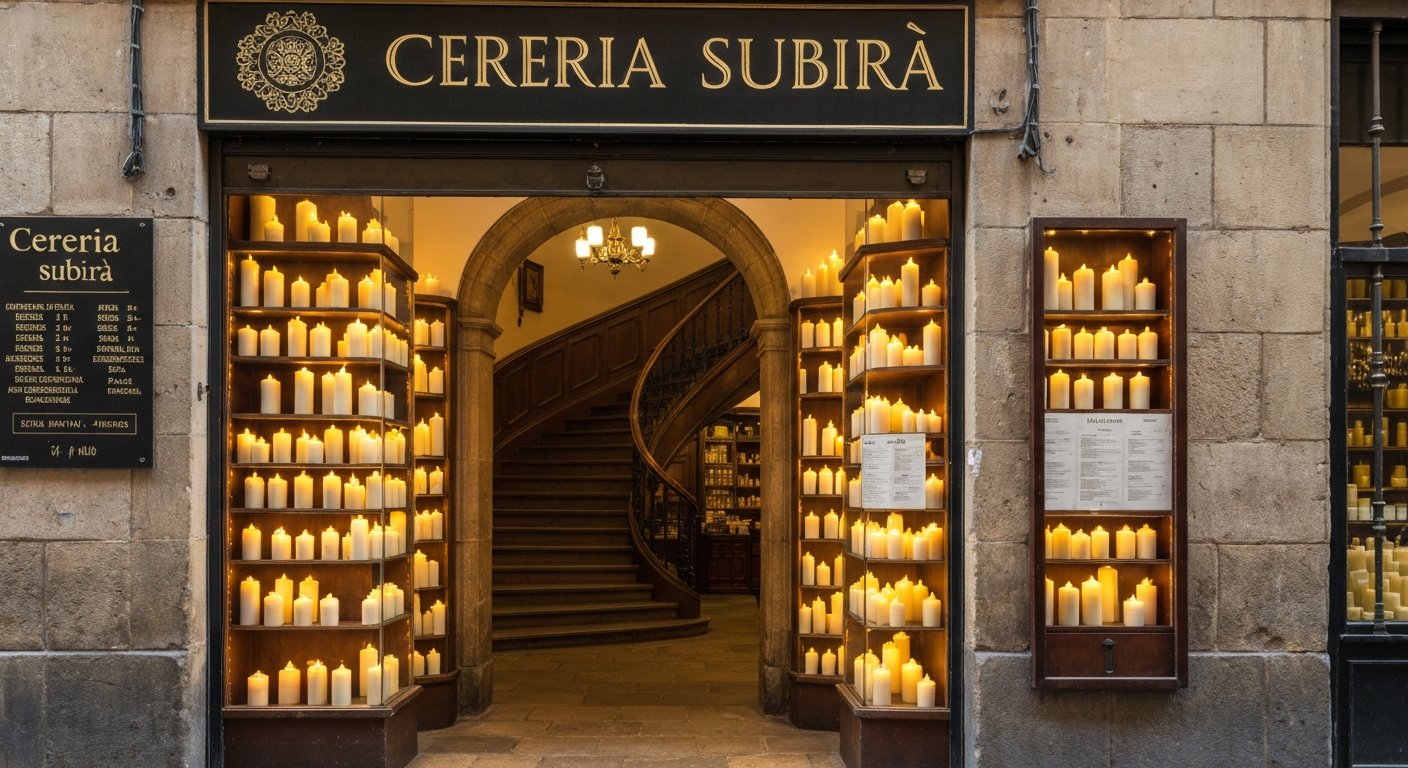
The Gòtic rewards small, old-fashioned browsing more than chain shopping. The address everyone should make time for is Cereria Subirà on Baixada de la Llibreteria, the candle shop trading since 1761 and the oldest shop in Barcelona. It has a curving baroque staircase and a shopfront that looks unchanged in a century; it still supplies candles to the Sagrada Família. That’s the sort of continuity the city likes to keep in its pocket.
A short walk into El Call, Sombrereria Obach on Carrer del Call has sold caps, berets and hats since 1924 from behind a hand-painted modernista façade and a near-200-year-old oak counter. It even has a cameo in Carlos Ruiz Zafón’s The Shadow of the Wind, which is apt: the place already feels like a chapter. For something edible, Caelum on Carrer de la Palla doubles as a shop for convent-made sweets, jams, chocolates and liqueurs, and the whole thing makes a better souvenir than another tote bag you’ll forget in a week.
The real browsing spine, though, is Carrer de la Palla / Carrer dels Banys Nous, the lanes that curve along the old Roman wall between the cathedral and Plaça del Pi. This is where you find antiques, prints, jewellery and bric-a-brac — the sort of stock that makes you slow down because the window itself is doing half the selling. On weekends, the artisan food and art markets on Plaça del Pi and the periodic antiques market on Plaça Nova add a little bustle without the full La Rambla circus. If you need a proper market hall, the Boqueria is just a two-minute step out onto La Rambla, though by then you’ve already crossed from old town into performance.
Where to stay in the Barri Gòtic
Staying in the Gòtic puts you inside the postcard, which is both the point and the problem. You can walk to the cathedral, La Rambla, El Born and the beach without a metro, and step out of your door straight into the atmosphere. Accommodation leans boutique and design-heavy, often carved out of old palaces and merchant houses, with small guesthouses and apartments filling the gaps. Big chains are scarce, and truly budget beds are thinner on the ground than the tourist brochures imply.
The trade-off is noise. The lanes are stony and sound bounces. Terraces stay busy late. Streets around La Rambla and Plaça Reial can be loud and rowdy well past midnight. If you’re a light sleeper, ask specifically for an interior or courtyard-facing room and pack earplugs. Better still, aim for a quieter side street — the pockets around the cathedral, El Call, Carrer Ample or the streets near Plaça Sant Jaume are more residential and less showy. And keep your belongings close on the busy pedestrian arteries at all hours; the quarter’s beauty doesn’t cancel out its habits.
Where to stay here
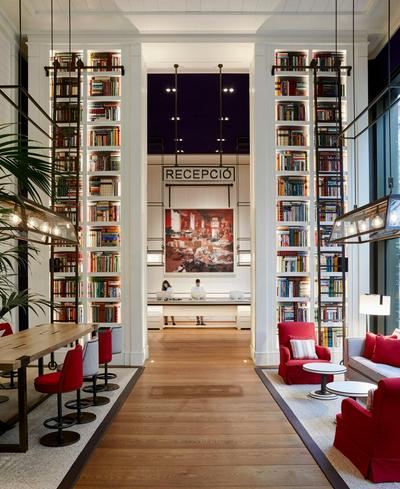
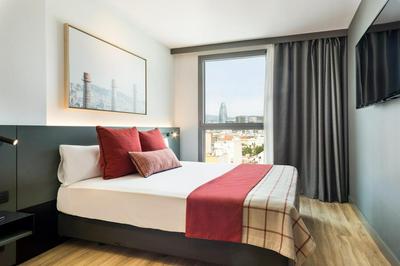
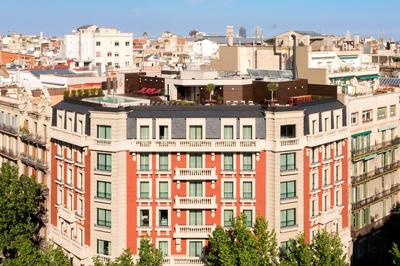
Hotels in Gothic Quarter (Barri Gòtic)
Our best-rated stays in this neighbourhood. Prices are approximate “from” rates — confirmed at the provider when you continue. We may earn a commission if you book through our partners, at no extra cost to you.
 In this area
 In this area
 In this area
 In this area
Getting around
The Barri Gòtic is walking territory. Most of it is pedestrianised, and you can cross the whole quarter in about 15 minutes on foot. That’s the correct speed here anyway. Three metro stops ring it: Liceu (L3) on La Rambla for the western and southern lanes, Jaume I (L4) on Via Laietana for the cathedral, MUHBA and El Call, and Catalunya (L1/L3) at the northern top by Plaça de Catalunya. Drassanes (L3) serves the harbour end.
Almost everywhere central — El Born, El Raval, the Barceloneta beach, Passeig de Gràcia — is a 10–20 minute walk, so you rarely need transport once you’re here. From the airport, the quickest fixed route is the Aerobús from either terminal to Plaça de Catalunya, about 35 minutes, then a short walk or one metro stop from the quarter. The R2 Nord train or L9 Sud also connect with changes, and a taxi runs roughly 25–35 minutes depending on traffic. The quarter is effectively car-free with almost no parking, so taxis and ride-hailing can only drop you at the edges — on Via Laietana, La Rambla or Plaça de Catalunya — from where you walk in. Bikes and scooters are awkward in the crowded lanes. Your feet are the only transport that really understands the place.
Good to know
Gothic Quarter (Barri Gòtic) — your questions
Is the Gothic Quarter a good area to stay in Barcelona?
Yes, especially for a first visit. You’re inside the atmospheric old town and can walk to the cathedral, La Rambla, El Born and the beach without using the metro. The trade-offs are noise and crowds, so choose a quiet side street away from La Rambla and Plaça Reial, ask for an interior room, and bring earplugs if you sleep lightly.
Is the Barri Gòtic safe?
It’s safe in the sense that violent crime is rare, but it’s Barcelona’s top pickpocket zone, especially on La Rambla, around the cathedral and Plaça Reial, and on packed pedestrian streets. Keep your phone and wallet in a front or zipped pocket, close your bag, and stay extra alert in late-night crowds.
Is the Gothic Quarter really medieval?
Partly. There are genuine Roman remains, the Temple of Augustus columns and the Barcino ruins under Plaça del Rei, plus real 13th–15th-century Gothic buildings like the cathedral’s body. But much of the ‘medieval’ look was created or heavily reworked between about 1900 and 1930, most famously the Pont del Bisbe and the cathedral’s main façade.
What is the best way to explore the Gothic Quarter?
On foot, with no plan. The quarter is compact, mostly pedestrianised, and best understood by drifting from the cathedral to Plaça de Sant Felip Neri, El Call, Plaça del Rei and the Roman columns at Carrer del Paradís.
Gallery