Beijing guide
Qianmen & Dashilar, Beijing: where old commercial China still haggles, steams and sells
A walk through Beijing’s merchant quarter, from Qianmen’s polished front window to Dashilar’s time-honored counters, duck houses and renovated hutong lanes.
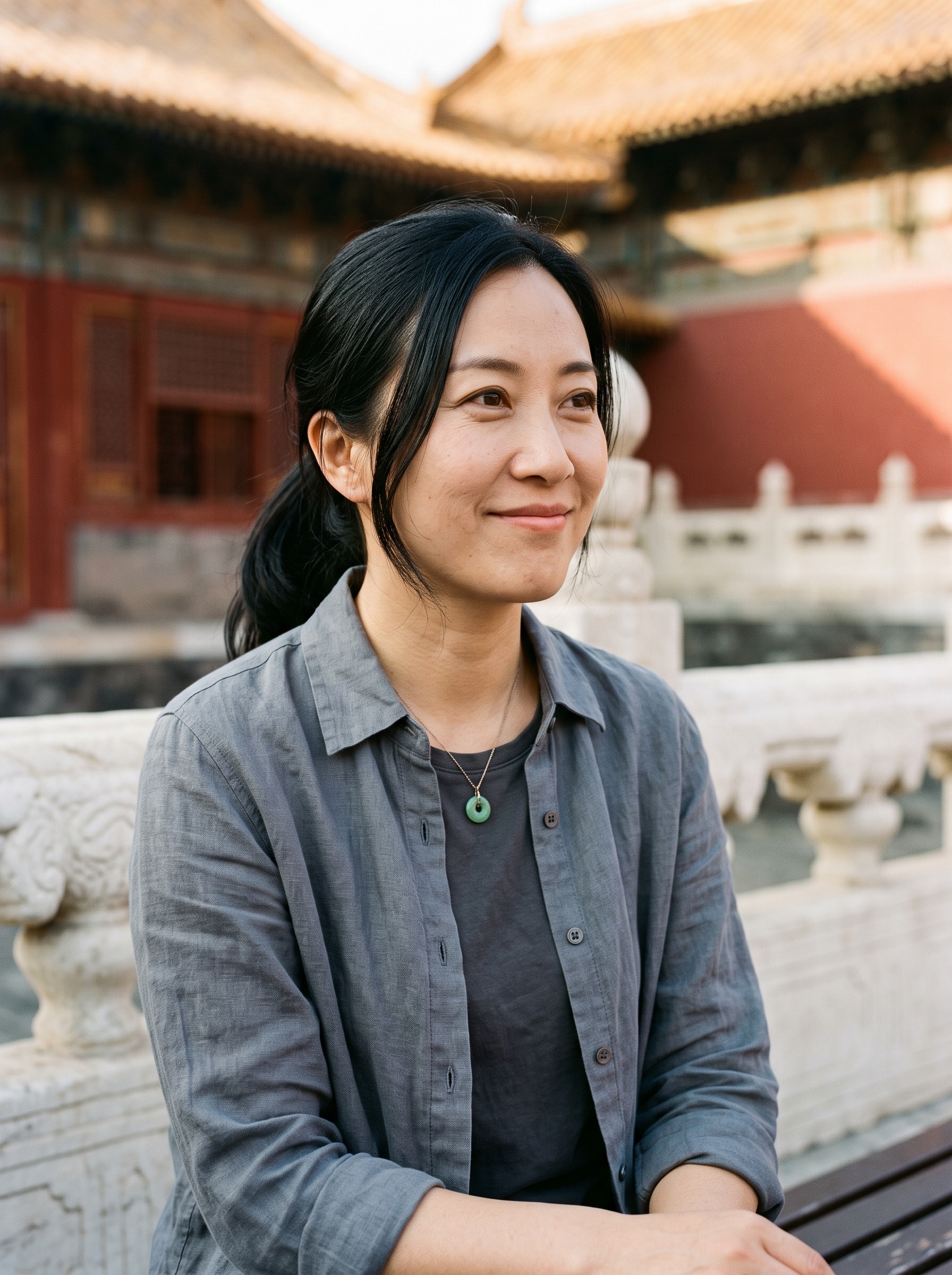 By Zhao Meilin

Walk south out of Tiananmen Square and the city changes its grammar. The flags and granite of the political centre give way to shopfronts, steam, shouted prices and the neat theatre of a restored tram bell. Qianmen Street runs straight and ceremonial, but the real pleasure is what happens once you leave its polished length and turn west into Dashilar, where Beijing’s merchant memory still feels lived-in rather than embalmed.
What Qianmen & Dashilar is known for
This is old commercial Beijing, the side of the city that sold things rather than ruled them. Qianmen Street is the front window: a wide pedestrian avenue rebuilt in the 2000s to a late-Qing look, with the restored dang-dang tram clanging its way past chain flagships and the odd century-old sign. It is tidy, theatrical and very good at introducing first-timers to the city’s old axis. But the street’s real function is to funnel you toward the older, denser world behind it.

Dashilar, also written Dazhalan, is where the city’s commercial past stops being decorative. The main drag is only about 300 metres long, yet it packs in more than 70 shops and traces its layout to the Ming dynasty, when wooden fences gave the street its name. The lanes behind it are a genuine tangle, and that is the point. Here, locals still buy medicine, shoes and pickled cabbage from counters their grandparents used, while visitors drift between time-honored brands and the occasional design studio. The old Beijing rhyme about dressing well ran through this district for a reason: a Majuyuan hat on your head, a Neiliansheng cloth shoe on your foot, a Ruifuxiang silk robe on your back.
What makes the area feel singular is not nostalgia, but density. In a few walkable blocks you can pass a 350-year-old pharmacy, a silk house, a specialty coffee bar in a converted bathhouse and a smashed-porcelain jeweller, all without any of them seeming like a joke. It is busiest by day and mellows sharply after dark, when the shutters come down and the crowds thin toward the subway. That is also its honesty: this is not a nightlife district pretending otherwise.
Where to eat & drink
Come hungry and come with a duck in mind. Qianmen is one of the few places in Beijing where roast duck is not just a meal but a lineage, and the lineage matters. Quanjude opened its original store here on Qianmen Street in 1864 and effectively wrote the modern playbook for hanging-oven roast duck over fruitwood, carved at the table and rolled into thin pancakes with scallion, cucumber and sweet bean sauce. It is grand, ceremonial and unapologetically the place where dignitaries were traditionally taken.

For the older method, Bianyifang in the Xianyukou food street roasts duck in a closed oven, which keeps the meat juicier and the skin thin. The Xianyukou branch dates to 1855 and traces its recipe to a lineage older than Quanjude’s. If you want the locals’ value pick, Siji Minfu by Qianmen is the one many rate a match for the big names at a friendlier price; it draws a genuine queue, so pull a ticket on the WeChat mini-program and go shopping while you wait.
Dashilar itself has its own answer in Ziguangyuan, which does a halal version of Peking duck alongside lamb skewers. That detail matters because this neighbourhood has never been a single-note food story. It is a place where duck, beef, tripe and dumplings all occupy the same old commercial map.
Beyond duck, this is snack country. Duyichu at No. 38 Qianmen Street has been folding shaomai since 1738 and still trades on the tiger-head plaque the Qianlong emperor is said to have given it. In the lanes around Xianyukou and Menkuang Hutong, Tianxingju serves chaogan, the stewed liver-and-pork dish that looks modest until you realise how much Beijing taste is built on it. Yueshengzhai is where people go for braised beef, and the old-Beijing tripe counters are there too, for those who do not mind a little texture in their lunch.

For something quieter, Yangmeizhu Xiejie has Soloist Coffee at No. 39, a specialty roaster in a converted bathhouse. It is one of those Beijing places that makes perfect sense only after you have spent the morning in old lanes: you sit with a cup of coffee where bathwater used to run, and the city’s layers line up neatly for a moment.
Going out
Set your expectations early: Qianmen and Dashilar are a daytime proposition. The shops on Dashilar keep roughly 8am–10pm hours, and once the retailers pull their shutters the hutongs go quiet and dim. There is no bar strip here and no club scene to speak of. If you want the city to stay loud after midnight, go north to Gulou or east to Sanlitun.
What evening life exists here is cultural and traditional. The best-known is Deyun Community, the xiangsheng house that made Guo Degang a national name and still packs rapid-fire two-hander routines into an old Dashilar venue. It is a good night out if your Mandarin is up to the wordplay, and atmospheric even if it is not. The room matters as much as the jokes: crosstalk belongs to the old city, and this is one of the few places where it still feels like a neighbourhood form rather than a packaged performance.

Nearby, Daguanlou Cinema keeps going as a working cinema and still bills itself as the birthplace of Chinese film, where the country’s first film was screened in 1905. That claim can coast on its own legend, but the building is worth your time because it still functions as a cinema rather than a monument pretending to be one.
For an actual drink and a late coffee, the creative lane of Yangmeizhu Xiejie keeps a few cafés and small spots open into the evening, and Beijing Fun just east of Qianmen Street has smarter restaurants and bars around the Page One bookstore. But this district is not built for drifting from bar to bar. It is built for a show, a supper, a walk home.
Things to do
Start at Zhengyangmen Gate and its Arrow Tower. Climb the tower for a view straight up the central axis to Tiananmen, then walk south down pedestrian Qianmen Street and let the street do what it was designed to do: stage the transition from state to market. The restored gate and tower are the ceremonial front door of old Beijing, and the tram bell below them is the city’s gentler reminder that transport once had a rhythm.

The dang-dang tram is not just a novelty. It is a restored version of the trolleys that first ran in Beijing in 1924 and were scrapped in the 1960s, which means the clanging bell is carrying a little more history than most souvenir rides. If your feet are done, take it. If not, keep walking until the polished front window gives way to the side streets.
That is where the neighbourhood becomes itself. Cut into Dashilar West Street and then Yangmeizhu Xiejie, the former printers’ and booksellers’ lane that has become the flagship of the Dashilar creative-renewal project and part of Beijing Design Week since 2011. Old courtyard houses here were handed to independent owners rather than demolished, and the result is one of central Beijing’s neatest short walks: Mofan Bookstore at No. 31, with its own working printing press; Caicifang at No. 35, which sets broken-porcelain shards into silver jewellery; Beijing Postcards, full of old maps and city memorabilia; and antique dens like Deep Inside at No. 6.
This lane is the argument for preservation made practical. It does not pretend old Beijing was pretty. It simply shows that old courtyard structures can still host books, design, print and trade without being flattened into a theme. For travellers who care about how cities adapt, not just how they pose, it is the most rewarding short walk in the area.
Crafts hunters should also step inside Neiliansheng to watch the multi-layer cloth-sole shoes being finished, and Tongrentang, a working traditional-medicine pharmacy since 1669. These are not museum pieces. They are the point. If you want to know why Qianmen and Dashilar matter, watch a pair of shoes being made or stand in a pharmacy that has outlasted dynasties.
{{ATTRACTIONS}}
Shopping & markets
Dashilar is the reason people say go to Dashilar to buy things. The concentration of time-honored brands is unmatched. Ruifuxiang sells silk by the bolt and made-to-measure qipao. Neiliansheng has been hand-stitching thousand-layer cloth-sole shoes since 1853. Tongrentang dispenses herbal remedies with the confidence of an imperial-era pharmacy because it is one. Zhangyiyuan at No. 22 Dashilan has been scenting jasmine tea with Fujian leaves and Guangxi blossom since 1908. Liubiju keeps the pickles and fermented bean pastes that have been a Beijing kitchen staple for centuries. Majuyuan still makes the traditional hats that topped the old dressing rhyme.
The heritage half is the one most visitors come for, but the modern half matters too. Beijing Fun, the Qianmen East redevelopment, sits a few minutes east and gathers restored courtyards around the Page One bookstore, whose three floors of art, design and photography titles sit behind floor-to-ceiling glass framing Zhengyangmen. It was once voted Beijing’s most beautiful bookshop, and while that title can sometimes be overworked, the view is real enough.
For contemporary craft and quirky souvenirs, the Yangmeizhu lane shops beat any airport gift counter. The point is not to buy because you are supposed to, but to browse with a little patience. Many of these time-honored stores are experiences as much as shops, and the pricier items can usually be shipped. That is useful in a district where the best things are often too awkward to carry.
Where to stay in Qianmen & Dashilar
The pitch here is location. You sleep a short walk from Tiananmen, the Forbidden City and the Temple of Heaven, on the pedestrian side of the centre rather than the traffic-clogged one. At the top end, the Mandarin Oriental Qianmen occupies restored courtyard buildings just off Qianmen Street, and the MUJI Hotel in the Beijing Fun complex offers a pared-back, design-led stay steps from the subway. Below that, the lanes hide a good spread of heritage-styled boutique hotels and hutong courtyard guesthouses.
Rooms can be small, and older buildings vary in soundproofing and lift access, so read recent reviews before booking. The trade-off is that the district goes quiet and shuttered at night. If you want bars and late food on your doorstep, you will be happier in Gulou or Sanlitun. If sightseeing is the priority, this is one of the most convenient bases in Beijing.
{{HOTELS}}
Getting around
This is one of the easiest central districts to reach and to walk. Qianmen station sits at the top of Qianmen Street and is served by Line 2 and Line 8. From Qianmen’s E2 exit it is roughly a 700-metre walk north to Tiananmen Square, with the Forbidden City just beyond, which is comfortably on foot. For the western lanes and Yangmeizhu Xiejie, Zhushikou station on Line 7 and Line 8, Exit A, is about a seven-minute walk north into Dashilar and only one stop from Qianmen on Line 8.
Dashilar and Qianmen Street are pedestrianised, so once you are in, you are walking everywhere. The dang-dang tram covers the length of Qianmen Street if you want a rest. For the airport, transfer to the Capital Airport Express via Line 2, or to Daxing via the Daxing Airport Express. Taxis and ride-hailing cannot enter the pedestrian core, so expect a short walk to a pick-up point.
FAQs
Is Qianmen & Dashilar a good area to stay in Beijing?
Yes, if sightseeing is your priority. You’re within a walk of Tiananmen, the Forbidden City and the Temple of Heaven, on a pedestrianised, subway-connected part of the centre. The catch is that the district gets quiet after the shops shut, so it suits early-rising sightseers better than people who want nightlife outside the door.
Where should I eat Peking duck here?
Quanjude’s original Qianmen Street store is the grand historic choice. For the older closed-oven style, go to Bianyifang in Xianyukou. For a well-priced local favourite, try Siji Minfu near Qianmen and pull a queue ticket on WeChat first. Ziguangyuan on Dashilar Street does a halal version.
Is Dashilar worth visiting, or is it just a tourist trap?
The main drags are touristy and crowded, yes. But the value is in stepping off them. Tongrentang, Ruifuxiang, Neiliansheng and Zhangyiyuan are the real thing, and Yangmeizhu Xiejie, with its bookshops and design studios, is one of central Beijing’s best short walks.
What is the best thing to do if I only have half a day?
Walk from Zhengyangmen down Qianmen Street, eat duck or shaomai, then turn into Dashilar and continue to Yangmeizhu Xiejie. That gives you the gate, the tram, the old shops and the renovated lanes without rushing the place.